Liminal Belgrano: Deserted Shopping Arcades, “Noism,” and the Memory of the “Cabildo Shooter”
What lies hidden in the Cabildo galleries? Between liminality and “ningunista” explorations, this chronicle takes us through a Belgrano scarred by tragedy: it has been 20 years since the murder of Alfredo Marcenac at the hands of Martín Ríos, the avenue’s serial shooter.

Disclaimer: We suggest a playlist to read this note.
What hides in the basement of an extinct shopping arcade on Avenida Cabildo (Buenos Aires, Argentina)? Dirt gathers in vacated stores, filled with unpaid bills and court summons stuck to the door. Windows boarded up with plastic and paper. Menacing cafes. Cryptic adult commerce in the back. Perhaps a santería store. This isn’t it. There must be a mistake. This isn’t the right place. The tunnels pulse. They breathe. A presence. We look back and—
V̨͎̜̰̰̳́̏́͋͜H̹̩̟͍͈̜̭͛͂̌͘S̼̜͎̞̤̦̀́̀̽ͅ Ģ͚͙̜̣̼̞̒͑̑̕L͇̘̜̬͓̘͈̔̆̒̀Í͖̹͕͍̘̘̈́͜͡͡Ṫ̻͈̠͓̖͕̄́͗͜Ç͚̥̗̲̻̘̆̅͐͠H̻̫̣̰̱́̉̂̚͜ͅÉ͖͔̲̜͇̩̂̎̚͟S̡̥̤̤̩̖̔̋̍͆͢
1987. A boy walks hand in hand with his mom. Model airplanes. Scalextric. Victorinox. Tobacco shops with imported European goods for mustachioed gentlemen. Playing cards. Backgammon. Lighters. Keychains. Novelty items. Outside, canvas awnings take over the sidewalk, offering refuge and inviting passersby to shield themselves from the sun. The entrance is the natural continuation of the sidewalk (indeed: a gallery). Only once inside do we realize we’ve been captured; facing the orange neon arch that reads "Galería Río de La Plata," we’re already surrounded by colorful stone cladding and bronze inlays, we’re already in the bowels. There’s nothing left but to surrender and flow into the depths of—
We return to the present. Nothing. No one. Not a trace of orange neon. Questions persist: How do we get back objects from other worlds? Where do we find the children and teenagers we once were? Mothers no longer hold our hands, or they’re no longer here.
A meme goes around in infinite incarnations: you returned to the past but there’s no one there.
The shopping arcades on Cabildo endure. More like cemeteries than promenades. The columns, the stones, and the metal are the only traces of a prosperous world, now lost. In “La rubia tarada,” Luca Prodán takes a jab at Hari B, founder of Los Violadores: he accuses him of being a rich boy from Belgrano. In mid-2002 or 2003, rumors spread among the pseudo punkitos hanging around the area that the fascists from the Legión Negra had declared a “punk hunt.” They were ready to beat up any kid with spiky hair and Flema patches. There was nowhere to run because the spaces we moved through were the same—the sordid shopping arcades along Avenida Cabildo, filled with poorly printed T-shirts from La Polla Records and Lacrimosa, overpriced CDs, and cheap piercings.
The shopping arcades on Cabildo endure. More like cemeteries than promenades. The columns, the stones, and the metal are the only traces of a prosperous world, now lost.
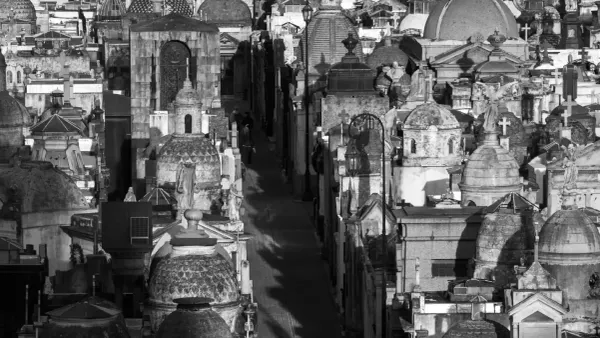
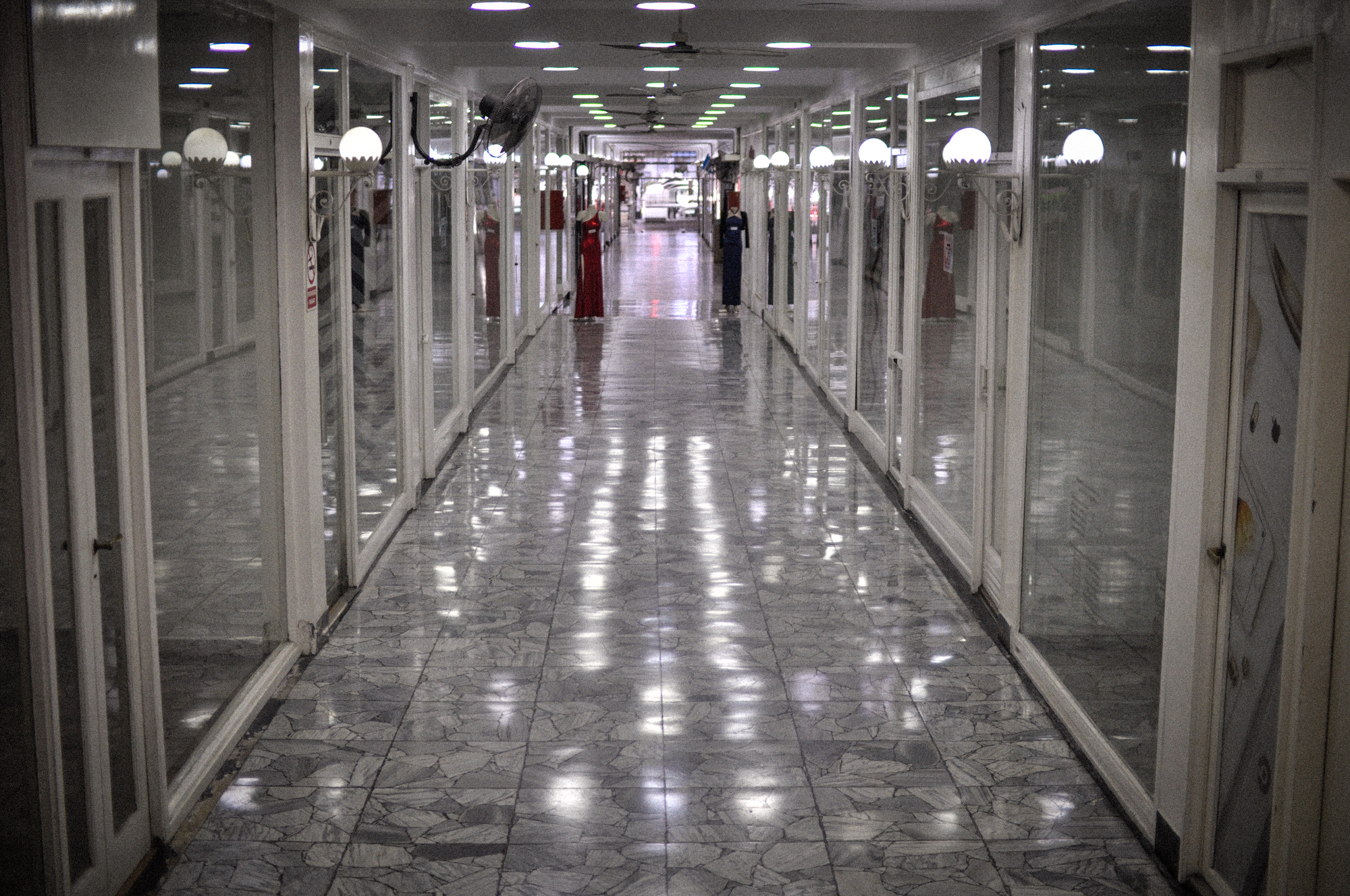
That was the habitat of a large part of the teen porteño fauna seeking an identity that deviated from the norm: Nazi skinheads, antifa skinheads, straight edge, anarcho-punks, California punks, darks, alternative kids. While Mecca was the little square outside the Bond Street gallery, Belgrano was another epicenter of rebellion. Avenida Cabildo housed the imposing shopping arcades Recamier, Río de la Plata, Las Vegas, Río de Janeiro, Los Andes, Acapulco, and several others. Each with its own architectural identity. Paseo Marga, the most Kubrickian (white with space-age fans), offered aura photography with a Kirlian camera. They were secret passages from an era, back in the 2000s, that no longer existed: marble floors, golden letters, columns adorned like totems from extinct civilizations, iron staircases. A Lovecraftian delirium.
Leila Infinito, who specializes in urban exploration, topophilia, and other wonders, notes in her brilliant and essential log:
Galería Río de la Plata, Belgrano. In the sixties, there was a boom in these types of shopping arcades. In Belgrano, there were more than twelve along Avenida Cabildo. For as long as I can remember, they were a meeting point and a place to stroll. Now they are all emptier than ever; the Recamier is only missing a couple of tumbleweeds rolling around—it's a desert. Most of them have had their distinctive features washed away. It’s a shame to see them like this. This one in particular still has quite a few occupied shops and some activity. The four columns covered in mosaics in the Central Hall make it worth the detour to go in and take a look around. According to the website of the Ombudsman's Office, the columns were declared Cultural Heritage under Law 1227, which also protects other works by Juan Batlle Planas, such as the mural in the hall of the San Martín Theatre.
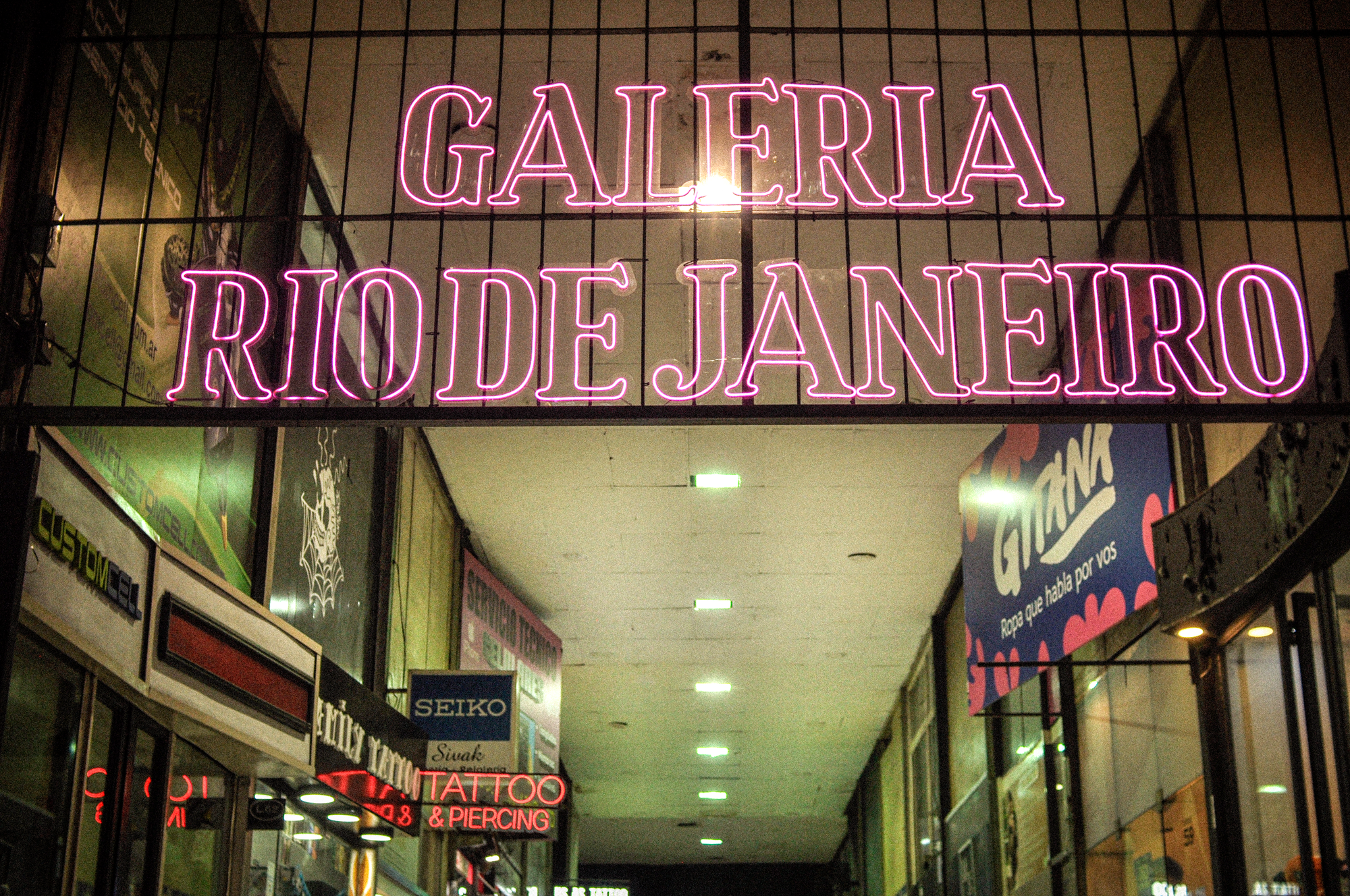
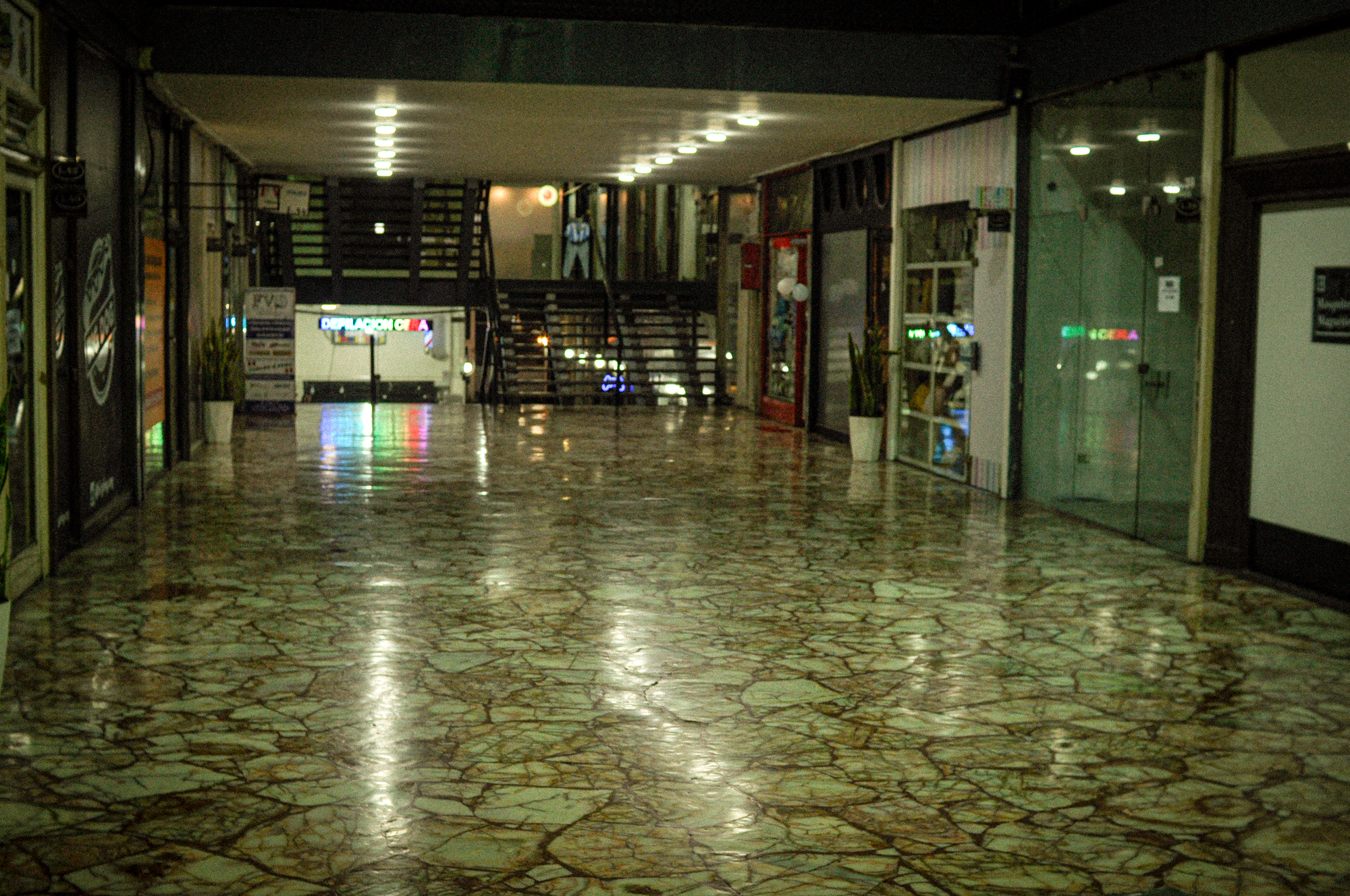
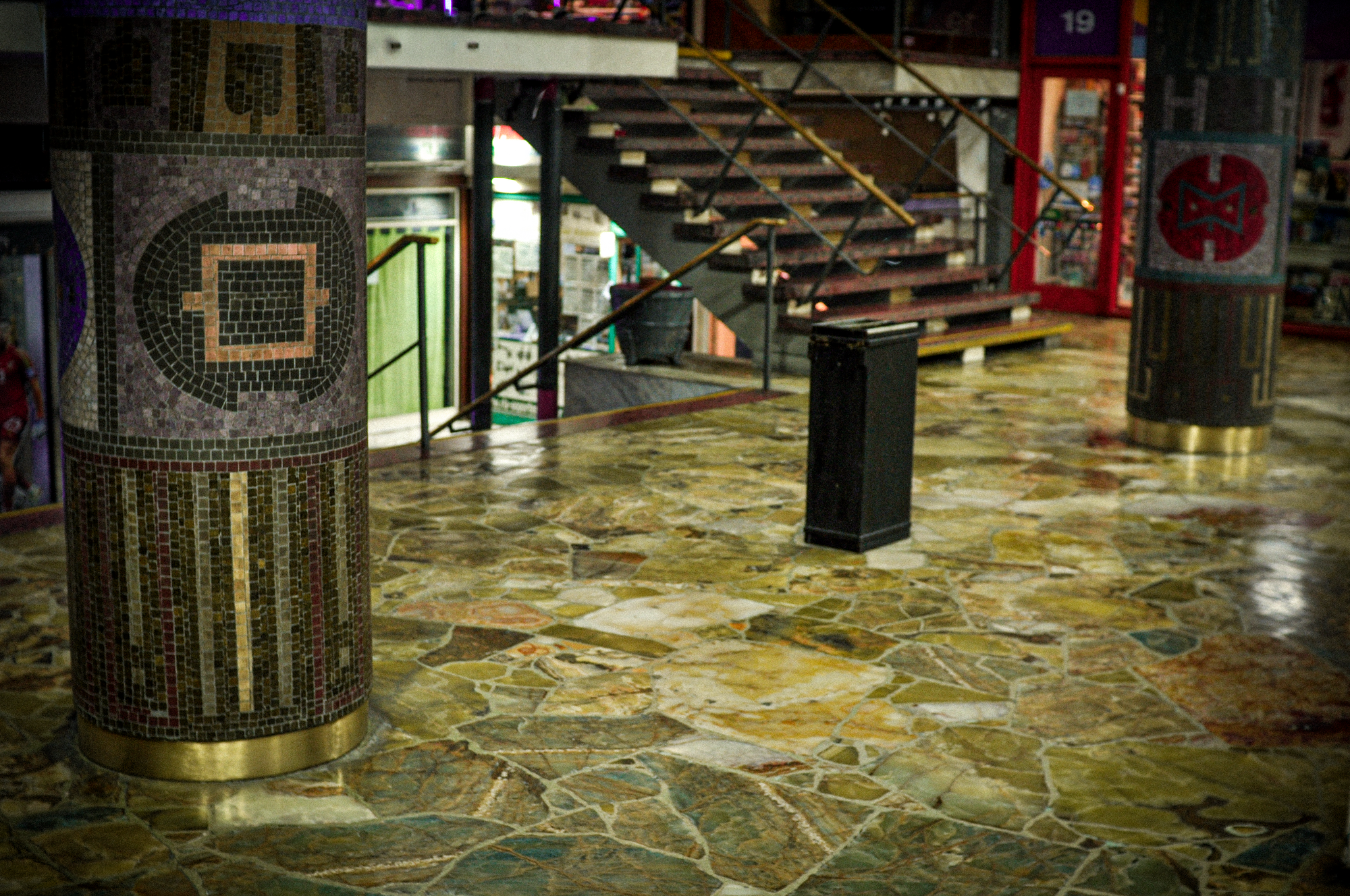
Photo: Lucas Driel.
At the beginning of the 21st century, the shopping arcades were still inhabited, with all their businesses open, though already in decline. The elegance they once had in the last century had morphed into stores for consoles, tattoo parlors, santería shops, second-hand clothing, upholstery, blank CDs, and toner cartridges for printers. Only a few shops today maintain their vitality. In the Galería Río de la Plata, El Imaginario still opens its doors to fantasy worlds for players of Magic: The Gathering, Warhammer, and D&D.
We grew up and those places became teenage anecdotes. Returning twenty years later shattered all romanticized memories; they were exaggerations of the mind. Entering the Galería Recamier today means encountering one closed shop after another. There’s nothing left. Only a few remain open, selling nerdy paraphernalia, a Vietnamese restaurant, rotting posters of artists no one listens to anymore, and not much else. Desolation, an urban desert in the middle of one of the most psychotic avenues in the city.
What can we reclaim from those years? Are there memories? Yes, there are. The record store Lon, in the Galería Río de la Plata, where a confused teen first saw the album covers of KMFDM, Stray Cats, or Primus. The slow speeds of KazaA and dial-up internet made for torturous downloads. He would have to wait to discover in that same gallery, some shops sold the pirated album for a quarter of the original price.
Deeper inside the same gallery was Splatter House, a video store that ceased to exist in 2019. That shop, number 53, was rented out and its unforgettable graphics were replaced: before, a font worthy of any EC Comics magazine (it could be Tales from The Crypt or The Vault of Horror) indicated the name of the business, accompanied by the silhouette of Leatherface with his chainsaw raised high. Potential customers could thus anticipate the kind of trash they would find inside: from science fiction to horror, astrozombies, masked wrestlers, European porn, pseudo snuff. Perhaps the reality was different, but the memory is of an owner who was a punk rock fan, of a shop decorated with flags and scarves from the Ultra Sur, the far-right faction of Real Madrid. It wasn’t uncommon to run into skinheads with white-laced boots.
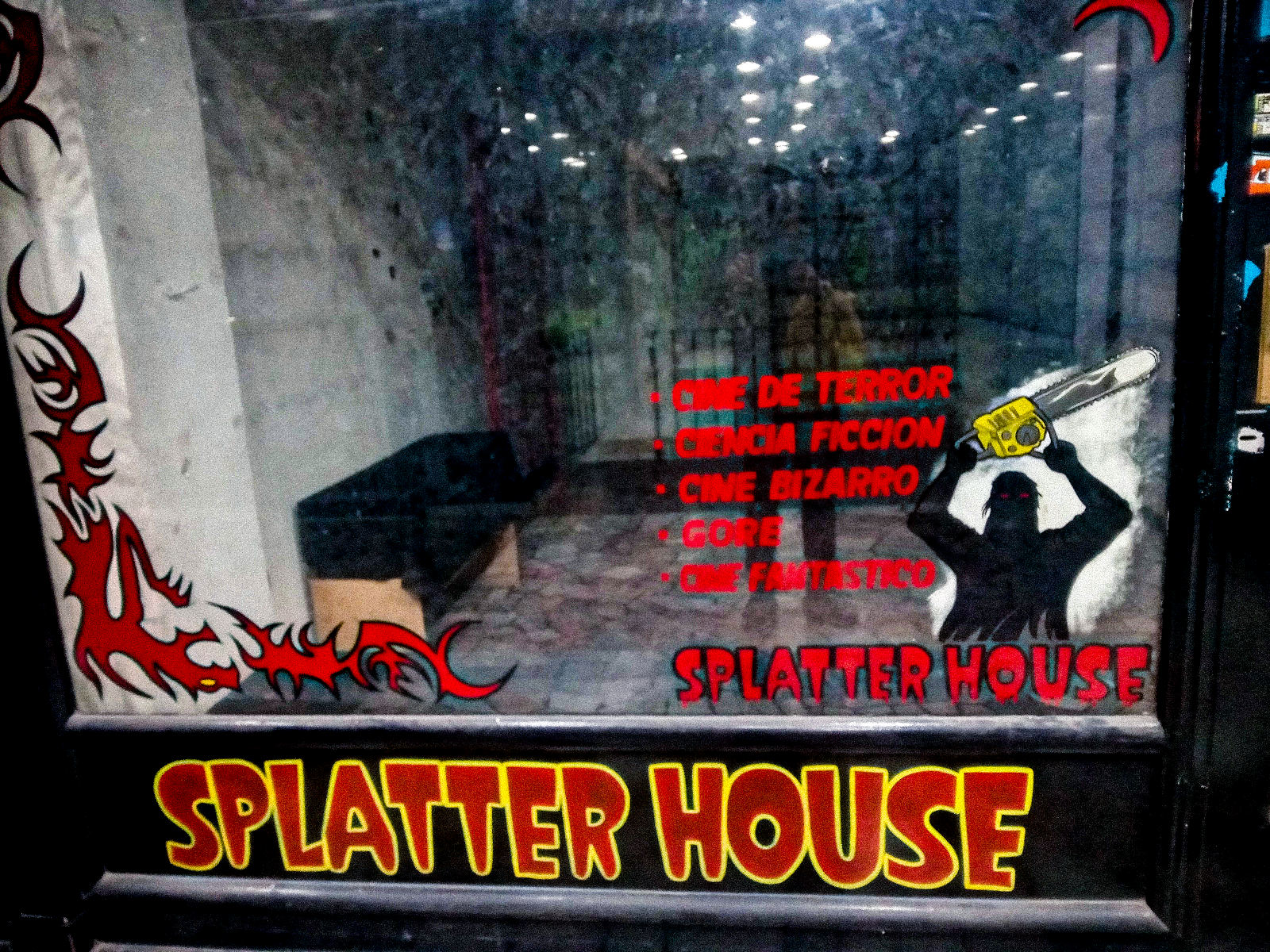
Now, looking inside, it resembles an S&M dungeon, like the one where Marcellus Wallace gets sodomized in Pulp Fiction. Or similar to the basement of Helvete, the record store where the creators of Norwegian Black Metal gathered, whose owner, Euronymous, ended up murdered.
Previously, Perver Records was at the back of the Galería Las Vegas, down by the bathrooms and the café. It was run by a guy named Lucio, an amateur boxer who would scribble mock autographs on the album covers and sell them as authentic to fans of the Misfits.
The Galería Los Andes was home to one of the most intriguing and incredible spaces, the Índice Mármol bookstore. Store 92 was tiny and crammed with material, making it easy to feel overwhelmed. The fanzine Body Bag by Marcelo Pocavida, editions of Scum Manifesto by Valerie Solanas, the Unabomber Manifesto, The Satanic Bible by Anton LaVey, and a vinyl bootleg of Charles Manson's LIE album were some of its oddities. The bookstore was a meeting point for goths, and nerds playing Vampire: The Masquerade, but it also hosted punk film cycles, live bands, and esoteric, occult events. The store operated until 2010.
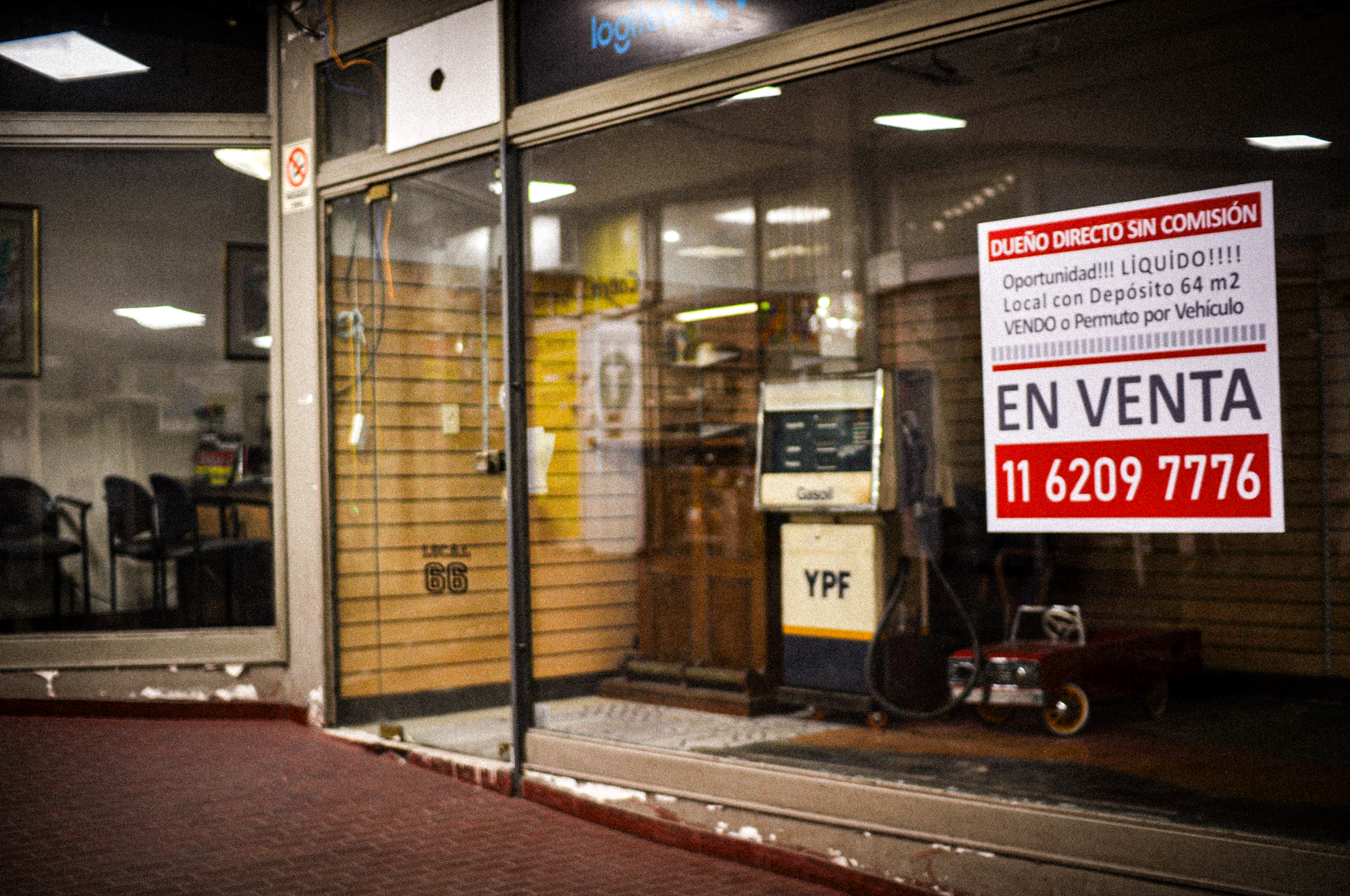
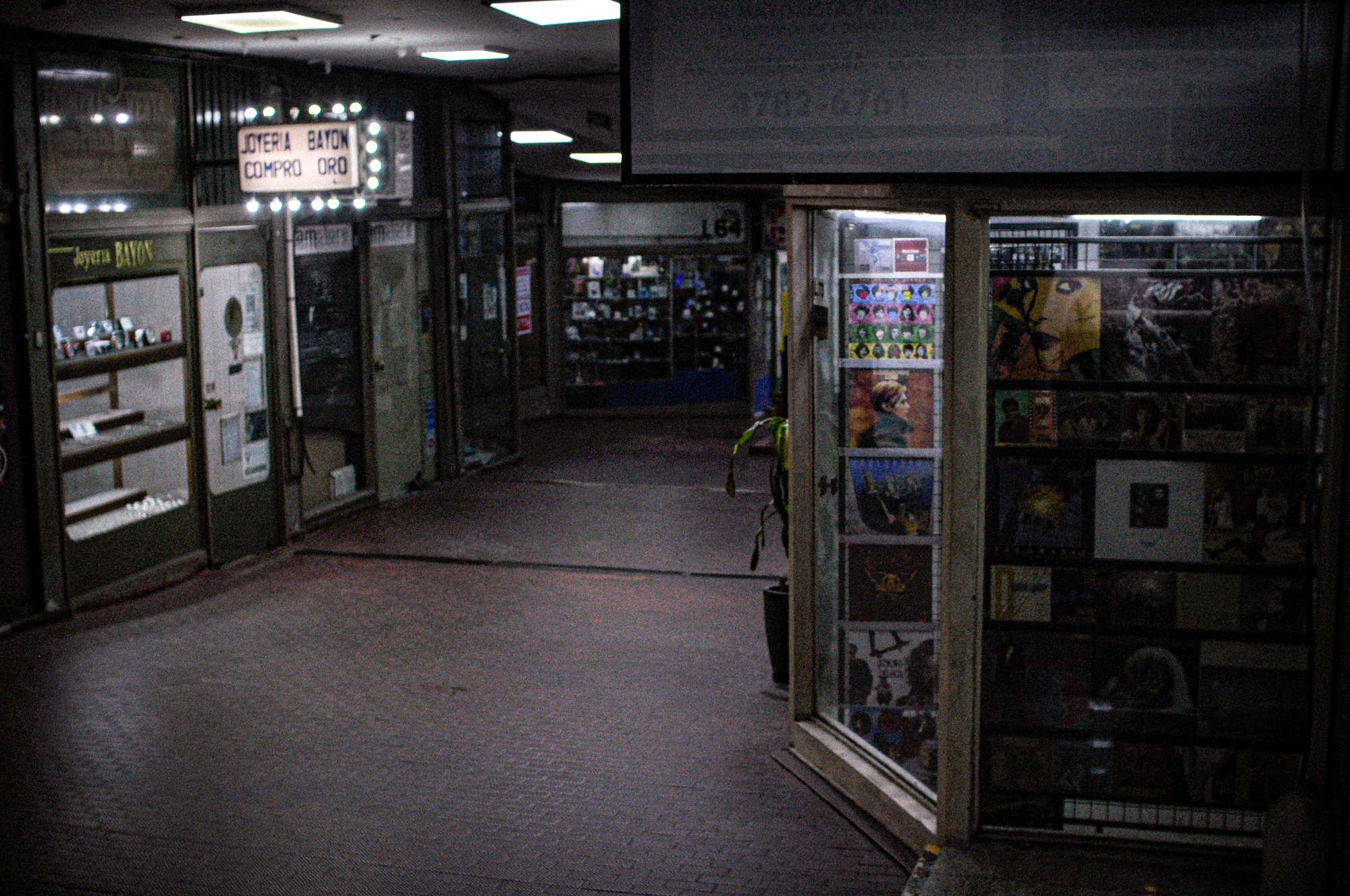
Photo: Lucas Driel.
Finally, it's impossible to forget Galería Churba at Cabildo and Juramento. The closest to the underworld, both in an esoteric and physical sense: the gallery was laid out in a downward spiral, with a huge glass pyramid at the center of the lowest level (The most Masonic one you have. No, that's too Masonic…), where they used to sell electric guitars. The rest of the shops were rock bars and tattoo parlors. By the late 1990s, it was demolished and replaced by Tower Records. Today, it’s a Dexter sportswear store.
Then, a voice calls to us in the hallways of a gallery. It whispers a single word on a loop: liminal.
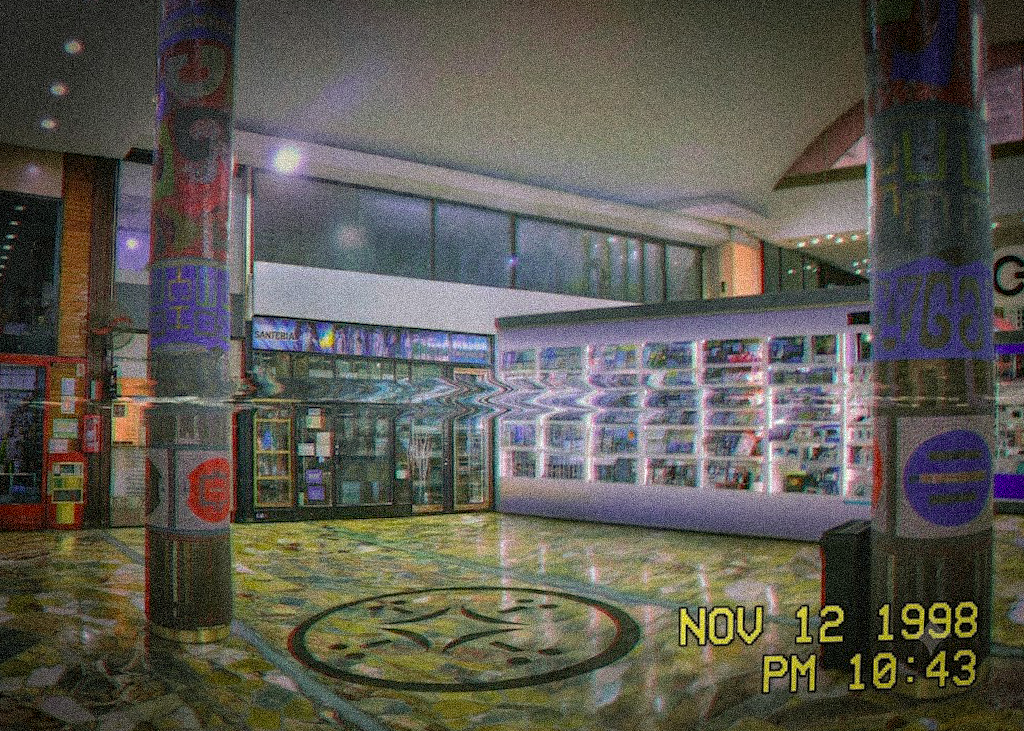
Liminal strolls
In the early 20th century, anthropology became interested in liminality. The European ethnographer Arnold van Gennep placed it in initiation rites, where he saw it as the passage between two identities. In the hundred years since, its meaning has expanded via the internet to incorporate social dimensions, in addition to space and time. Among theorists of the gothic and horror, concepts like the abject and interstitial monsters emerged—those that exist between two incompatible zones: the nineteenth-century monster, alive and dead at the same time, like a third thing, outside the order of the cosmos.
Liminality was finally turned into an internet abomination in 2019, when a user on 4chan posted the iconic image of the Backrooms: carpeted, yellowed hallways, where the only certainty is that you need to get out of there, but how?

The creepypasta that accompanies the image:
If you're not careful and you noclip out of reality in the wrong areas, you'll end up in the Backrooms, where it's nothing but the stink of old moist carpet, the madness of mono-yellow, the endless background noise of fluorescent lights at maximum hum-buzz, and approximately six hundred million square miles of randomly segmented empty rooms to be trapped in. God save you if you hear something wandering around nearby, because it sure as hell has heard you.
The image became increasingly popular: the liminality of the Backrooms is inseparable from stealth genre video games and the boom of professional and free development engines like Unity and Godot over the last decades, along with their thousands of tutorials on YouTube. Currently, several Argentine indie games explore liminal horror set in Buenos Aires: VHS Paradise, The 39, Buenos Aires Mirror Line, and PanchoFobia.
We are increasingly inhabited by the language of video games, to the point that most will recognize the verb "no clip". Just so you know, noclipping means that a collider (a detector that registers when we collide with something in the game) has failed or is simply absent, and thus we enter the no-world: maps, geometries, characters, and objects that only the developer, and no one else, can visit. The Backrooms or similar anomalous spaces are visited in video games like Enter the Backrooms, Superliminal and The Exit 8. Kane Parsons brought the Backrooms to the format of an analog horror web series (video above), and has a self-titled film with A24, currently in theaters as we type these words. In 2018, before the photo of the Backrooms, a now-deleted tweet labeled this type of spaces "liminal," but it wasn't until the following year that the concept gained enough momentum to collide with the yellowed photo and explode on social media.
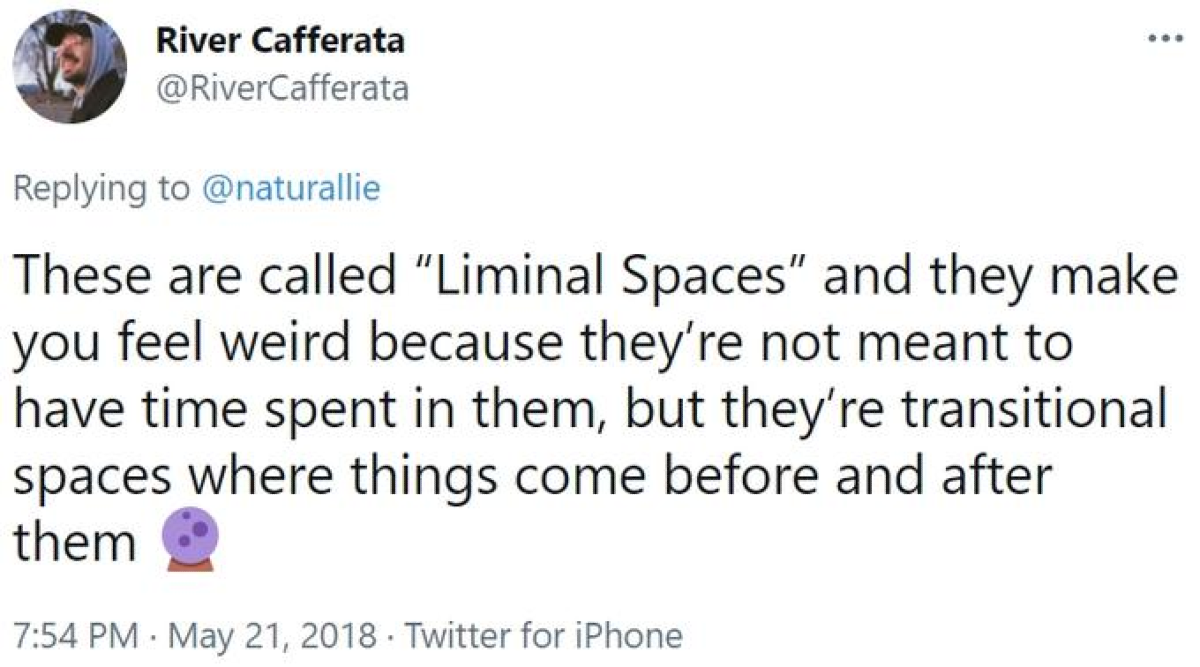
Search trends confirm that the concept of "liminal" is inherently pandemic, with sustained growth since 2020. In the mental suffering of lockdown and existential threat, a nostalgia for Marc Augé's non-places was born: spaces meant for circulation between inside and outside, never for permanence. Tunnels, airports, parking lots. They are non-places, but they must also meet the condition of having no one. Passage spaces without anyone passing through them. As if the concept of liminality were liminal in itself by saying exactly the opposite of what it implies: elegiac spaces stripped of their transitional function that are more reminiscent of post-apocalyptic narratives.
They are spaces meant for circulation between inside and outside, never for permanence. Tunnels, airports, parking lots. They are non-places, but they must also meet the condition of having no one.
Interestingly, if we compare the trends, "liminal" had its first peak of searches in Argentina (5k, not relative) in July 2019, a year before the rest of the world. This correlates directly with the retrospective exhibition "Liminal" by Leandro Erlich, the most visited in the history of MALBA (240,000 attendees). Another crowning glory. The curatorial text warns that "the title refers to a zone existing at the threshold of another space, alluding to the position of being about to cross into or enter a specific place or state of existence, but never quite arriving."
The now-defunct X account @ArgenLiminal used to include images that had nothing to do with liminality, but a lot to do with nostalgia and loneliness: a patio in the suburbs, mate on the kitchen counter, a living room tinted by sunset. Perhaps, as in Erlich’s exhibition, Argentine liminality is the common thread of such disparate experiences that no longer relate to the threshold, the public or the private, but to the urgency to return home. Perhaps what we miss is the confinement of the pandemic.

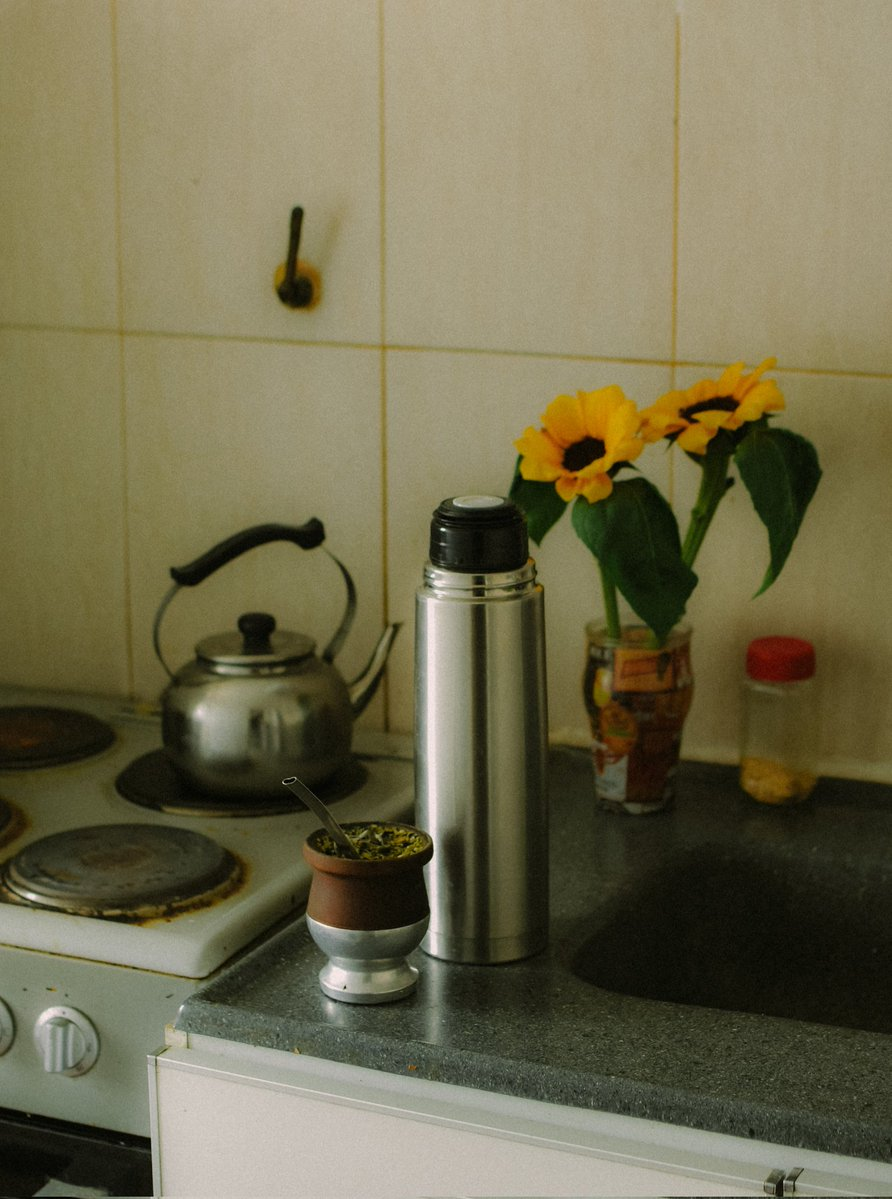
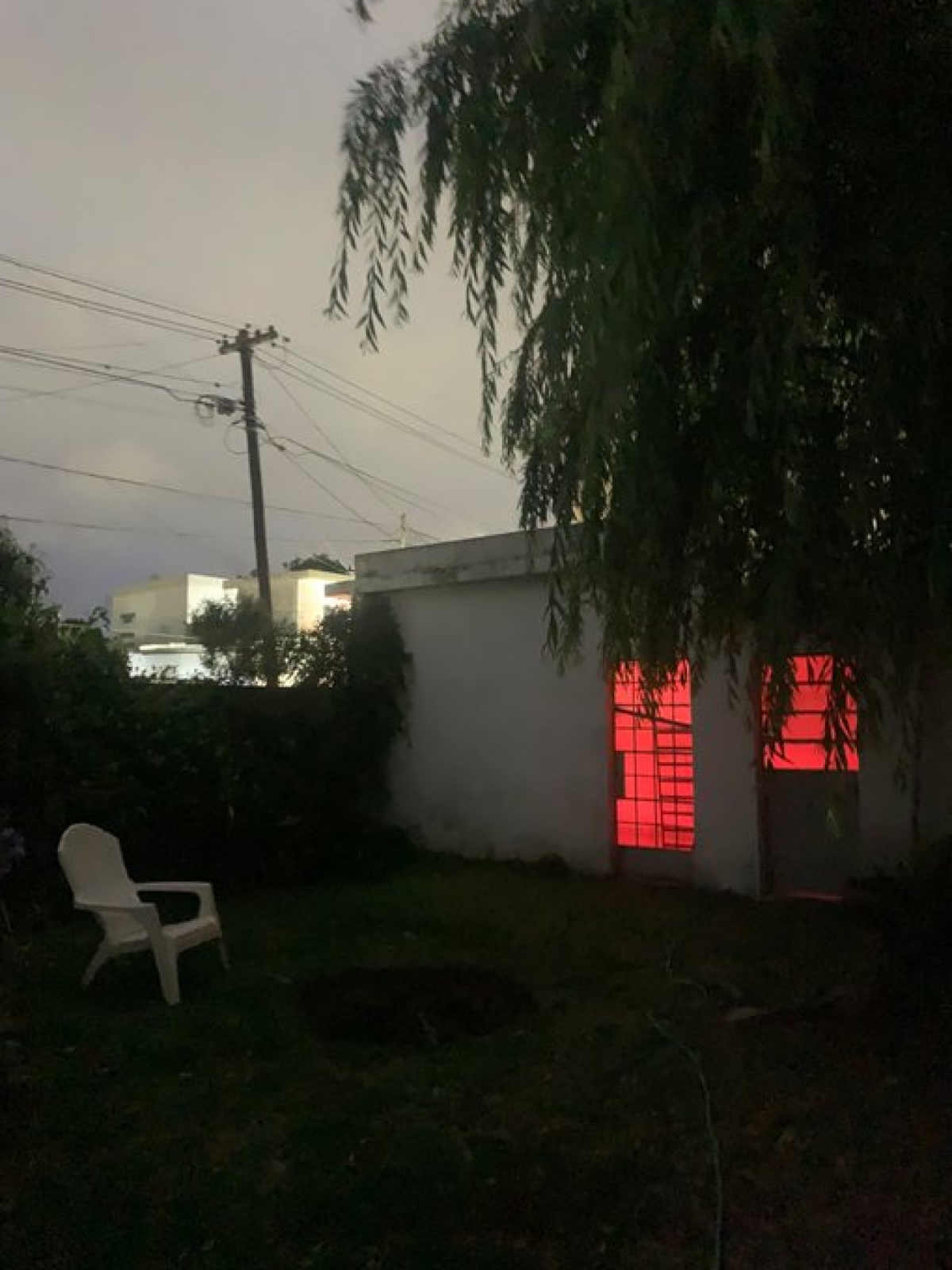
Source: @ArgenLiminal
June 2026. We stroll through the ruins of the Belgrano galleries, empty and dirty. The Multiplex, the only surviving cinema, is showing Backrooms. We're having a liminal experience (Is there a New Argentine Liminal?).
In liminality, tensions coexist between the inside and the outside, the present and the past, and nostalgia and horror. As we mentioned: they are non-places. This tension between the public and the private is palpable in the towns of North America, permeated by what philosopher Jürgen Habermas calls the "colonization of the lifeworld": taking over the public square to the point where the idea of teenage rebellion that MTV programmed into us ex-youth consisted of going to make a scene at a mall (scenes that Avril Lavigne and the New Radicals depicted in their debut music videos). Those suburban white kids who scandalized Yankee (Karens), humorously chased by chubby security guards, played in a privately owned space that was publicly accessible, a cultural and economic locus that had existed for almost half a century by then, unlike in Argentina (or rather, Buenos Aires). Here, we only had our first large shopping malls in the late eighties and early nineties, without them ever colonizing the lifeworld. In fact, mass shooters love malls (not as much as schools).
Let's remember that today's kids use "liminal" when they want to talk about ruins and desolation. The mandatory requirement for taking a liminal photo is that there can't be anyone in it. In the liminal Belgrano, what we have, in the absence of the mall experience, are the galleries. In our adolescence, we would roam them from end to end in search of rock memorabilia: records, posters, guitars, songbooks, clothes, and tattoos made up the identity horizon of the neighborhood natives. We would slap stickers on the shop windows, looking for a drummer for the band. They were must-visit places (resting wasn’t an option, with no cafés or food courts). Sometimes we would share a chat on the back stairs that led to Ciudad de la Paz, but we were quickly kicked out. This forced us to explore the neighborhood, stop in parks, and grab a one-peso coffee at Burger King.
But twenty years ago, a group of kids took neighborhood exploration to the extreme and ended up drowning underground. This is the story of Noism.
Superí and Olazábal
A glance from the sewer can be a view of the world.
Alejandra Pizarnik.
Few knew what was hidden in the underground world of Belgrano. Roy (Rodrigo Sierra) and his friends did. They called themselves the noists (as in no "ism"), and they believed in the need to noclip back to reality after exploring the city in non-automatic ways. However, they overlooked the most important maxim of urban exploration: When it rains, no drains.
On the night of December 16, 2006, four friends arrived at the culverted Vega stream on the railway embankment of Superí and Olazábal. Under the watchful gaze of Mirtha Legrand in a giant Silkey hair dye advertisement, they began their descent despite the National Meteorological Service having announced storms. Indeed, that night there was a severe storm with rain, hail, and even tornadoes, which not only caused flooding in Buenos Aires but also wreaked havoc across the country, claiming victims from electrocution and being swept away by rising rivers. Five years earlier, just a few meters from the drain on Superí, an unlicensed nursing home had flooded during a storm (in ten minutes, the living room filled with water up to two and a half meters). As a result, five residents lost their lives.
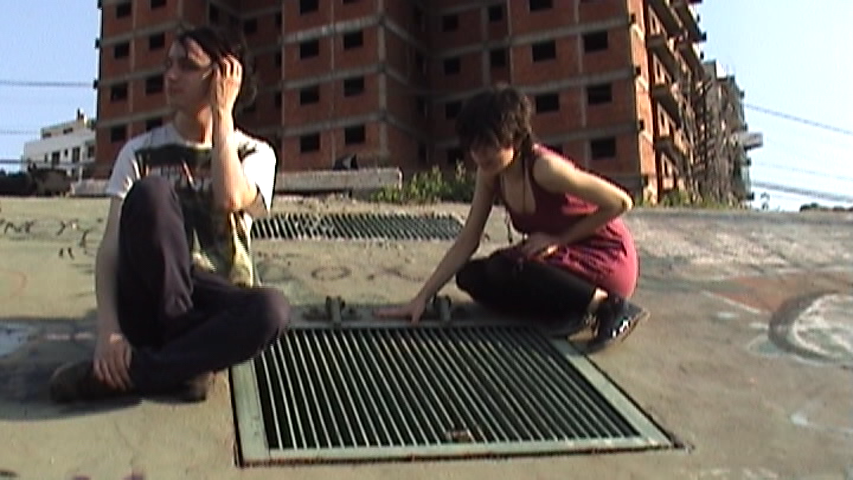

Source: Unreleased short film by Fernando Montes Vera (2008).
The media that reported the deaths of the four noists dubbed them "the boys from the sewers." According to the posthumous thesis of Noism, there exists a technological virus that pulls young people away from reality and leads them to construct virtual realities. The Noism, which Roy had initiated, manifested not as a solution but as an amorphous, unclassifiable, and unrepresentable proposal for practicing exploration, which would be the path back to the real.
It's not that we're becoming conspiracy theorists, but yes. The Noism Archive, run by documentary filmmaker Lucas Larriera, is a website aimed at preserving Noism memory and continuing the legacy of Roy, its founder, something that seems to go against his intentions: Noism was a promise that the movement would have no leaders or codices, and Roy was about to delete the movement's website out of fear that it would become something concrete and marketable. But the archive does honor his will: Noism did not become a product, but rather an open and collaborative effort. After Roy's death, it was his mother, Mónica Sierra, who took on the main responsibility of preserving his legacy until her death in 2018. Twenty years after the physical disappearance of the explorers, the website shares content regularly. In 2019, they posted a brief text about the closure of Splatter House. It also features a survey of numerous spaces where Noism activities took place, and even includes a map with all the points and summarizes:
It’s important to know that Buenos Aires is in Argentina and that in Buenos Aires there is a neighborhood called Belgrano.
It’s important to know that this is where Noism originated.
In the same neighborhood where Noism began, I was born. In 1988.
On December 16, 2006, there was a storm in Buenos Aires. In the neighborhood of Belgrano. It was the biggest storm of the year.
At that time, Belgrano flooded a lot.
It’s important to know that beneath Belgrano there are at least two buried streams.
I don’t remember that day. It was just another night. Another flood among many.
The night of December 16, 2006, marked the end of Noism.
Roy, Bob, Sebastián, and Joaquín drowned in the Vega stream.
I never got to know any of them, though I wish I had.
We continue on the map. Entry NIN_MAP_10. The screen glitches. Click.
1998. Cabildo 2230. Galería Las Vegas. The archive informs about the group Kenosis, made up of Mónica Sierra, her teenage son Roy, and others. They hold esoteric meetings with the gallery as a hub. Together they publish a volume. The prologue, "Return to the Forgotten Paradigm," calls for noclipping back to the truth as a recovery of what was taken by Lethe, the river of forgetfulness (Aletheia, the true word), something that Mónica's son reinterpreted and perfected in his writings. A heavy heritage. In the case of the Kenosis group, it was a battle flag against postmodernity, with no weapons other than "the grace of serving God."
The archive reveals that Roy and his mother not only shared their spiritual quests at Galería Las Vegas, but they also resided at Galería Río de la Plata. Just a few meters away. We couldn’t overlook the coincidence of the names with the Vega Stream and the mouth of the Río de la Plata, where Joaquín's body, the youngest of the explorers, was found. It wouldn’t have been responsible to continue without a bit of fact-checking. We found some frames in a interview with Mónica, where the address is visible, pixelated and dark, in Roy's CV.

The numbers didn’t seem to match the address of Galería Río de la Plata (Cabildo 2280). After several combinations, we found a pdf hosted on Yumpu’s website, a digital publishing platform. Somehow, the address and the name of the Kenosis group appear in an endless list of publishing houses compiled by some Chilean service exporter in 2014. Kenosis Group, Cabildo 2262. Roy and Mónica didn’t live in Galería Río de la Plata, but just a few meters away, in the building next to Argentina's first McDonald's, and on the same block as Las Vegas. Continuing the family tradition of metaphysics in galleries, Roy participated in occult talks at Índice Mármol, on Boulevard Los Andes.
Twenty years ago, many learned the words psychogeography and drift in the media frenzy that followed the tragedy, but that’s when we step down from abstraction and place Roy in those concrete spaces, imagining his journeys, a kid among many born in the eighties, a neighbor of McDonald's, daily traversing the liminal galleries, raised in philosophical and theological debates led by his mother. At the same time, he graduated in Public Relations from the University of Palermo and resigned from his job at a renowned agency in a declared career suicide. Mónica noted that going down to the stream was "stupid". Roy had foot problems and had taken Flamenco classes as a child to improve his motor skills.
The neighborhood of Belgrano embodied a boy with ostranenie (the estrangement that Russian formalists proposed as the ultimate literary procedure: to make the mundane strange). Roy created a system that focused on the human, destroyed it before betraying himself, and paid for it with his own life. He and his friends filled the neighborhood with legends like 1 + 1 = 1, and the sigil of Noism, which forms a shield with four smiley face emoticons. In fact, a giant one continued to plaster the Carranza viaduct for many years after Roy's death. It’s not hard to see a sewer in the sigil.

The mouth of the stream no longer exists, and the embankment has been modified to open an underpass on Olazábal. The corner now shows something completely different from what they saw the night of the storm. The walls are covered with mosaics featuring geometric artworks. One of them has the word "museum," but nothing indicates a museum of what. For us, there’s no doubt: Belgrano Liminal had taken human form in a 25-year-old man and wanted to tell us something with his sacrifice. There’s much more to say about Noism, archives, memory, and those who shared Roy's legacy, finding it in his webs, his hard drive, and his songs, and offering his traces to the rest of the world. But now we must continue.
We move on to Olazábal. Disoriented, we set off towards Cabildo.
First Person Shooter
June 2005: a burst of gunfire pierces bus 67 at Olazábal and Vidal. Two injured.
March 2006: a new attack on the Balcarce café, at Crámer and Juramento. One person injured.
June 2006: the shooter prepares at Crámer and Elcano and sprays a train car with sixteen shots. No injuries.
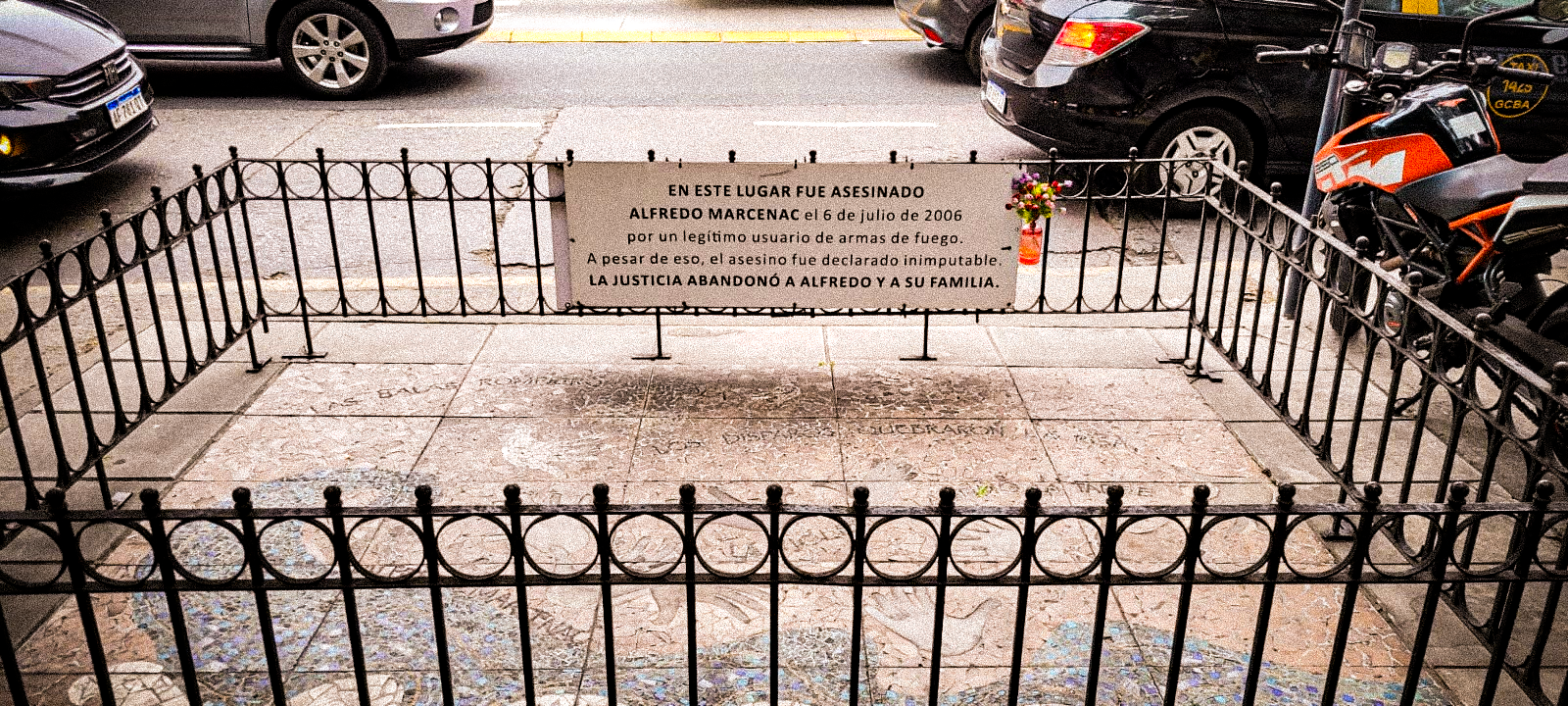
Exactly 20 years ago, on July 6, 2006, the local shooter emptied his magazine in a random attack on Cabildo at 1700. He killed Alfredo Marcenac, 18, and injured six others. The media mentioned that the attacker rode a yellow bicycle. The mother of, let’s call him A, saw a bicycle of that color every time she entered and exited the parking lot of the building on Avenida Crámer. On the morning of July 14, A's father told him that their neighbor turned out to be the Belgrano Shooter, Martín Ríos. A boy who spent a lot of time at the entrance of the building, wearing headphones, not responding when neighbors greeted him as they entered. What A remembers is that the father was a commercial airline pilot and took him to Tiro Federal. After the crimes, the family put the apartment up for sale, which took longer than usual to sell. Surely due to the weight of living in the house of a murderer. But Belgrano is a neighborhood characterized by that; it wasn't strange at that time to cross paths with the femicide Ricardo Barreda, and the protests outside genocidal dictator Jorge Rafael Videla's home, located at Av. Cabildo 639, 5ºA, were also frequent.
Ríos never obtained the psychological fitness certificate required to be a Legitimate Firearm User. He had a Bersa Thunder 380, with bullets hand-carved to cause the maximum damage possible. The prosecution argued that he acted with awareness and premeditation: he killed for pleasure. The defense countered that he was schizophrenic: he killed just for the lolz. Marcenac's family never obtained justice; the killer is housed in the psychiatric unit of the Ezeiza Penitentiary Complex: his relatives managed to have him declared not guilty by reason of insanity. In 2025, the National Chamber of Appeals in Administrative Litigation determined the State's responsibility for the lack of control in issuing firearm permits. The National Firearms Registry (RENAR) failed to fulfill its duty verify the background and psychological fitness of Ríos, who had been arrested in 2002 for possession of weapons and drugs.
Ríos never obtained the psychological fitness certificate required to be a Legitimate Firearm User. He had a Bersa Thunder 380, with bullets hand-carved to cause the maximum damage possible.
Ríos is the shadow of Roy, a different incarnation. The only thing they share is the obsession with their own projects and the disregard for the outside gaze. Today, Ríos's actions seem to resonate with young Argentinians seeking to import the student massacres from the United States. We cross our fingers.
Lost World
We've lost a lot in Belgrano, especially on Cabildo, with a bus rapid transit system that has made it unrecognizable, empty shopping arcades, and not a single cinema. In the eighties and nineties, its cultural offerings included Prix D'Ami, which had three locations in the neighborhood before settling on Monroe and Vuelta de Obligado. Throughout its existence, it hosted performances by legendary national artists like Los Redondos, Charly García, and Los Violadores, as well as international acts like Iggy Pop and King Crimson. Later, it transformed into Dr. Jeckyll, where Divididos, Las Pelotas, and even Alanis Morrissette performed. The venue then became the club La Diabla, then a Chinese owned supermarket, and is now demolished.
Yes, a lot has been lost, but beneath the surface or through spilled blood, infinitely more has been lost:
Isabel Salazar. Delfina Castro. Wenceslada González. Elena Garibaldi. Celina Mariani. Rodrigo Sierra. Alberto David Cardazzo. Sebastián Abel García Serrano. Joaquín Prieto. Alfredo Marcenac.
Negligence, accidents, and a thirst for blood. Friends and family remain inhabiting the quintessential liminal space: grief. Empty rooms. Writings. Abandoned email accounts. Toothbrushes. Clothes. Half-used creams. Medication blister packs.
It is estimated that it takes between three and four generations to be completely forgotten. Both Alfredo and Roy were with friends when they died. They left their mark on a world that, while already broken, was far from instilling experiences of mass desolation like those we've faced in recent years. They invite us to forge new encounters: to explore, traverse, and build memories in the stripped spaces that saw us grow. Perhaps, who knows, noclip back to reality.
Las notas de 421 no tienen paywall
Y a cada colaborador se le paga por su trabajo. Las dos cosas dependen de los suscriptores.