The Philosophy Behind Final Fantasy VII: Life, Death, and Hope
More than just a video game, FF7 is a work about loss and hope. How its creator's grief shaped a classic.

More than just a video game, FF7 is a work about loss and hope. How its creator's grief shaped a classic.
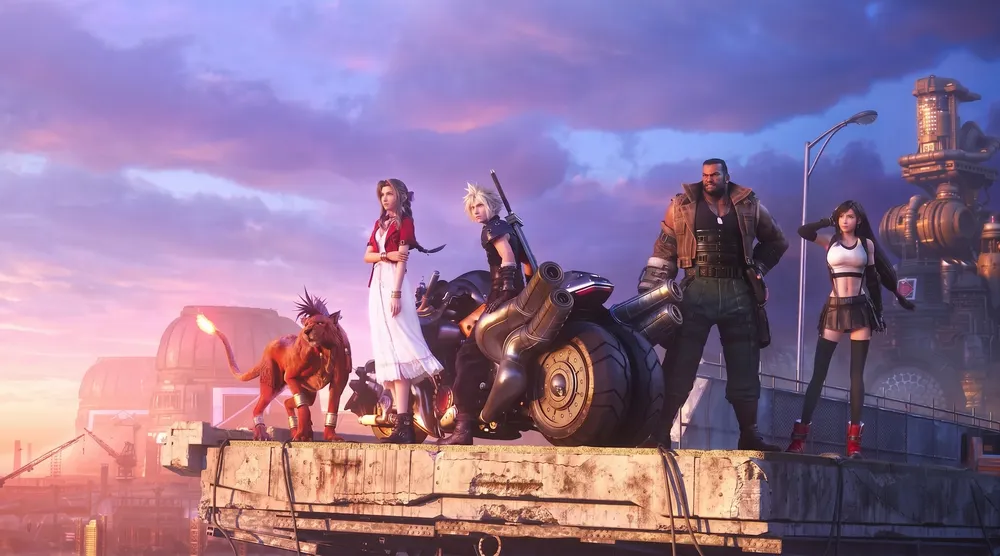
A few days ago, the release date for Final Fantasy 7: Revelations was announced, marking the third and final installment of the "Remake" saga of the original game from 1997. The remake, a reimagining of the original story with a distinct yet refined gameplay style, has sparked equal parts euphoria and anger since its original announcement. This reaction is inevitable given the project's magnitude, the expectations, and the level of affection and significance that FF7 holds for many (myself included). This debate is not the focus of the article.
At the age of 11, I spent the entire summer in Mar del Plata with my grandmother, and the only thing I brought to keep me entertained during the intermittent rainy days and my grandmother's tango nights was my PlayStation 1 with a moderate selection of games. The crown jewel of my collection: FF7. I played it upside down and inside out. I unlocked every secret, leveled up every character, and even got all the Limit Breaks for Aerith. To this day, it's one of my fondest gaming memories.
This was the first time I connected with a game not just as a playful experience, but as a work of art. A complete, multidisciplinary endeavor, involving constant dialogue with itself and its elements. A polyphonic story, with multiple conflicting narrators, a soundtrack already attuned to the audiovisual, and various messages. Some of those messages are the focus of this article. It’s worth noting, there are many spoilers.
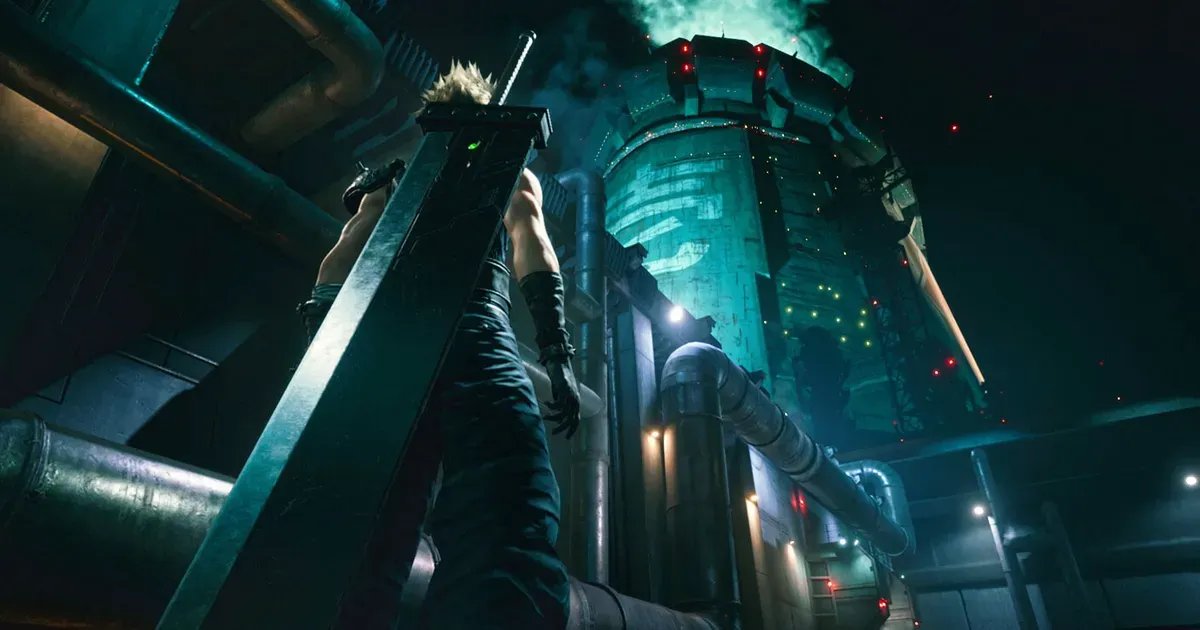
A corporation recklessly extracting energy from the Earth, sustaining a decaying metropolis; an out-of-control experiment, losing its mind due to an identity crisis; mythological creatures attacking humanity, a self-defense mechanism of the planet. The culmination: a giant meteor summoned on a collision course with Earth. Amidst all this chaos, stories emerge: about families victimized by circumstances, about adversity in the face of technological advancement and corporatism, about the good of the community over personal honor, and even stories about leaving a legacy. This entire film of micro-narratives is built around a single central element: death, loss, and what comes after.
This entire film of micro-narratives is built around a single central element: death, loss, and what comes after.
Final Fantasy is no stranger to death: in Final Fantasy 4 and 5, we experienced the loss of playable characters, while Final Fantasy 6 goes a bit further. The significant difference in 7 is how it turns death into the main concept of the game: it permeates every character in our party and the world at large. It becomes, if you will, the leitmotif.
This came from a place: it was a deliberate and profound change proposed by Hironobu Sakaguchi, the creator of the saga, vice president of Squaresoft, and producer of the game. During pre-production, specifically during the writing process of the story and the world, Sakaguchi's mother passed away; this reconfigured everything he believed the game should convey as a message and central theme: Final Fantasy 7 had to be, in Hironobu Sakaguchi's eyes, a game about "life."
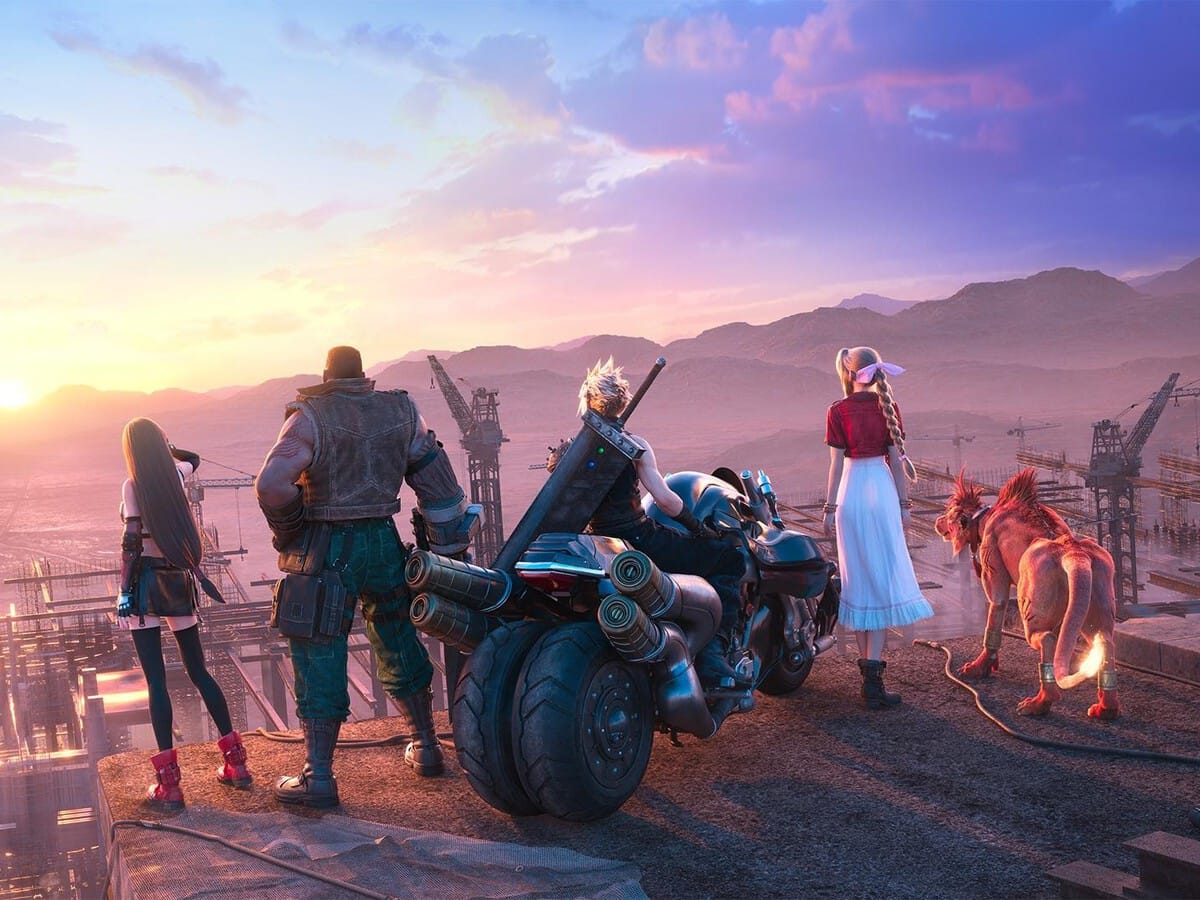
And "life" is undoubtedly the backdrop of the entire act of Final Fantasy 7, a game that is above all "hope-core": behind every catastrophe, there is hope. Even in the face of the imminent destruction of the world by a giant meteor, one can find scenes of a dream for tomorrow, of a "what will we do next?" and what can be built with what remains. There are countless examples that can be analyzed regarding this approach, so I will focus on what I consider the most crucial.
The classic conflict of postmodernism: the machine against man and his essence, his habitat, and his communion with nature. Perhaps the most direct message of FF7, a reflection of the unchecked advance of technology (and with it the rise of corporatism), very similar to the cyberpunk style, overshadowing customs, institutions, and human spaces. It’s not far from us: in Midgar, the enormous city ruled by Shinra, we see an isolated society, segregated by social class, with no access to green spaces and in some cases, even to natural light; conditions inconceivable for the development of human life, as Sabato would say.
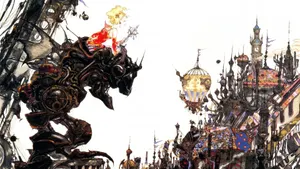
The entire first stage takes place in Midgar, so as players, we are immersed in monochrome, the condition of alienation, and the marginalization generated by Shinra. A design decision is present here: Midgar is “alive.” It’s a character, a colossus that breathes and reacts; so much so that we see it adapt later in the game. At the same time, we witness the small acts of life and survival of the inhabitants of the suburbs, the lower neighborhoods, and the corporate class. Small communities, some gathered around a bar or a giant screen, others trapped in the repetitive cycle of production; they all share the same train, the same pollution, and the same black mantle that colors the screen.
In parallel to corporatism, in a town called Cosmo Canyon, lives the oldest human in the world: Bugenhagen. The grandfather of one of our party members and a wise man, Bugenhagen is the one who first introduces the central concept of life and death in the world of Final Fantasy 7: the Life Stream and Mako, the blood and essence of the world; a virtuous, self-sustaining cycle, similar to the karmic or reincarnation cycles known in religious/spiritual beliefs. He is also the same character who normalizes the process of dying and thus “demystifies” it: how death is necessary for the world to nourish itself and continue the cycle, the entropy that channels death and removes its value of “meaninglessness.” In his explanation of the natural cycle, of the fate shared by all and everything, he proposes a reason. Something much greater than anxiety and corporate consumption.
Another perspective that Final Fantasy 7 addresses regarding life is, simulating Mary Shelley's Frankenstein, that of the construct endowed with life or survival. The following three characters serve three distinct forms.
First: Sephiroth, our antagonist. Tormented by a deep identity crisis, disoriented by the discovery of his origin, and driven mad by the knowledge of his blood. Sephiroth is the reflection of that intelligent construct, an artificially created being (a golem experiment of Shinra) with the vision of a super-soldier in mind. A fictitious life, a nonexistent origin story, a void within the cycle of life and death that is the mako. An existence without purpose that leads him to cling to the first identity hint he finds: his “Ancient” half and his JENOVA gene.
Second: Vincent Valentine, the optional character who became a poster boy. If I used Sephiroth as the example of Frankenstein, it’s fitting to compare Vincent to Dr. Jekyll and Mr. Hyde. Vincent represents survival, the human turned construct; someone who shouldn’t be alive, but undoubtedly is. A sort of lich, another product of corporate experiments that turned him into half human, half monster, with apparent immortality, without a past and without a present. Since we recruit him into our party and see his backstory, Vincent embarks on one of the hardest processes: finding meaning after death, whether it’s his own or that of a loved one.
Since we recruit him into our party and see his backstory, Vincent embarks on one of the hardest processes: finding meaning after death, whether it’s his own or that of a loved one.
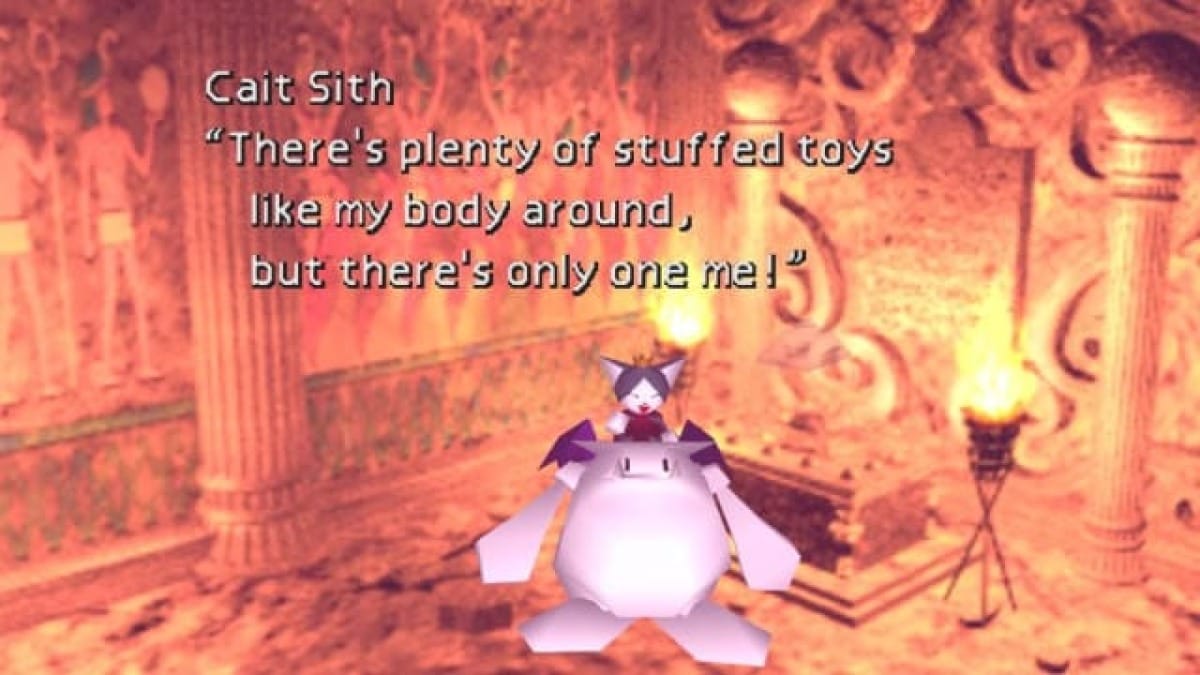
Third: Cait Sith, the toy. In the trilogy of the construct, Cait Sith represents a midpoint between the previous two: the inorganic body with borrowed consciousness, a puppet. It’s this charming robotic cat that serves as a connection between the corporate world and natural man, acting as a vessel for the redemption of someone who operated solely within the logic of the machine. It’s no coincidence that the alchemy between both stances comes in the form of a colorful cat riding a deformed moogle with significant deficiencies in skills and mechanics: it is, quite literally, the antithesis of optimization and monotony of the corpo.
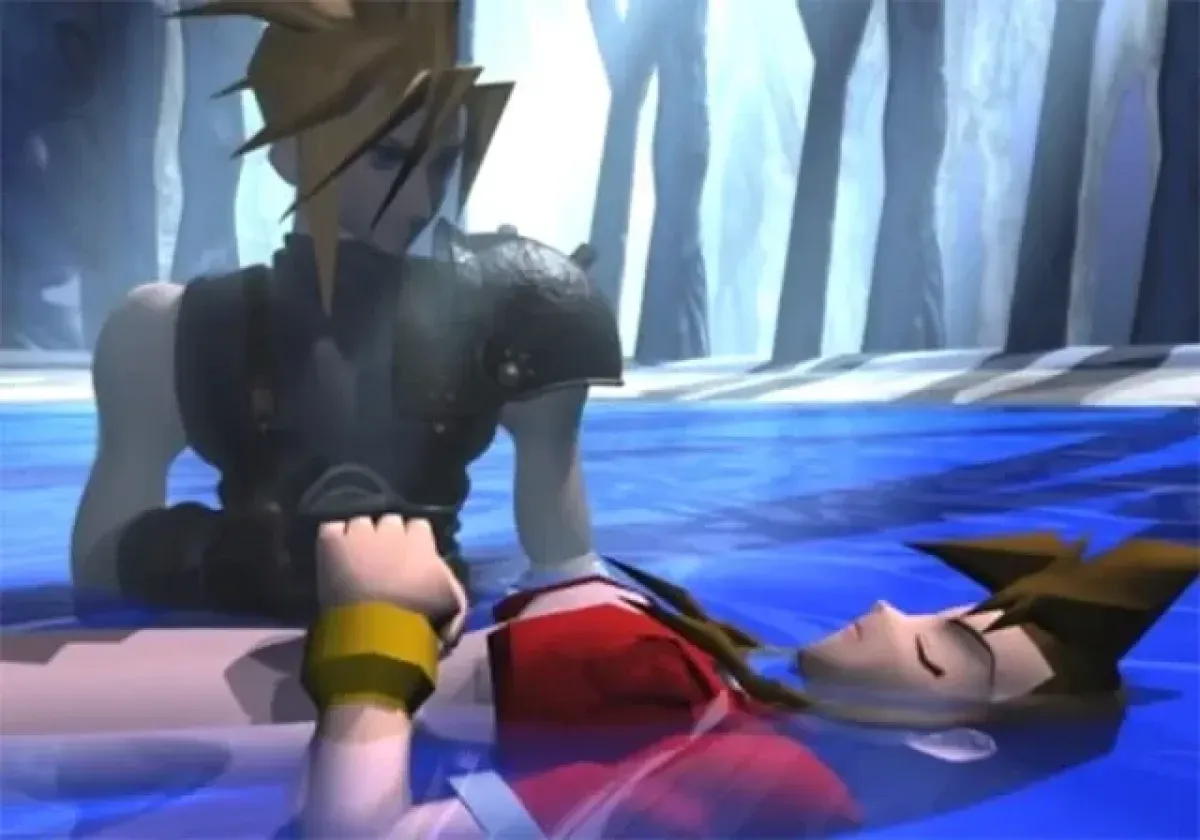
It’s impossible to analyze Final Fantasy 7 without mentioning Aerith. She is not only the direct point of contact with death (an unexpected, swift, silent death, in which there is no interaction, no intervention, and no shouting; perhaps the strongest climax I’ve experienced in a game) but also represents something that largely accompanies every aspect of life and death in our reality: faith. Aerith is the embodiment of that “hope-core,” not only because of her personality but also because of what the story does with her: from ghostly flash appearances when we enter certain places after her death to the use of her musical leitmotif in more than one theme within the game, Aerith remains present in the party even after her death. It’s not merely a dramatic device, like when Tellah ethereally appears in the final battle of FF4, but a continuous effort of the game. Aerith died but returned to the Stream, and now she is everywhere.
Final Fantasy 7 makes it clear: family is part of life. Not even The Sopranos has such a strong presence of the maternal figure as this game does, and for good reason: the figure of the mother is always, inseparably, linked to death beyond life. Ifalna, Aerith's mother, dies in her final effort to protect her. Elmyra, the adoptive mother whose maternal instinct arises from the death of her husband in battle. Jenova, the antagonist's 'primordial mother,' the false mother who, even in pieces, protects what she recognizes as 'her blood.' It seems the game proposes something: the act of giving life inevitably brings you closer to death. This is a clear reflection of the process Sakaguchi went through during development, the loss of his mother, that protective figure who paves the way for life.
The perfect synthesis of this idea of family within the game is found in Marlene, Barret's daughter, one of our party members. For the first time, a character in the saga has this level of connection with an NPC (we only get to know grandparents and grandchildren, like Relm and Strago or Galuf and Krile); the game repeatedly shows Marlene as the entire reason Barret does what he does. AVALANCHE exists, in a way, thanks to Marlene. Moreover, once Aerith is kidnapped by Shinra, Elmyra takes care of Marlene while the party continues their adventure. And to add to this, when we finally learn about Barret's background and his hometown, we find that Marlene is also a driving force for Dyne, that friend forgotten in the desert.
It’s no coincidence that the only daughter in the game is the greatest source of motivation for so many characters. Marlene represents new life, that future that must be preserved, someone worth keeping the light on for. Someone to leave a legacy to.
The last aspect I want to address, perhaps one that nicely encapsulates the previous ones, is the idea of legacy that Final Fantasy 7 directly tackles. The entire main conflict surrounding Cloud revolves around this: his memories are not his, his clothes are not his, his weapon (the icon of this game) isn’t either; his story is a blend of his own and someone else's. But far from being an identity theft, when we finally see the complete story and what happened to Zack, the game reveals that which transcends death and that so many other narratives have explored: Cloud is Zack's legacy, the passing of the torch; the continuation of a story that is not solely tied to the body, but to the idea. And beyond this example, I believe the best case of this is Red XIII and the legacy of his father, Seto. Another climax of the story, besides being a moment accompanied musically by the theme The Great Warrior (which shares a leitmotif with the theme of Cosmo Canyon), the game gives us a unique weapon for Red XIII: his father's headpiece. After this, Red XIII decides to join us for the rest of the adventure.
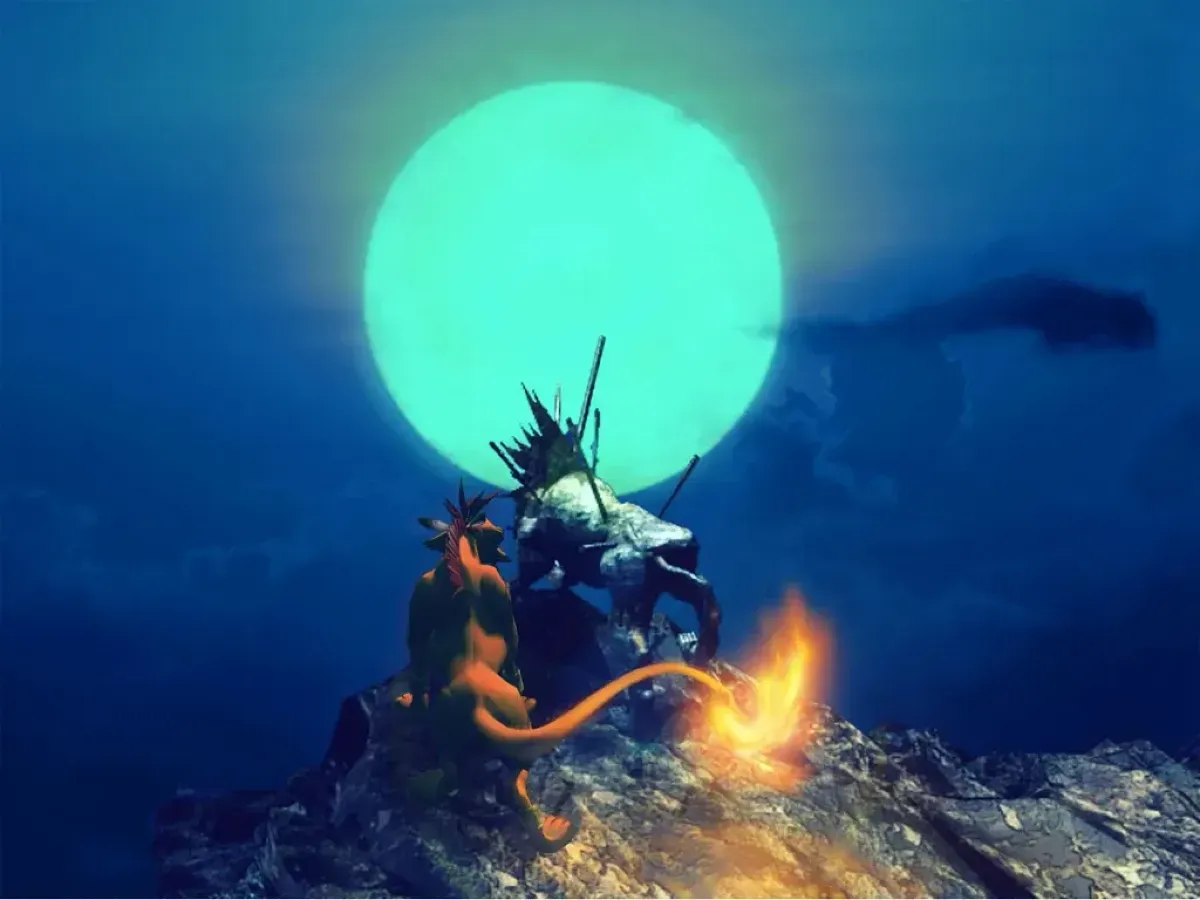
That object, that scene, that soundtrack, and that resolution from a character are not merely gameplay decisions: they are the game, and at the same time, they are its developers conveying a message. After receiving that legacy, that generational passing of the torch, Red XIII found the only thing that defies death: a reason, a quest.
After receiving that legacy, that generational passing of the torch, Red XIII found the only thing that defies death: a reason, a quest.
Final Fantasy 7 is, above all, a great game. It innovated in graphics, introduced new mechanical concepts to the world of JRPG , and solidified a cyber/steampunk aesthetic like few games had managed to achieve until then. But beyond that, it also tried to convey a message. A message of hope for all those who have lost someone, who have ever felt the deepest loneliness. A message that, at the age of 11, made me understand it not just as a game, but as a work of art, a piece of life, and moreover, a lesson.
I will never stop recommending playing the original game, experiencing it in its visual rawness and musical beauty, as it was originally conceived. If you enjoyed the remake, if you heard a theme that hooked you, or if this article piqued your curiosity, don’t hesitate to download it from our beautiful internet, buy it outright through Steam, or even burn it onto a pirate disc to play on your own PS1. That would be the best legacy.
Y a cada colaborador se le paga por su trabajo. Las dos cosas dependen de los suscriptores.