PUMM 2026: A Festival of Girls in Tech
1,500 girls shared their projects at PUMM 2026, an event aimed at promoting the inclusion of women in the tech world.

Lali appeared on the screens at the Complejo Art Media. It was a surprise message, projected in the hall and also on the stream: "I want to ask you if you've ever thought an idea of yours could totally crush it and change the world." When she finished speaking, the first reaction from one of the girls in the audience was another question: "Is that AI?"
The doubt says a lot about who was there. PUMM (Programando Un Mundo Mejor, or Programming a Better World) is the free festival organized by Chicas en Tecnología (CET) for teens and young people ages 13 to 23. And its audience doesn't look at technology from the outside. This year it brought together more than 1,500 girls, counting those who came to the venue and those who followed along on the stream from all over Latin America. Twenty-six schools attended with their student groups.
"I want to ask you if you've ever thought an idea of yours could totally crush it and change the world."
Noelia Vega, CET's director of Community and Communications, calls it the biggest tech festival for girls in Argentina. "What we're trying to do is bring technology closer to girls who still don't have any contact with it today, so they can see the STEM world (science, technology, engineering and math) as a possible future for themselves too," she explains. "We want to spark early STEM vocations."
Their own problems, their own solutions
The main event was the HackaPUMM, a development marathon that ran all day. Six teams worked on concrete problems: access to healthcare services, microplastics in cosmetics, the barriers people with disabilities face in accessing information, community connection with soup kitchens. "When we work on a problem with impact, we have to look at how that phenomenon plays out with the people involved, their realities and their environments," said Lucía Mauritzen, CET's executive director.

The winner was EduZOO, which starts from a stat: according to the organization, in 2025 six out of ten kids failed the PISA reading and writing tests. So five young women and their mentors developed a free platform, available online 24/7, that reinforces guided learning through game-based activities. "When a kid learns to read, a bridge gets built. What we want with EduZOO is for every kid to be able to cross that bridge and learn, letter by letter, how to build it," said Mía, one of the team members.
Meanwhile, the project fair gathered nine student groups with projects designed to transform their surroundings, and their creators walked visitors through them with enthusiasm. One came from Escuela Normal Superior N° 9 DE 1 "Domingo Faustino Sarmiento": an inclusive library. It's led by Emma, 16, who took Chicas en Tecnología courses during the pandemic. She bought her first electronics kit precisely because those courses encouraged her to keep going in tech.
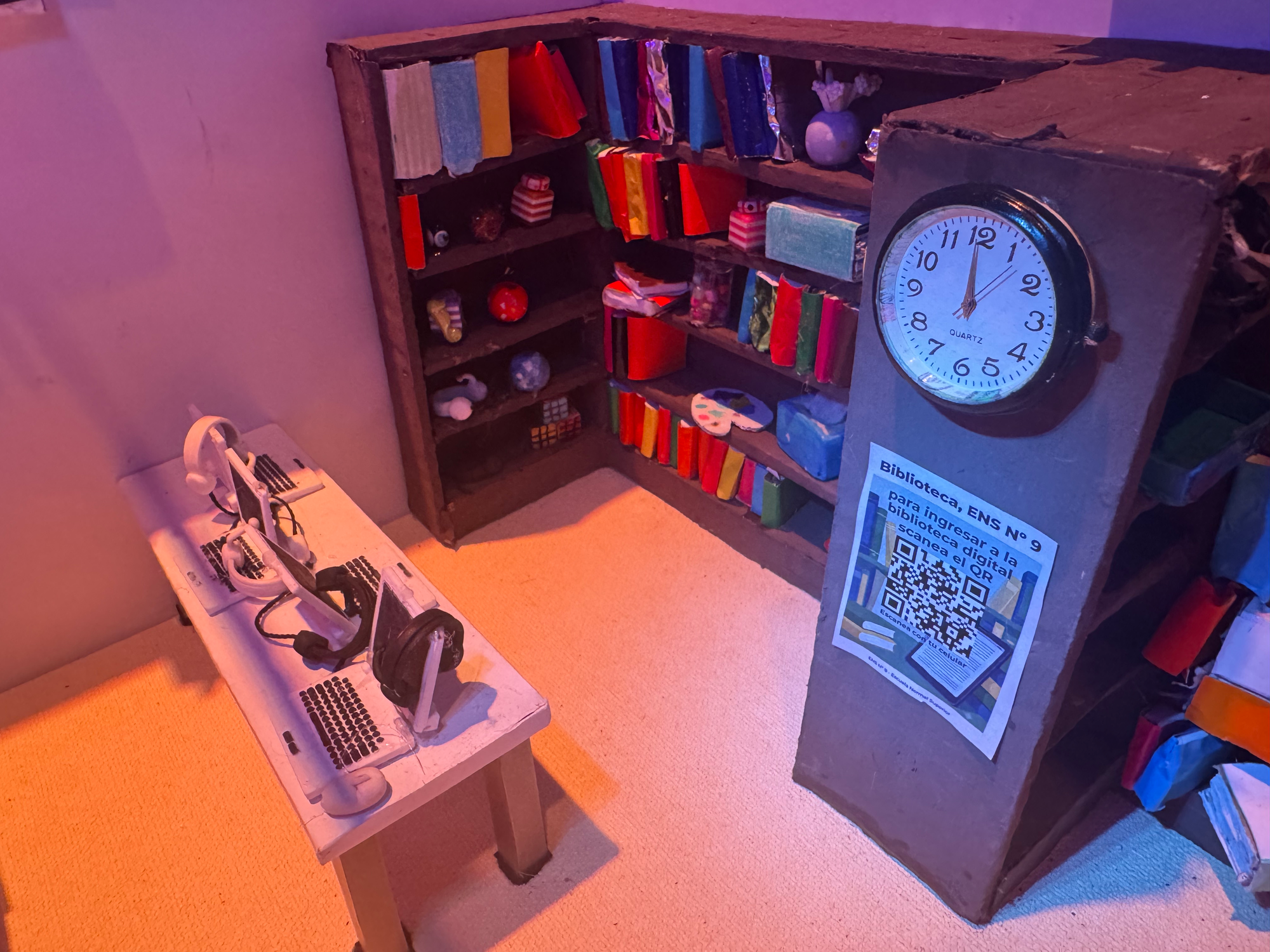
The starting point was something they noticed about their classmates: many of them work or take care of their siblings, and school takes a back seat. The library they designed has a calm space with special lighting and games specifically meant for managing stress, computers, noise-canceling headphones, round tables for wheelchair users, bins for sorting trash and a carbon monoxide detector. The bins sparked a debate: teachers told them there's no eating in the library, but the students know better. The project is run by the students themselves. "If it scales, I can help raise awareness," said Emma, before offering her diagnosis: "School spaces aren't ready for diversity."
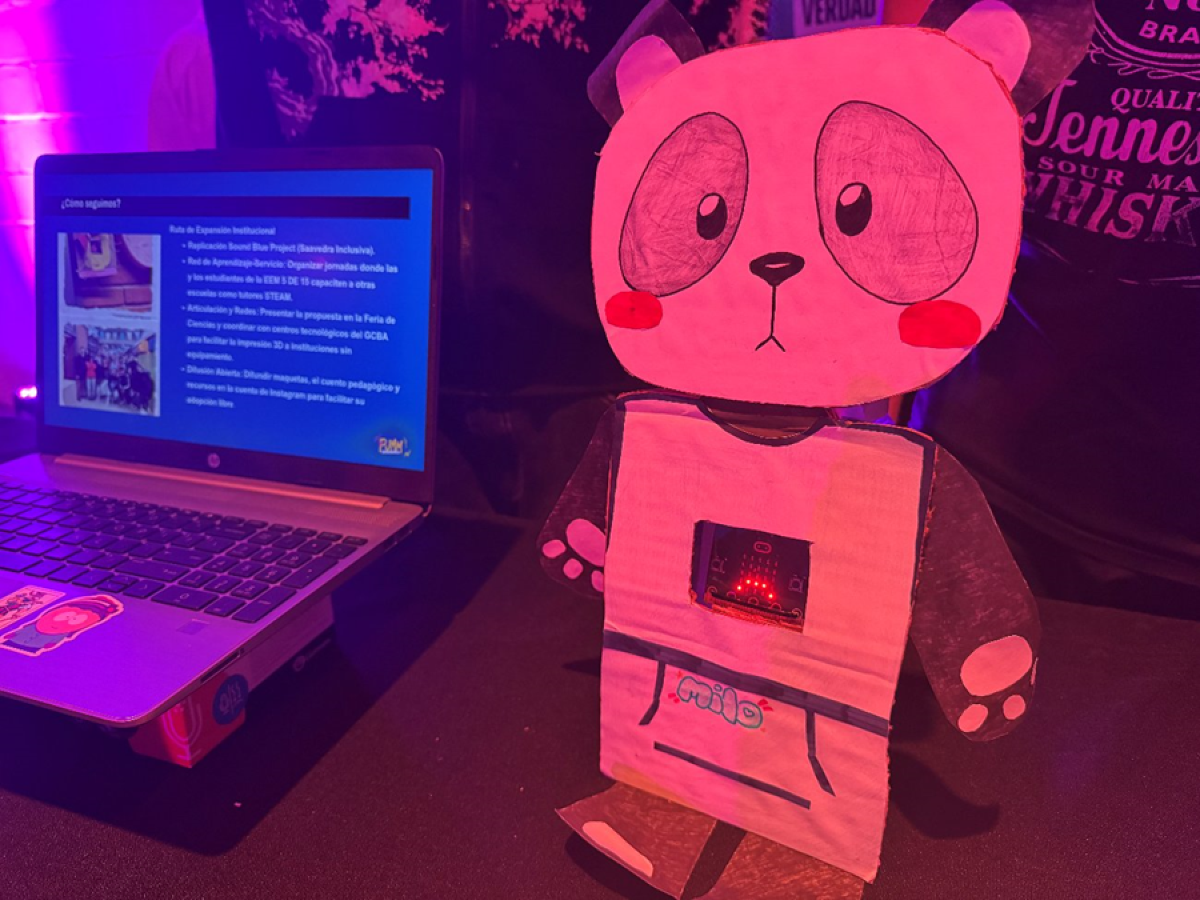
Another hallmark of this edition was the number of projects focused on childhood anxiety. One of them, from students at EEM N° 3 DE 15, is Milo, part of the Sound Blue Project. It's a doll designed for kindergarten that works like a traffic light: when the classroom gets too noisy, it turns red. Before introducing Milo to the kids, they're told a story, hand-illustrated by its creators. The group is already thinking about what's next: organizing workshops to train other schools as STEAM tutors.
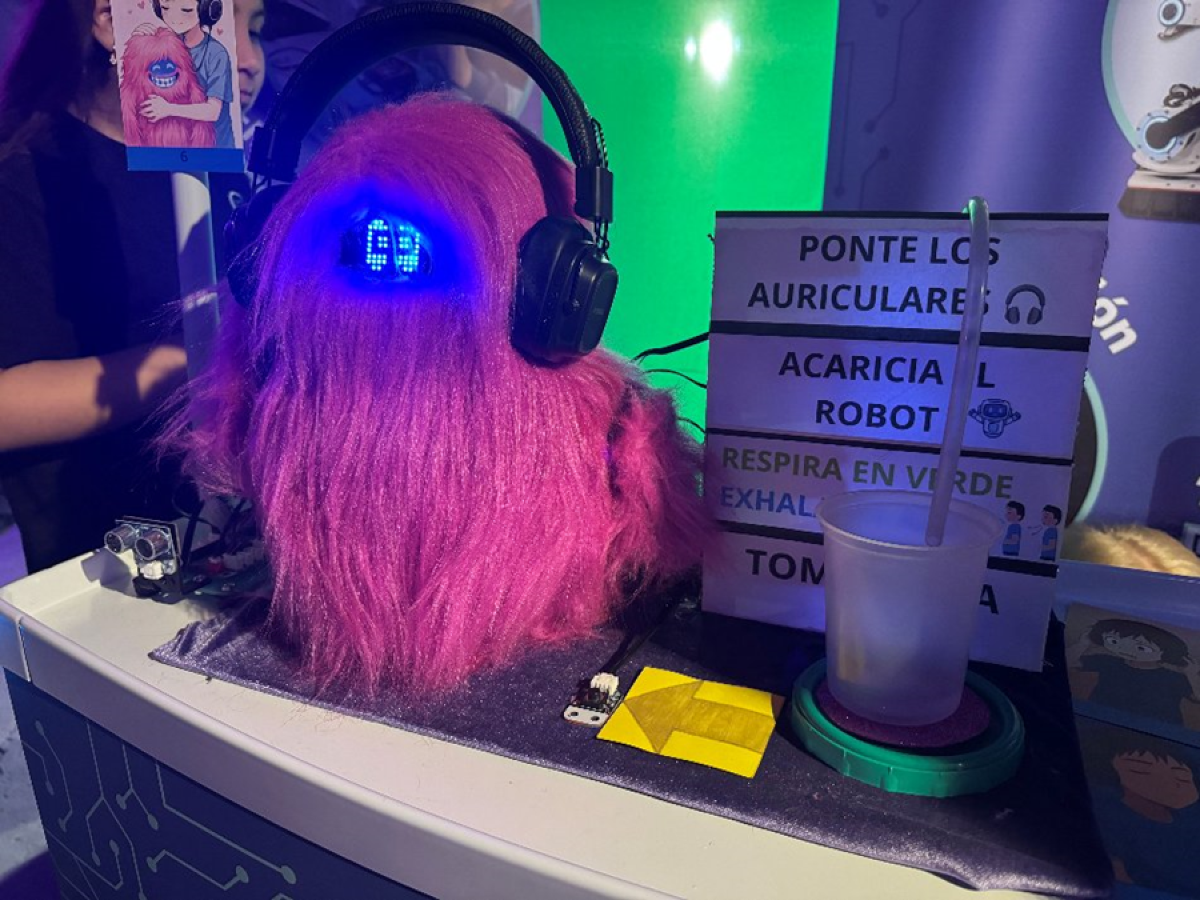
Another anxiety-related project, from a private training program (ChalinTech), is a plush robot that walks you step by step through calming down: put on the headphones, pet it, breathe in when it turns green, breathe out when it turns blue. At the end of the process, it even serves you a glass of water.
Dancing with sensors, programming a bot
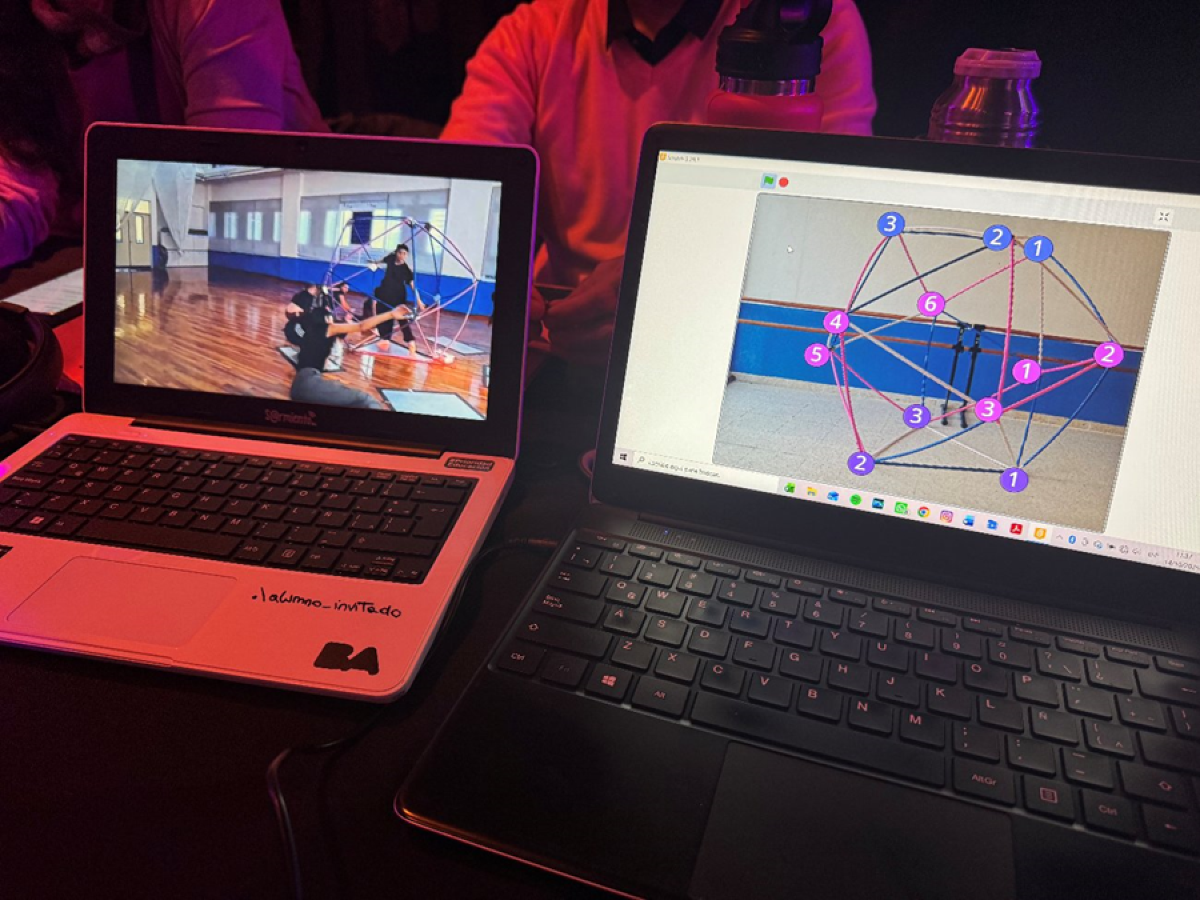
Mora studies at the ESEA Dance School N° 2 "Jorge Donn" in Villa Luro, where alongside the regular high school curriculum students train in folk and tango, or in classical and contemporary dance. She and her classmates are in classical and contemporary. Their high school track includes a Technology class: "we decided to do this tech project and combine it with dance," she says.
The result is an icosahedron, built with help from the art teacher, fitted with sensors the students installed together with their Technology teacher. This year they added lights. "It's something other classes had already been working on, and this year it was our turn, so we added the light and other stuff, and every year something new gets added," she explains. What they brought to the festival is a sample: at school they have a bigger icosahedron that tells a story using sounds of nature.
Catalina is in tenth grade at the Cortázar school and came with the Julio Bot, an assistant on the school's website that answers logistical questions. "The front office usually gets swamped because lots of families ask lots of things every day," she explains. "A lot of them the same thing," a classmate adds, laughing. The teachers started the project, and then the students joined in to expand and refine it. "So far it's working really well," Catalina says.
Another hallmark of this edition was the number of projects focused on childhood anxiety. One of them is Milo, a doll designed for kindergarten that works like a traffic light: when the classroom gets too noisy, it turns red.
Along the way they learned to work with "an artificial intelligence, but one that you're feeding the information into." And that opened up a discussion about how AI is used at school. Generally at school, the girls said, AI gets used for assignments, but it's not part of the curriculum; it's just something students do in practice. "It's great that we get to learn it, because that way we start handling something that's actually happening, and happening kind of under the table, and it's way better for it to be out in the open and for us to know how to use it well."
From a school to a warehouse
Chicas en Tecnología is turning eleven. It was founded in 2015 by four women who came from different fields and who, according to Noelia Vega, weren't tech specialists. Its mission ever since has been to close the gender gap in the industry. The first program was called Programando un Mundo Mejor (what would later become PUMM): "Today it's turned into a festival, but 11 years ago it was a hackathon at a school," Vega recalls. That first edition was designed for 30 or 40 girls.
 Soldan
The underlying idea is that technology doesn't belong only to technical profiles. "We're all mediated by technology, we use it constantly, and we promote a conscious and also critical use of it," she says. As an example, Vega mentions a 20-year-old who created a career aptitude test that uses an AI algorithm to show where you can study each degree, paid or free, in short courses or full programs. "Maybe she built it in four weeks and polished it in six hours," she says.
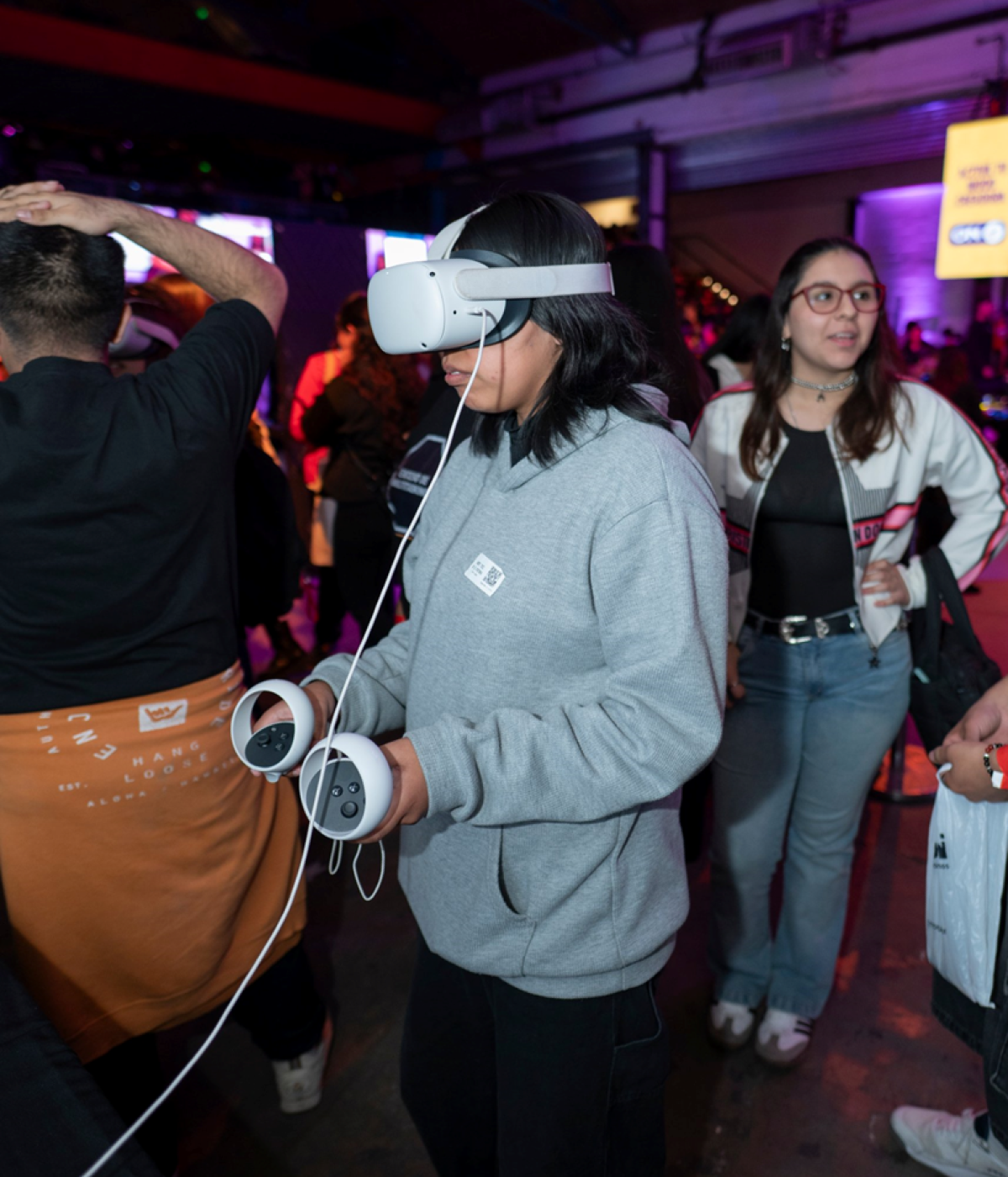
This edition's motto was to switch on "creator mode": doing, not just watching. There were creation labs, talks by girls for girls, and workshops where specialists shared ideas for spotting a problem, building a tool and launching it. Some wrote their first line of code and some ended the day with a robot they'd built with their own hands. The immersive experiences added more than 15 challenges from organizations, universities and companies, and a few robots roamed the venue greeting participants.
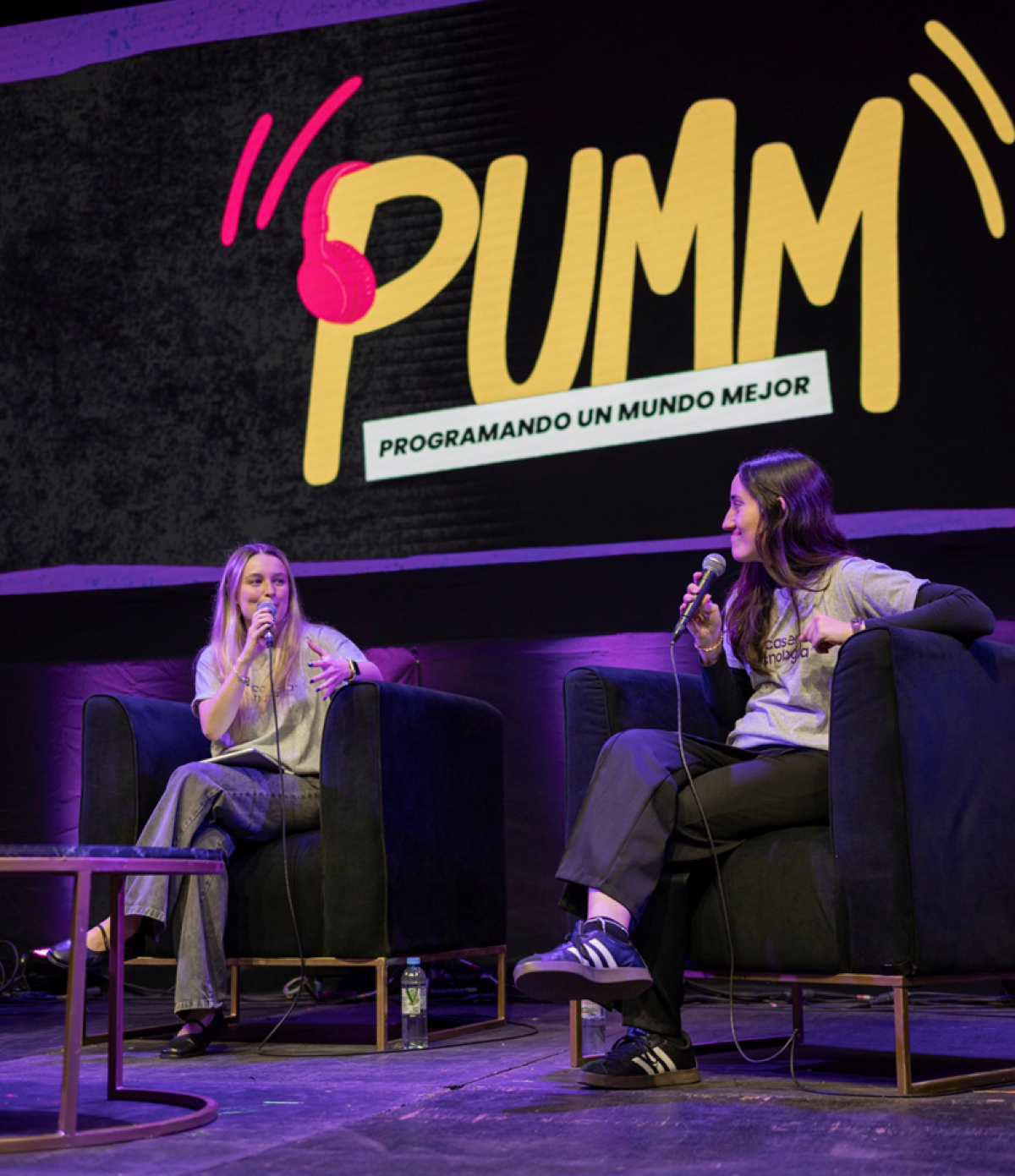
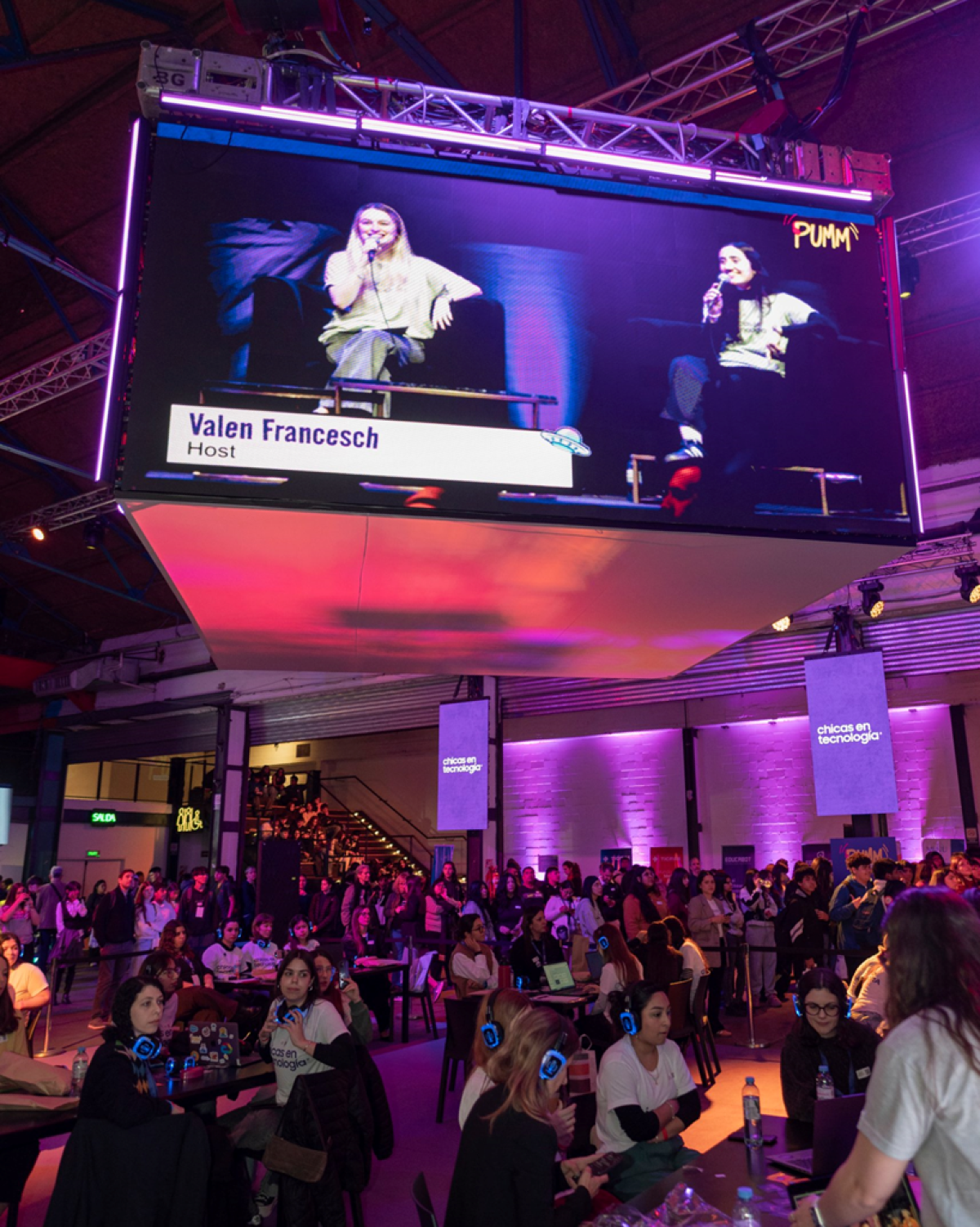
Among the event's hosts were two computer engineering students. "PUMM can be a great starting point for a lot of girls, who maybe discovered something that's going to interest them for the rest of their lives. I would have loved to have something like this when I was starting out, to get my questions answered and walk away with a concrete project," said Valen Werle, a streamer and advanced student in the program. "It's super inspiring to see girls getting involved in things they think are wrong and looking for technology to fix them," added Valentina Francesch, also a member of the CET Community.
Two out of ten
The festival targets the 13-to-23 age range because that's when career paths tend to take shape. And the gap it aims to close has numbers behind it. The Paridad en Código survey, which CET conducted across 50 tech companies in Argentina, shows that women make up 36% of their workforce, concentrated in areas like administration, human resources, design and project management. Their presence shrinks in development and data roles, and even more in technical leadership: only 20% of people in leadership roles are women.
The study points out other contrasts. 76% of women workers have a university or postgraduate degree, compared to 54% of men. And nine out of ten companies believe there's no gender pay gap in their organization, while outside estimates put the gap between 17% and 20%.
Their presence shrinks in development and data roles, and even more in technical leadership: only 20% of people in leadership roles are women.
"Our big challenge is leadership in tech," says Vega. For her, what's at stake isn't just jobs but what kind of technology gets made. She points out that for a long time voice assistants were female, and that with the arrival of AI, male voices started to be heard. And she suggests a test: ask an AI to show a person leading and a person raising kids. "It'll most likely show a man in one and a woman in the other. That's no coincidence, it's because of the structural biases we've been dragging along historically."
Learning to ask follow-up questions
The "is that AI?" heard after Lali's video is no minor anecdote. It's exactly the kind of question CET wants to train. The organization doesn't advocate embracing technology uncritically, but it doesn't reject it either, and right now the focus is on artificial intelligence: its use in the classroom, but also what happens outside, where uses pop up that adults thought were impossible and that, according to Vega, "suddenly happen and turn into crimes." That's why they work with teachers, families and their own community to provide tools for dealing with those scenarios. At the festival, a poster from Amnesty International invited participants to write down what's needed for a safer internet.
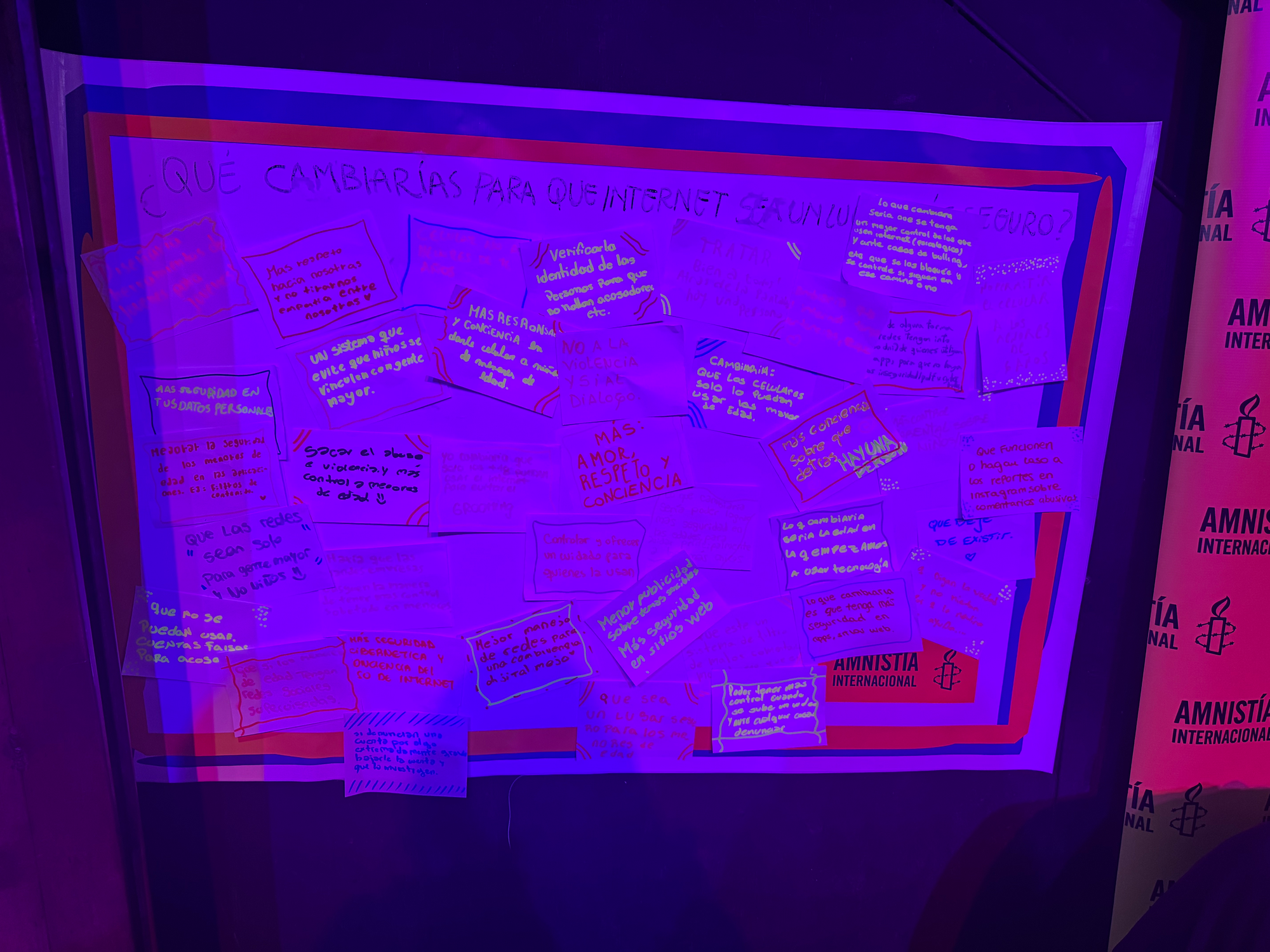
The relationship with technology has also changed shape. At the venue there was a robot pet and a humanoid robot, and Vega sees them as a symptom: "Suddenly it's a dog that's a robot pet, that we take care of, move around, take for walks." If her childhood had the Tamagotchi, she says, today these objects are part of girls' play and social lives. Adults' job is to walk alongside them, be careful about what they say, and also learn from them, "because they've got a lot more going on inside than we do."
Still, for Vega, adolescence changes less than it seems: "What I went through at 14 is what they're going through." What changes is where they look for answers. "They ask artificial intelligence everything. Okay, so how do we make sure the question is a critical one, that we can also read the answer with a critical eye, and learn to ask follow-up questions?" At a moment when AI keeps gaining ground, she says, the bet is that human intelligence "can also claim its spot on the field."
What's next
PUMM is the most visible face of work that goes on all year round. CET runs training programs in artificial intelligence, cybersecurity, robotics, data and AI-assisted programming; workshops that girls from the CET community lead in schools; and a virtual artificial intelligence camp that brings together participants from all over Latin America. It also does research and organizes meetups so that more role models emerge and more participants join the collective, because, as Vega puts it, "there's no reason they have to walk this path alone." As for working with companies, the goal is for them to develop policies so that women can work in tech in spaces where they feel comfortable: "That our ideas get heard, that what we build gets implemented."
Coming up next is peer mentoring, where girls between 14 and 23 will be able to support each other with their projects and their questions about what to study or what to do next year. There's also a new edition of the artificial intelligence camp and "a leadership program that's the bomb," says Vega, open to anyone who wants to lead communities. But beyond the specific programs, "Chicas en Tecnología is a place to explore."
The festival was organized together with Fundación Cimientos and Enseñá por Argentina, as part of the project "Strengthening the STEM Pathways of Young Women in Argentina," co-funded by the European Union. Schools, universities, social organizations and companies took part as allies. But what was on display at Art Media was something else: a library designed for kids who work and look after their younger siblings, a plush robot that teaches you how to breathe and calm your anxiety, a bot that makes a school's paperwork easier. And the good news is that the region's next tech creators are already working on new ideas
Las notas de 421 no tienen paywall
Y a cada colaborador se le paga por su trabajo. Las dos cosas dependen de los suscriptores.