Neurodevices: Reducing Subjectivity to Electrochemistry
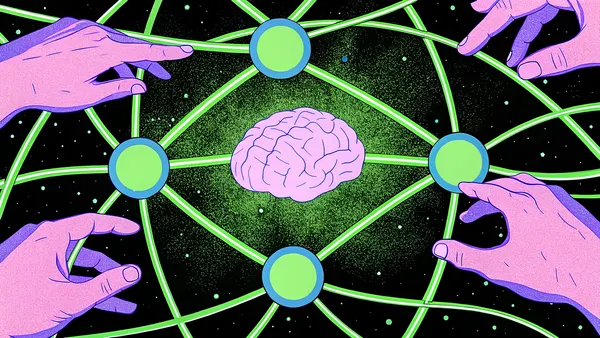
Today's neurodevices promise to optimize the mind. The risk: reducing human subjectivity to an electrochemical flow.

Neurodevices that can read the electrical (and blood) flows of the brain in real time already exist. They're currently being tested for use in diagnosing and treating mental illness, as well as for optimizing cognitive processes.
There are even mental health treatments on the way that will consist of intervening in the brain's electrochemical flow through electrical modulation. Can the psyche be equated with an electrochemical brain pattern?
The Motif Neurotech case
In April of this year, the U.S. Food and Drug Administration (FDA) gave the green light to Motif Neurotech to clinically test its chip on a group of patients with depression resistant to psychiatric medication. The implant is inserted through a roughly twenty-minute surgery into the inner side of the skull, above the prefrontal cortex. The device is meant to send electrical impulses to this area of the brain, which, according to the clinical evidence the company cites, is underactive in people with severe depression. The study is called RESONATE and will follow, for twelve months, patients who have already tried two or more drug treatments without results.
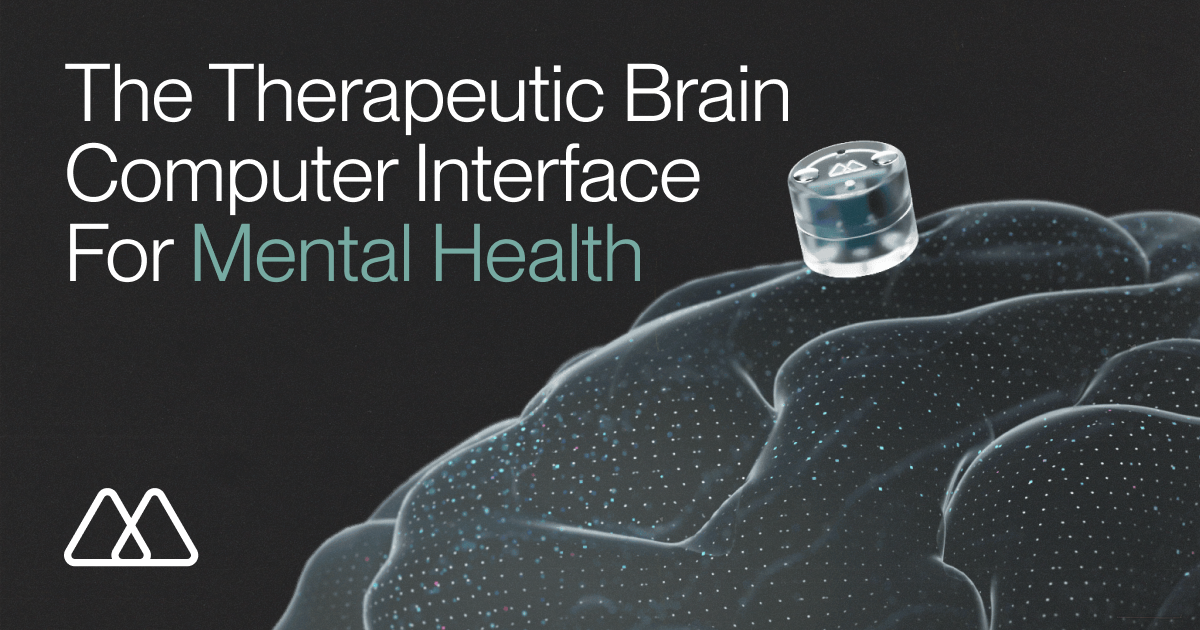
The FDA's approval of this company is no coincidence. Motif is one of the companies selected by ARPA-H (the U.S. Advanced Research Projects Agency for Health) for its EVIDENT initiative, a program backed by Trump that allocates some 139 million dollars to research on treating mental illness. As ARPA-H's director put it, the idea is to stop treating mental health in a “subjective,” unmeasurable way, and make room for individualized treatments based on data from bio-cognitive measurements.
The idea is to stop treating mental health in a “subjective,” unmeasurable way, and make room for individualized treatments based on data from bio-cognitive measurements.
It sounds incredible in more ways than one. The possibility of treating a psychological condition by modulating the brain's electrochemical flow seems like fiction. Then again, it's well known that science fiction is supplying much of the imagination driving lab research today.
As a side note, ARPA-H is one of the heirs of the historic ARPA, the U.S. Military Defense agency that created ARPANET in 1969: the first remote computer network, which gave birth to the Internet. With that track record, it looks like they mean business.
But before digging into this (and other) neurotechnologies, and their particular way of conceiving the psyche, let's rewind a bit.
On the psyche as an electrical circuit
In 1780, an Italian physician and scientist named Luigi Galvani was experimenting with stimulating frogs' nerves and muscles using electrostatic machines. In one of his experiments he noticed that the frogs' muscles contracted when touched with a scalpel, even though the body wasn't connected to his electrical equipment. That's how he discovered there was electricity in living beings; bioelectricity was the milestone that founded modern neurophysiology.
A couple of years later, in 1924, German neurologist Hans Berger made the first recording of the brain's rhythmic oscillations in a 17-year-old patient, as part of his studies on the correlation between brain activity and psychological phenomena. In his eccentric quest to find the scientific basis of telepathy (yes, that deserves its own chapter), he discovered the electroencephalogram (EEG), which made him world-famous, by recording the electrical activity of the human brain for the first time.
Many other precedents can be added to these, like the work of American neuroscientist Eberhard Fetz, who, through his experiments on monkeys, claimed that neuronal activity could be modulated through different kinds of conditioning. That opened the door to thinking about the voluntary manipulation of neuronal activity patterns.
So:
If there's electricity in living things,
if there's electricity in the brain linked to psychological phenomena,
and if it's possible to modulate neuronal activity (through conditioning or direct electrical stimulation);
Then, can modifying the brain's electrochemical activity be a mental health treatment?
Well, the idea is nothing new. We can go back at least 100 years, when, in the absence of antipsychotics (which were invented in the fifties), giving electroshocks to patients with schizophrenia or depression was pretty common (low amperage and around 100V).
Although the practice declined because of how grotesque the procedure was (if you don't believe me, watch Jack Nicholson in One Flew Over the Cuckoo's Nest), it's still used on drug-resistant patients under the name electroconvulsive therapy. With less spectacle, and performed under anesthesia in an operating room.
Several years later, the idea of electrical intervention as a way of treating the psyche is making a comeback thanks to neurodevices, expanding to a much wider range of contemporary conditions.
About neurodevices
Broadly speaking, neurodevices fall into two types: invasive and non-invasive. The difference is that the former require surgery. Let's take two of the most high-profile companies of each type to analyze them and see which players are behind these technologies.
On one hand we have Neuralink, probably the best-known name in the world of neurodevices, mainly because of its CEO and founder, Elon Musk. On the other we have Kernel, with an equally famous and controversial CEO: the immortality coach, Brian Johnson.
Neuralink develops neural implants that are placed through intracranial surgery, with a robot that uses a fine needle to insert 64 threads (carrying 1,024 electrodes) into the cortex. That's why it's considered the most invasive device of all. This connection creates a brain-computer interface (BCI), and one of its main current functions is letting users control digital devices remotely in a quasi-telepathic way, which is where the implant got its name: Telepathy (talk about Hans Berger's intuition, huh?).
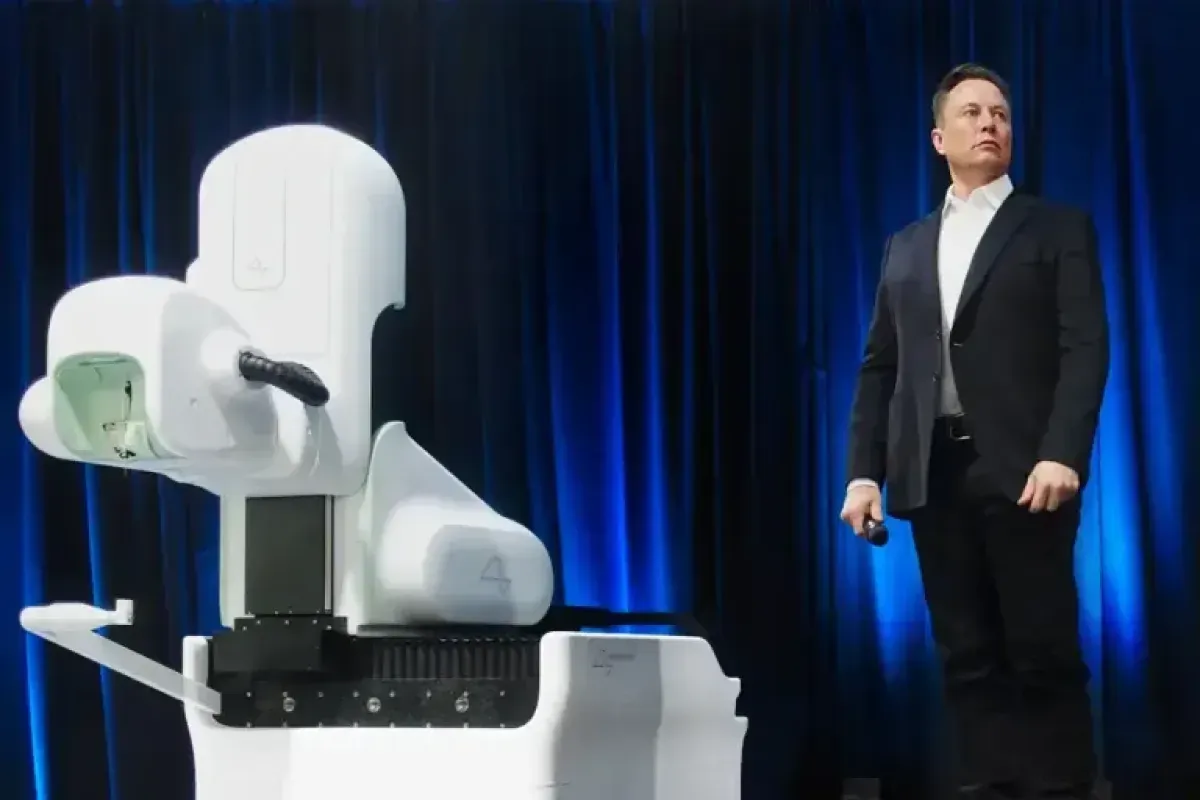
In January 2024, the first volunteer underwent surgery: Noland Arbaugh, who became quadriplegic in 2016 while swimming in a lake. As of now, around 25 people have been implanted. Neuralink's implant works with intracortical microelectrodes placed directly on brain tissue, capable of recording neuronal activity at the cellular level in high resolution. This allows a much closer look (100 microns) at individual neurons or groups of neurons and their exchanges, enabling both signal decoding and electrical stimulation of their action potential. So, by inferring the overall functioning of the psyche from the readings of the many electrodes placed in the cortex, it would be possible to read and intervene at the synaptic scale.
DJ Seo, one of Neuralink's co-founders, argued (in an 8-hour podcast devoted to the company) that it's possible to “write” to the brain using ultrasound, which could translate into advances in multiple fields, mental health among them: Neuralink goes even further than Motif Neurotech, claiming that these technologies could treat not only depression but also obsessive-compulsive disorder, anxiety and other psych conditions.
Even slowness, lethargy, would be among the illnesses to treat. That's what both Musk and Seo said on the Neuralink podcast, arguing that the pace of human-device communication needs to speed up. They say the implant would make it possible to skip the motor circuit, which runs from the brain to the muscles and then to action. The motor sequence would then be brain-device, bypassing the musculature, with almost instant access to anything connected to the Internet of Things. All managed by thought.
In the other corner we have Kernel. Bryan Johnson's company has 2 flagship neurodevices: Kernel Flux, a portable magnetoencephalography (MEG) helmet that uses high-sensitivity sensors (OPMs) capable of detecting changes in the magnetic fields of brain activity in real time, and Kernel Flow, which has been studied for its ability to emit photons via infrared light, allowing blood flow to be measured in order to determine the relative concentration of hemoglobin in the brain.
The company argues that by analyzing the brain's electrochemical activity patterns, it would be possible to determine how each pathology should be treated. For example, they used the Flux helmet to investigate biomarkers of depression and calculated which treatment would be optimal by tracking nothing but the brain's bioelectrical variations.
Both companies share a measurable conception of illness and treatment in mental health, differing in that Neuralink bets on direct intervention in the brain, while Kernel leans toward constant measurement and monitoring. If these companies have become so visible, it's because of their CEOs, the technofeudal showmen Elon Musk and Bryan Johnson. They share a vision of the human being as a system that must be optimized through interventions in both the psyche and the body itself.
They share a vision of the human being as a system that must be optimized through interventions in both the psyche and the body itself
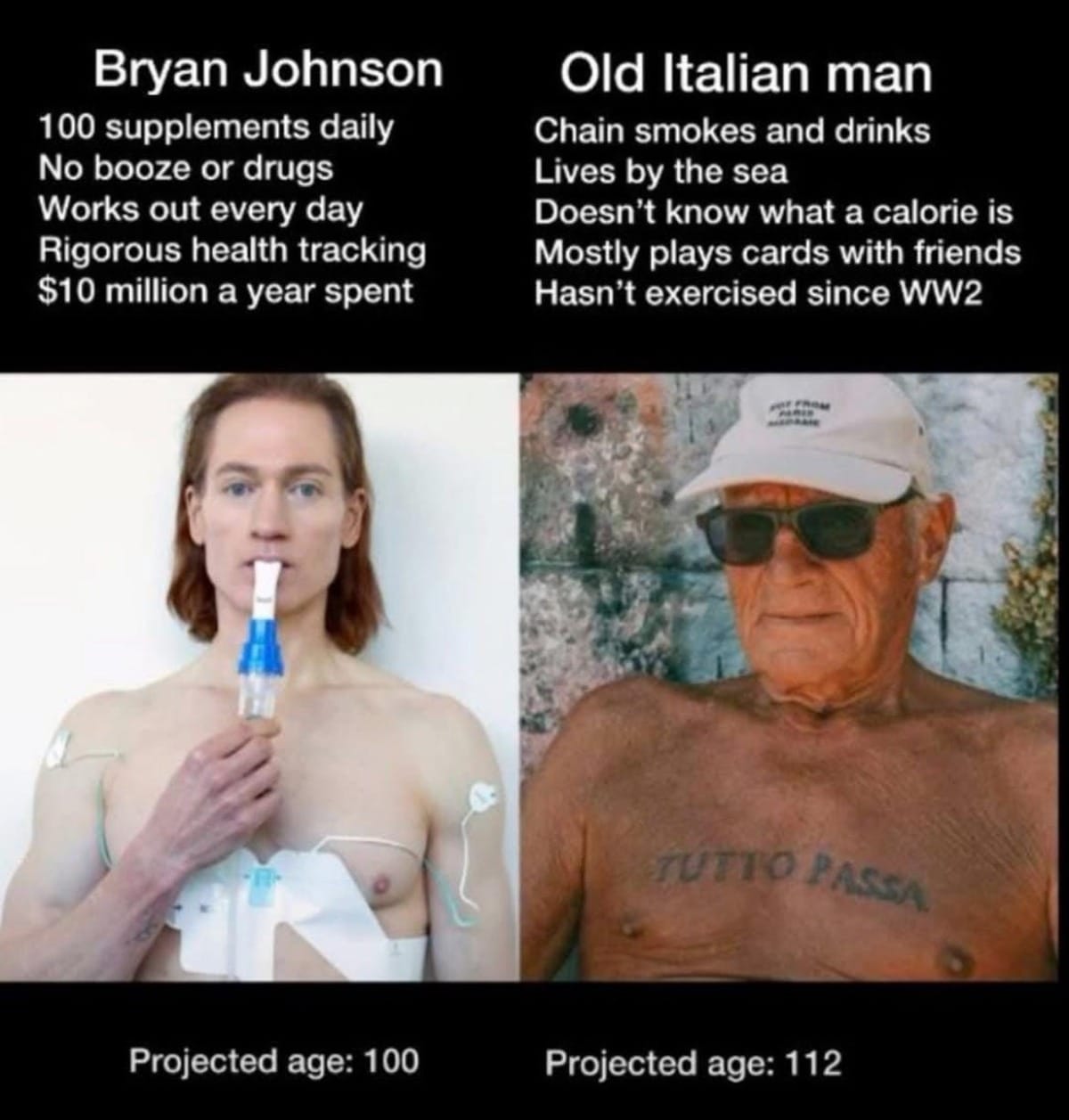
Bryan Johnson, in particular, takes this self-parametrization/optimization to the extreme: in his quest not to die (Don’t die is the movement he founded), he undergoes countless tests and interventions, ranging from regular plasma transfusions with his son to counting his nighttime erections. He also measures his neurocognitive parameters with the Flux and Flow helmets to know what he should be doing at every moment: the best time to eat, to sleep, to study, etc.
Besides Motif Neurotech, Neuralink and Kernel, there are more neurotechnologies operating along the same lines. I'll describe just two more that are relevant here.
Emotiv
Unlike the other companies, Emotiv already sells several of its devices to the general public. Its cheapest model is a pair of two-channel electroencephalogram (EEG) earbuds that can read brainwaves. The goal of these earbuds is to process all the data spit out by the EEG sensors and have the company's own AI (which comes in the device's starter pack) give you tips to boost creativity, ease anxiety, improve memory, manage focus, stress, etc. The idea is to be able to (self-)control the mind to optimize cognition and even treat those imbalances that cause suffering.
Synchron
Its Stentrode device is invasive, but less so than Musk's. It's inserted through the patient's vascular system and lets them control digital devices with their thoughts, much like Telepathy. One not-so-minor detail: the company, in collaboration with Nvidia and Apple (again, this is serious business), is developing what it calls cognitive AI: a new generation of artificial intelligence trained directly on the neural activity of every user of the device, in order to build an average model of the brain and refine future responses. Right now the implant is aimed at patients with quadriplegia or amyotrophic lateral sclerosis, so they can control the devices in and around their homes with their minds. On top of that, cognitive AI promises to detect neural patterns linked to psychiatric illnesses and apply micro electrical stimulations to balance the brain, since its electrodes are bidirectional (they don't just read neural flows, they can also work like a tiny brain pacemaker).
Nobody can read the menu, but there's sauce on everything
From the US government via ARPA (the Chinese too, but getting into that would take another 3,000 words or so) to the big technofeudal lords like Musk and Johnson, everyone acknowledges that the potential for progress in this field is still completely unknown.
The promises they make sound incredible and give hope to anyone suffering from severe depression or serious neurodegenerative diseases (no point denying it). Operating devices with your mind is life-changing for someone with quadriplegia. Even for people (and especially the families of people) living with depression that doesn't respond to psychiatric medication, these treatments look like a hopeful way out. But even acknowledging all that, we need to stay very alert to the paradigm of the psyche underpinning these technologies and the players building them.
The notion of mental illness as a particular electrochemical flow in the brain fits right in with the times: suffering is purely individual, context-free, and located in a specific area of the brain. Mental suffering also lines up with the cognitivist metaphor: the brain is the computer that processes everything, and if an individual has a mental health problem, it's fundamentally because of a glitch in their system.
Anxiety, depression, obsessive-compulsive disorder: these are some of the pathologies conceptualized as alterations in the brain's electrochemical flow. So modulating those flows, whether through behavioral conditioning or even electrical interventions, will become a form of psych treatment.
And these neuro-gadgets won't just be used to treat conditions diagnosed with a first and last name; they can also be used to optimize the psyche. That's the direction taken by, for example, the aforementioned Emotiv, which offers the tempting possibility of modulating your mental states in real time. It wouldn't only be mental pathology that could be treated with neurodevices: in the achievement society that the Korean philosopher Han was already talking about, the need for optimization cuts across everyone.
It wouldn't only be mental pathology that could be treated with neurodevices: in the achievement society, the need for optimization cuts across everyone.
In today's wellness landscape, any bookstore has, on its main displays, different versions of the same book preaching "how to optimize your brain." On any social network, at some point, someone is going to tell you what to eat, or what exercises to do, or what supplement to take, or how not to feel anxious, or how to manage your anger, etc., etc., etc. Instagram turned into a shop window of tips: tell me what I have to do for "x" thing. Isn't that also what any chatbot offers us when we ask it about mental health? Claude, ChatGPT: they treat us nicely, they're accommodating. And they give us the coveted tips on what to do or how to optimize work, time, stress, even how to speed up grieving. Tips encourage everyone to manage themselves. Hence the coaching craze and the hunger for advice on getting healthier. As Boris Groys argues in Philosophy of Care, we keep trying to be healthier and we keep getting sicker. At this rate, no amount of tips is gonna cut it, man.
In this brain-centric boom in mental health, there'd be no need to dig deep anymore, the way psychoanalysis might propose, because the machine already knows (calculates) what's best for you. Why bother going deeper? Why make (myself) through an endless narrative, reflecting; why dig into the psyche.
The Freudian unconscious, made of phantasms and desires, seems to get remixed under these technologies into what Byung-Chul Han called the digital unconscious: the direction of treatment would be determined by all the biodata about themselves that the subject is unaware of (and that the sensors spit out). The instructions will be a series of didactic guidelines for the patient to follow. Some good tips. Or, as we've seen, a nice little electrical microstimulation.
Today's ways of treating the psyche lean more and more toward optimizing performance and tuning cognitive parameters to standards deemed ideal. It's in tune with what Deleuze was already laying out in Postscript on the Societies of Control, except now it reaches all the way down to neuro-electrical flow.
So, is the psyche just the brain's electrical circuitry?
The tendency to turn the living system into a tokenization of individual parameters to be managed leaves out all the other variables that make up subjectivity. Data claims to cancel out narrative, as if it weren't just one more narrative.
Even if these technologies may offer to relieve, prevent or cure diseases that have so far been irreversible (for now, more promises than anything else), we need to practice a kind of cognitive sovereignty so that we can think, from the south of the continent, ways of conceiving the psyche that don't fall into the reductionisms imposed from the north by the technofeudal lords and by the US government itself.
Argentina is a place that has historically resisted the idea that we're nothing but a brain, that the subject can be quantified as a set of electrochemical variables. The evidence for that is, among other things, our record-breaking number of psychoanalysts. Not because psychoanalysis is the ideal model compared to others, but because, at its origins, the movement Freud founded started out as a critique of the positivist reductionism of its time. The discourse of the person seeking help holds, in its nerves, far more information about their own future than any tip we could give them. But this goes beyond psychoanalysis.
The discourse of the person seeking help holds, in its nerves, far more information about their own future than any tip we could give them.
We also need to bring to light all the things that make up subjectivity and aren't located in the brain as an organ. Even in biological terms, the brain doesn't work on its own, nor can it be taken in isolation to account for mental health: a good share of our neurotransmitters are produced in the gut. The endocrine system regulates stress and mood through pathways that bypass the cortex. Thought, as the Argentine Benasayag and other post-cognitivists argue, is embodied. It doesn't reside exclusively in the brain; the whole body is involved in the emergence of the psyche.
And at the same time, this body is situated in an ecosystem, of which human beings are just one more integral part. Just as the singularity of each subject's history can't be ignored, neither can the social, economic, nutritional and environmental conditions that shape mental health be swept out of sight.
Resistance to technological brain-centrism will also come from the possibility of developing a field of our own, of breaking out of the Northern monotechnologism driven by Silicon Valley. Producing a local cosmotechnics, in the sense the Chinese philosopher Yuk Hui worked with, by promoting technologies that take into account the territory where they're deployed, and the fact that this territory isn't just a setting but something that shapes subjectivity.
The foundations for that local cosmotechnics are already written into the National Law: we mustn't forget that mental health is a "process determined by historical, socioeconomic, cultural, biological and psychological components."
Here's to health.
Las notas de 421 no tienen paywall
Y a cada colaborador se le paga por su trabajo. Las dos cosas dependen de los suscriptores.