Tenebris Somnia: The New Argentine Horror Hit
Pixel art and a tribute to B-movie horror. The excellent video game from Saibot Studios and film director Andrés Borghi.

A sighted person can see objects thanks, in part, to light. The waves generated by that light bounce, more or less diffusely and in every possible direction, off every object they reach, and our eyes pick up some of those waves.
Mirrors involve a different phenomenon, called specular reflection: light bounces back in an orderly way at the same angle it came in, and the brain interprets it as coming from the mirror, creating a virtual image of our reflection. But the physical reflection is one thing, and how the mind processes that information is another. Perception is subjective; that's why, for example, I can hyperfixate on that new zit on my forehead. Or see myself as overweight when I'm really not.
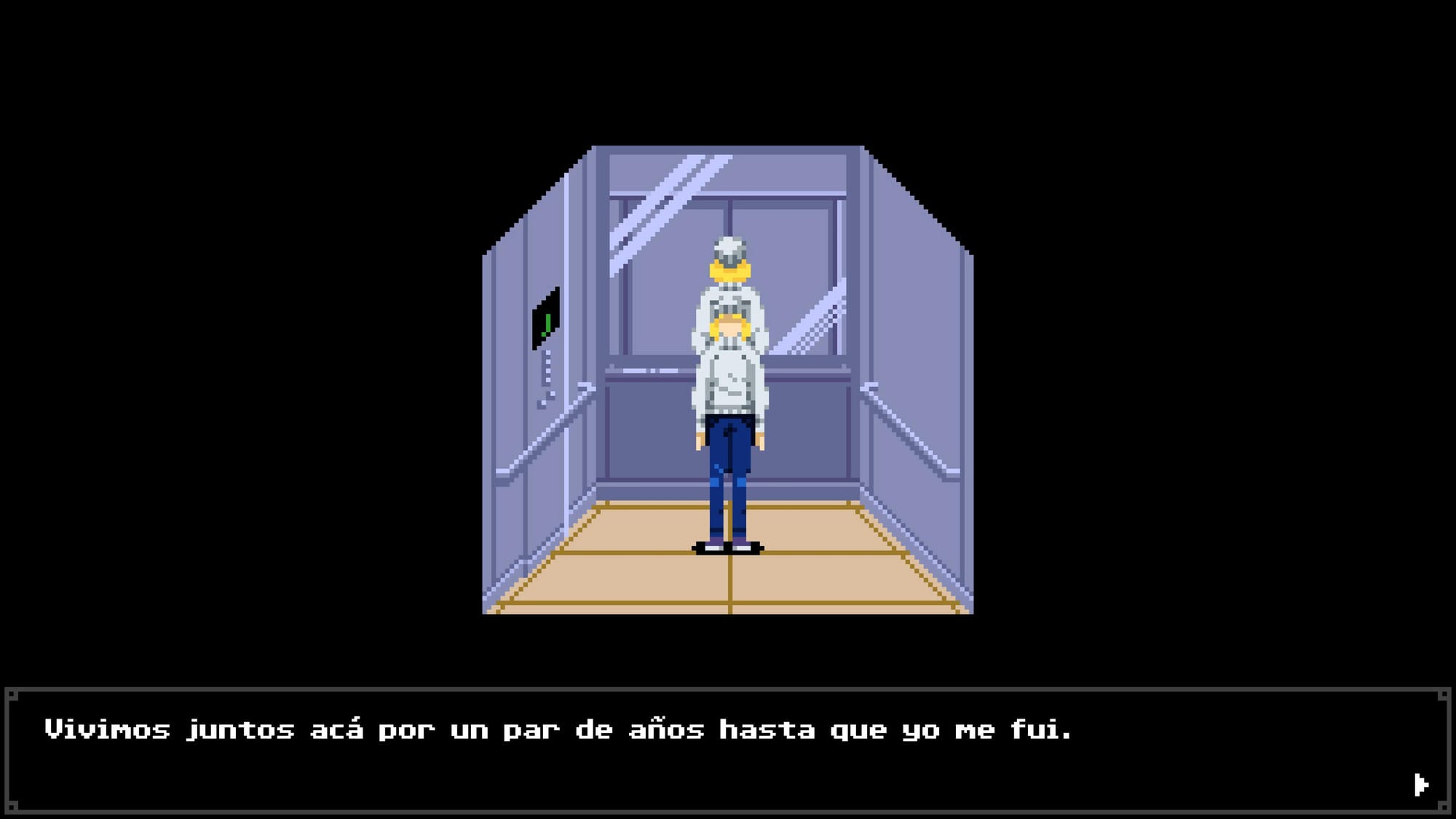
In Tenebris Somnia, the latest video game from film director Andrés Borghi, Saibot Studios and New Blood, there's an obsession with mirrors and perspectives. We control Julia, a young actress who decides to go to the apartment of Iván, her ex and a frustrated filmmaker, because she's been having nightmares about him.
In a setting with a retro 16-bit look, we start the game in the building's elevator, which has a mirror that faithfully reflects what we see: our low-pixel protagonist in her gray sweater, matching beanie, jeans and blond hair.
In Tenebris Somnia, the latest video game from film director Andrés Borghi, Saibot Studios and New Blood, there's an obsession with mirrors and perspectives.
When we open the apartment door, we find a small broken mirror on a piece of furniture. Julia asks out loud (since there's nobody else around) who broke it. We keep exploring the living room, looking for Iván, and find more broken glass: from a poster for something both characters worked on, and from a TV that no longer works. Other things are knocked over and strewn around the apartment, plus there's a strange symbol on a door.
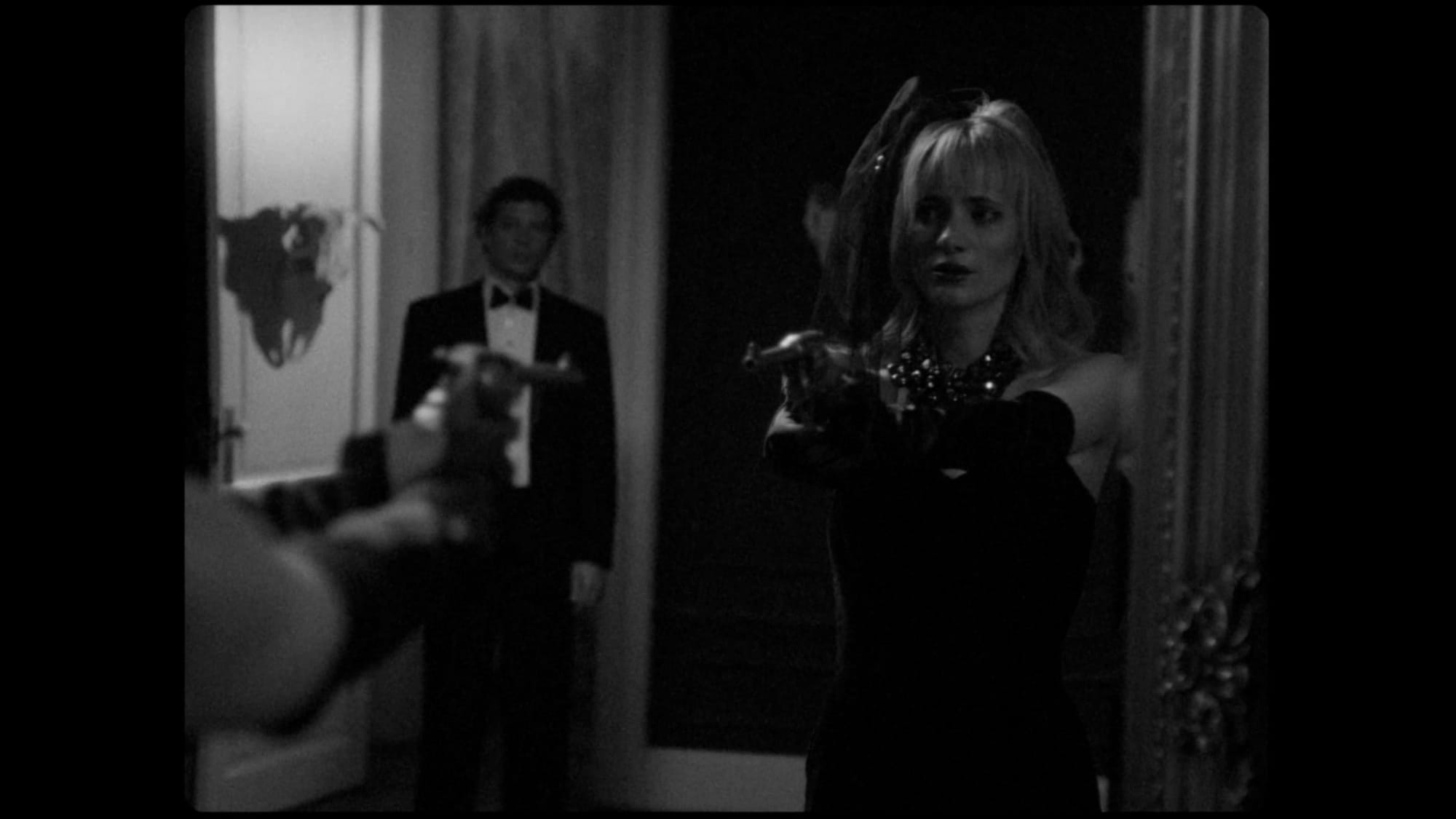
We solve a simple puzzle, the first of several waiting along the adventure that call Resident Evil to mind, and we notice the apartment door is wide open. Weird, we'd closed it. We take a few steps and suddenly the game stops being a pixelated world: we see a flesh-and-blood Julia, played by Argentine actress Clara Kovacic. The room turns real and in front of her appears a monstrous female creature (two-faced?) ready to attack. Before we can defend ourselves, the game snaps back to its SNES look and we're moving through this semi-flat space again, using a wrench to fend off the monster.
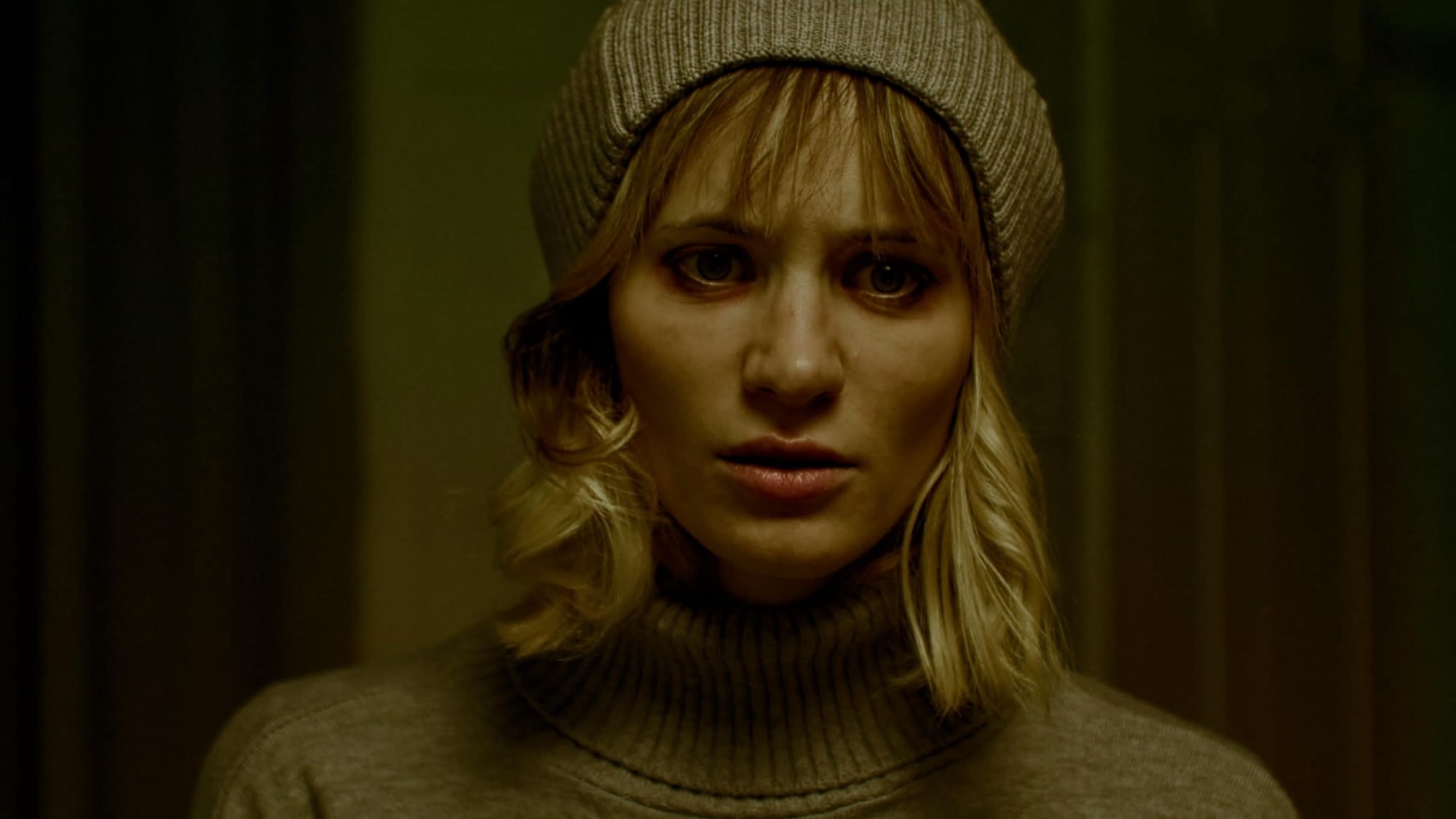
This happens fifteen minutes into Tenebris Somnia. From then on, we'll live the rest of Julia's nightmare jumping between these perspectives. On one side, a gorgeous retro aesthetic that knows how to combine colors to create appealing environments (and terrifying ones, the deeper we go). On the other, footage from an honest-to-god genre film, with close-ups lingering on our character's terror, performances full of fear and the macabre, super effective practical effects and CGI that pays proper tribute to good B-movies.
At first, this might read as a “gimmick”: a nice visual trick that does something novel and keeps us looking forward to interesting cutscenes. While in other games cinematics can be a drag, bogging down the pacing and killing our interest, here they're one of the driving forces (I never once thought about skipping a Tenebris Somnia cutscene). I was always curious to see what would happen next and what one of my actions would set off, since the consequences were often unpredictable.
On a second level of analysis, the aesthetic aims to create contrast. In an interview I did with him, Andrés Borghi explained that the mix of aesthetics and languages works so well because “the greater the contrast, the greater the impact,” and he considers it the best narrative tool. He also says it gets even better when you combine it with “the gap”: the “hole” between what you expect and what actually happens. Every time we experience that jump between perspectives and aesthetics, it hits us.
There's also a third level of analysis, tied to its narrative and gameplay coherence. When we start Tenebris Somnia, Julia isn't a woman who's forgotten her relationship with Iván and why they split. She may not remember the details, sure, some of them more than important, but she hasn't forgotten how aggressive and unpredictable this frustrated filmmaker became.
What's going on (spoiler alert) is that there's dark magic at play. Julia returns to an apartment that's been altered. As we progress, we visit this and other spaces at different points in time (not necessarily real, but with a strong dose of truth, and that's enough), going over memories with her, but those memories are cut up. We remember happy moments of Julia meeting Iván, their first kiss, prepping and acting in his short film. Also the not-so-happy ones: Iván venting his frustrations or Julia avoiding him. All of this shows up in installments, and warped. For example, with imperfect replicas of people made of a strange substance.
Back to mirrors: reflected images, altered perceptions. As we move forward, doubts creep in: why did Julia and Iván really break up? What happened in the relationship? While we try to figure out whether the nightmares mentioned at the start of the story are nightmares at all, Julia meets other characters and dark beings who question the present and past of her relationship. Until I reached the story's eventual plot twist, I went with Julia through a process of gaslighting (manipulation meant to make you doubt your own perception) and I started doubting the things she remembered too, and whether Iván was really such a piece of shit.
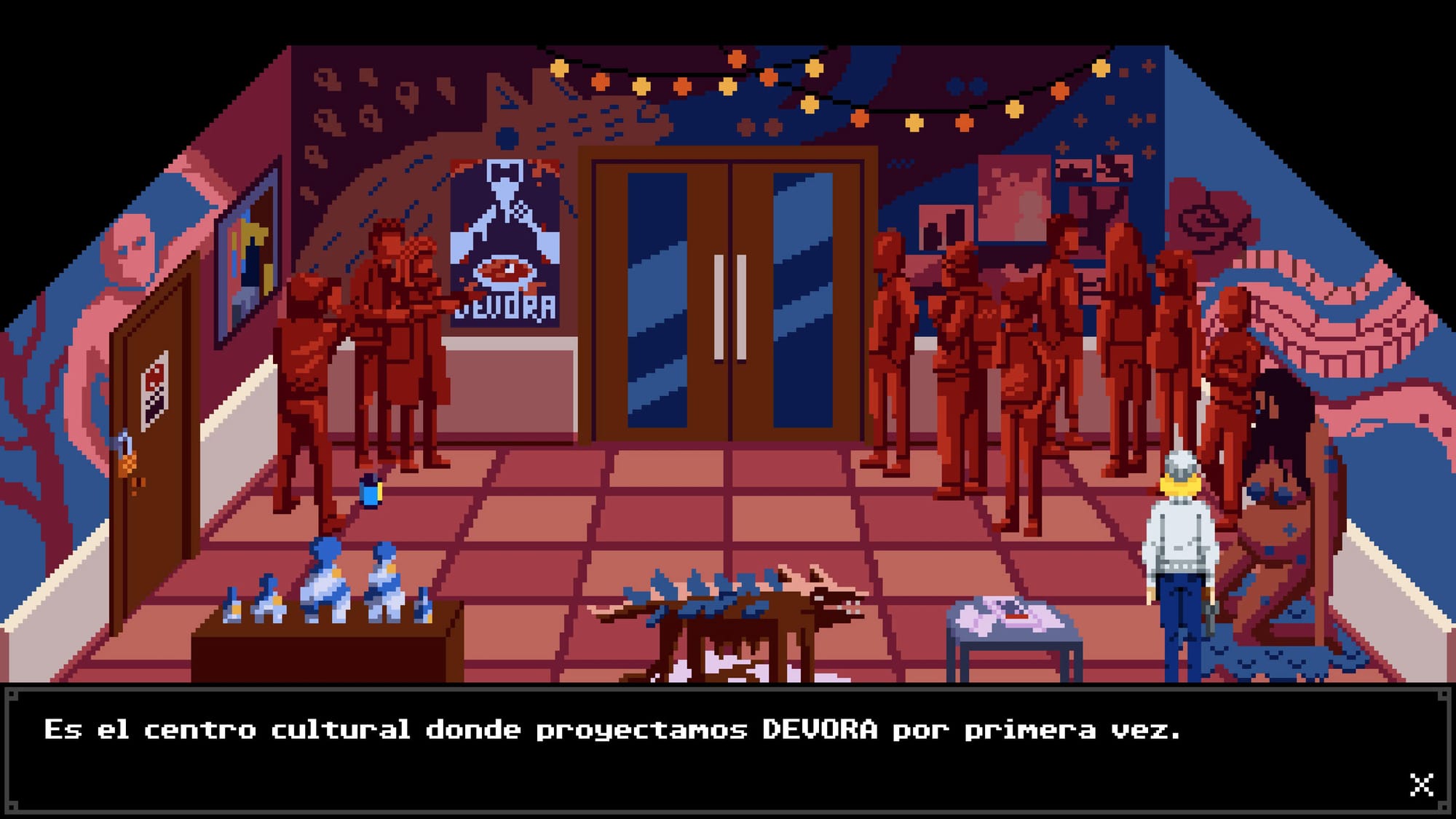
This happened because Julia builds her image (in the broad sense) the way we all do: with whatever little or lot we remember, with the reflections of ourselves we see in mirrors and in other people, with what we think of ourselves, and above all, with what we think others think of us.
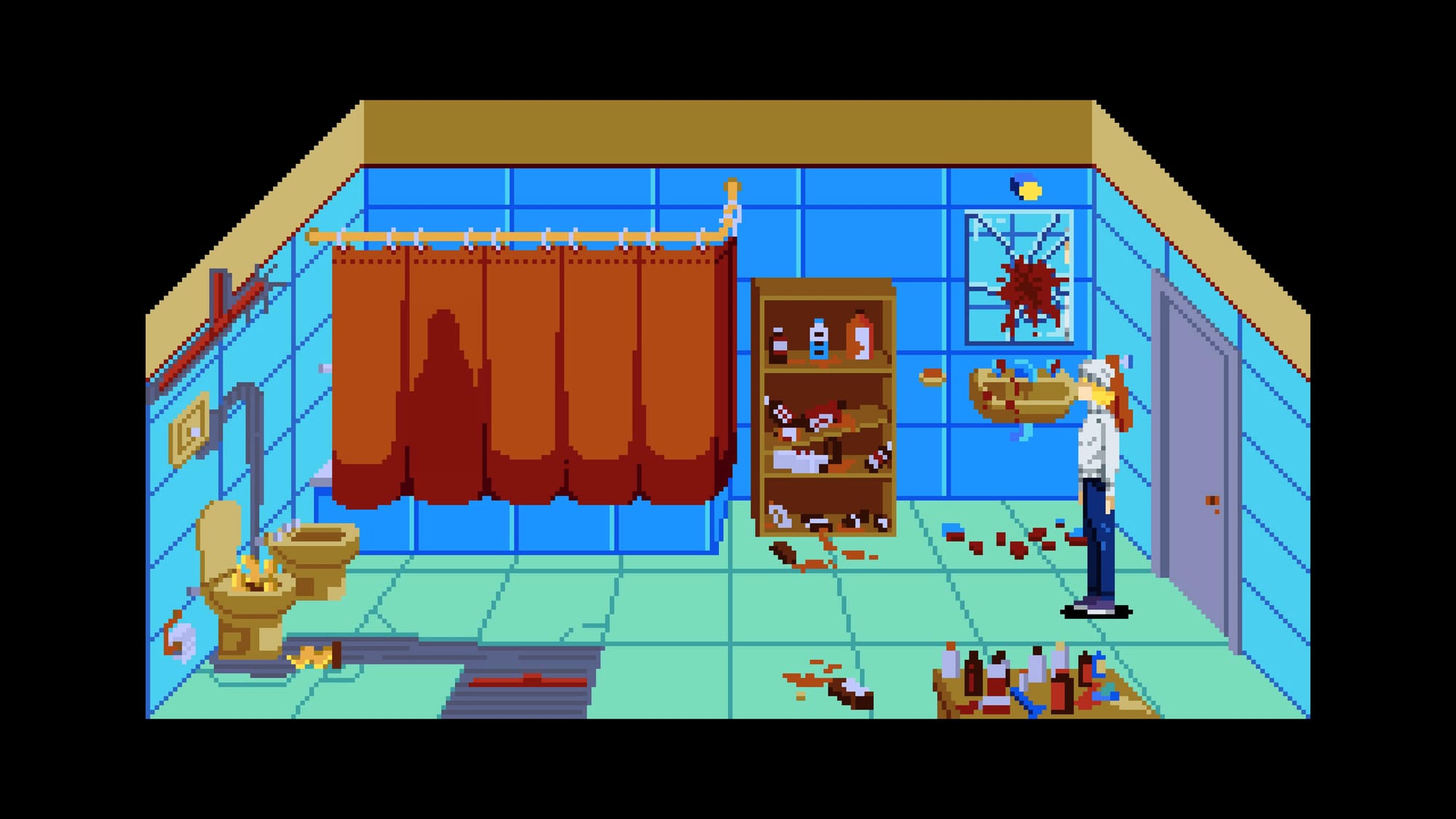
I don't think it's an innocent choice that at various points in the adventure you have to break mirrors. Mirrors that are often there because they make perfect sense (a mirror in the bathroom) and others that pop up at random to block our path during a chase. Or three mirrors in a row on a floor deep down below, a floor with misshapen rooms painted blood red, with distorted objects and surreal silhouettes. There's even a scene set in a room full of mirrors, where Julia sees her full-body reflection, but also things that aren't there.
These mirrors have a clear gameplay purpose: acting as an obstacle that keeps you from advancing, hiding a key item for solving puzzles, or even the cute touch of inverting the controls. But there's also a reading of this authorial choice: Julia is being hounded by the reflection of her own image. An image she still can't (won't) look at, and so she breaks it.
The obsession with reflections goes hand in hand with the shift in language in Tenebris Somnia. In a game that follows the genre's narrative devices to gradually build a shared past and uncover what happened, how could it be random that we jump from a handful of bits to a cinematic that looks “closer” to our perception of reality? What's real in Tenebris Somnia? Is Julia dreaming? Who really is that other female character (oh yeah, there's another one) who supposedly seduced Iván? Is it a coincidence that she usually appears facing Julia in the cinematic shots and that her true form only shows up in mirrors? Is it mere chance that we're dealing with a couple of film buffs and that part of the progression involves recovering reels from a short they worked on together?
Julia is being hounded by the reflection of her own image. An image she still can't (won't) look at, and so she breaks it.
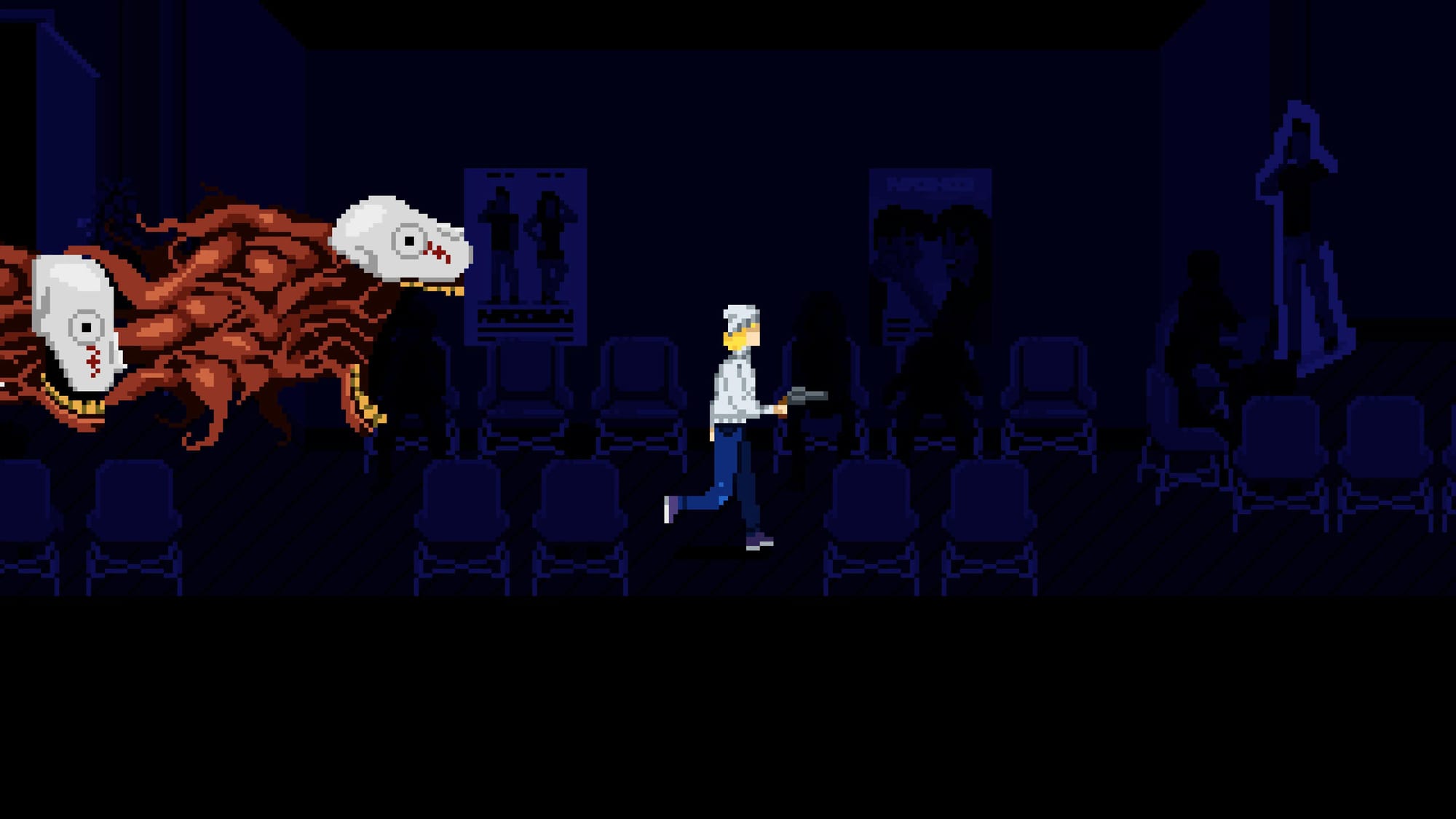
Once the veil lifts on why we're really looking for Iván and we uncover macabre things, Julia changes. She's no longer the same person who set out on this journey to find her ex (or rather, herself), and we'll notice she perceives her reflection differently. Getting there meant going through an interesting original universe of creatures, magic and objects (sometimes a bit overexplained), fighting with a super basic combat system that works if you've got some old-school chops, and solving puzzles that are sometimes heavily telegraphed and hand-holdy, but that honor Resident Evil with a lot of love, have layers of depth and, at their peak, are a story within a story. Special mention to the projector puzzle in the classroom, which moved me, terrified me and also made me cuss up a storm because I missed what it was hiding.
Tenebris Somnia is a remarkable work, with its breaking of perspectives, metatext, metagame and a sea of emotions. In that sense, it reminded me of Alan Wake 2, Remedy Entertainment's 2023 game that bombards you with the reality-bending transformations caused by a writer who can't control them. It's an interesting game about how we perceive reality, how we distort it knowingly or against our will, and the consequences we live with because of it. And maybe, above all, about the importance of searching for our own truths.
Las notas de 421 no tienen paywall
Y a cada colaborador se le paga por su trabajo. Las dos cosas dependen de los suscriptores.