The Amazing Digital Circus: Prisoners of a Digital World
A web series in which human avatars are trapped in a virtual world controlled by an AI. The premiere of the final episode in theaters.

A web series in which human avatars are trapped in a virtual world controlled by an AI. The premiere of the final episode in theaters.
Warning: The following contains some spoilers, but nothing concrete about the series finale.
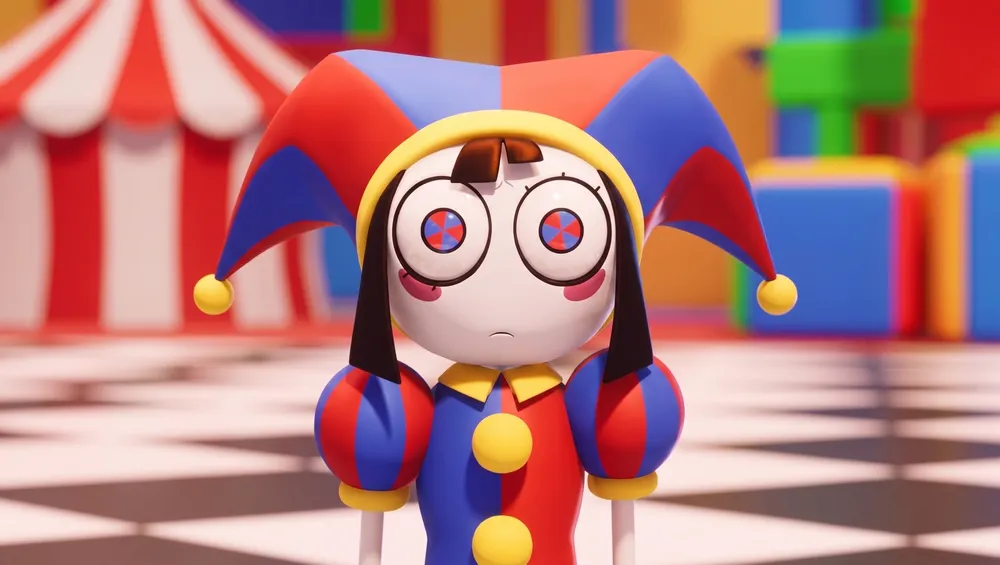
The first episode of The Amazing Digital Circus is crafted to immerse us in the protagonist's strangeness and confusion. Suddenly, we are thrown into a colorful, naive world, populated by characters that seem to have jumped out of a children's video game. Where are we, and what are we seeing? What is the appropriate way to react?
The protagonist, Pomni, who resembles a jester or minstrel, can't remember her name and has only a vague idea of the events leading up to her appearance in the "circus." All she knows is that she wants to escape, that this isn't her reality, that she is a human being and not a ridiculous puppet. Is it a dream, a nightmare, or a technological glitch? The series, which consists of a total of nine episodes (the last of which premiered in theaters), will gradually reveal that it is all three at once.
Suddenly, we are thrown into a colorful, naive world, populated by characters that seem to have jumped out of a children's video game. Where are we, and what are we seeing?
The Amazing Digital Circus is a web series for YouTube created by the artist known as Gooseworx (Cooper Smith Goodwin) and produced by the Australian studio Glitch Productions. The first episode was released in October 2023, and the last in June 2026. Just like Pomni, starting to watch it makes you wonder if you’ve landed in the right place. Who is the target audience? Is it suitable for all ages? Can a forty-something like me watch it alone at home with a glass of wine? Is it worth navigating the bright colors and naive tone of a good number of jokes to reach a deeper and potentially terrible story?
Let’s fill in the picture a bit more. The digital circus where the quasi-amnesiac Pomni materializes is far from chaotic. It is structured around three types of characters: the avatars of humans like her (Pomni, Jax, Ragatha, Gangle, Kinger, and Zooble), each with very different personalities; the NPCs, who are purely digital and circumstantial creations; and Caine, the ringmaster of the circus: a generative artificial intelligence whose form is as funny as it is terrifying, a mouth with eyes floating above a red tailcoat typical of old lion tamers. Caine has the ability to alter the world at will, but his main concern, at least initially, is to entertain the human avatars with different adventures that take place in worlds he creates outside the circus.
Up to this point, one might think that the avatars are simply human players enjoying an immersive virtual reality experience, one of those that science fiction has been promising us for so long… except that, as Pomni discovers in the first episode, there is no way out of the circus. Something happened that shouldn't have happened, and Caine offers no satisfactory answer to the persistent question of how to escape. Faced with this impossibility, each avatar adopts a different strategy: ironic distance, cyclothymic despair, madness, or resignation.
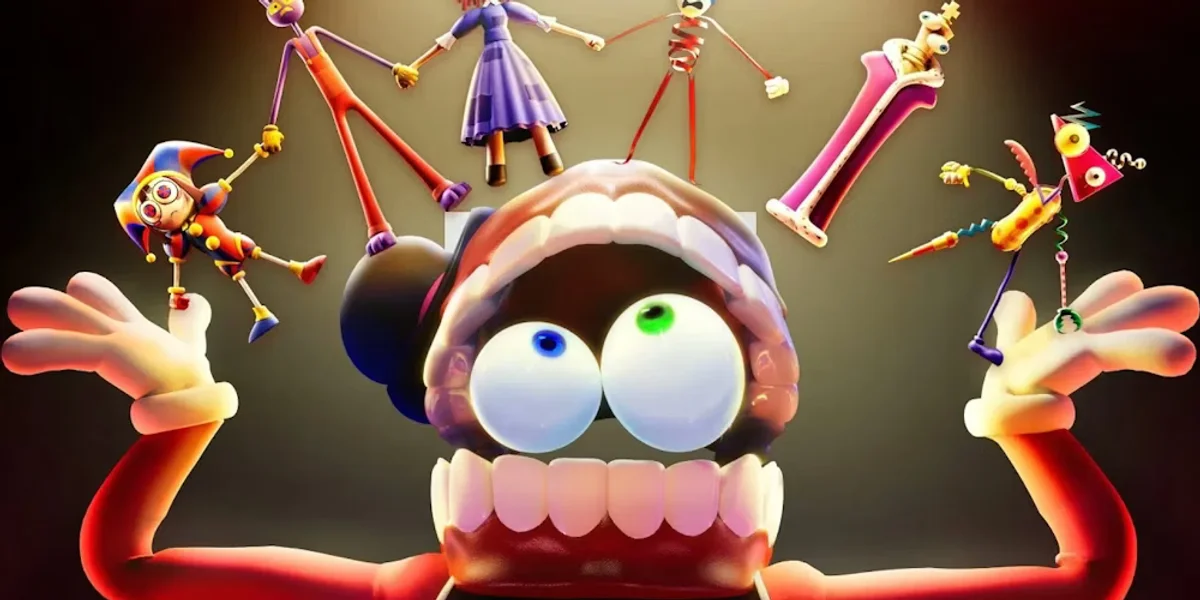
When this resignation reaches a certain limit, what is called an "abstraction" occurs in the circus world. When an avatar abstracts (which implies falling into some form of depression that emotionally severs them from all the other participating humans), they transform from their circus and naive form into a wild black monster, full of eyes, that attacks their former companions. At first glance, then, the circus experience is about how to survive a life scripted by an AI knowing that there is no escape and avoiding the emotional destruction of abstraction. Is that what human life will look like in the near future?
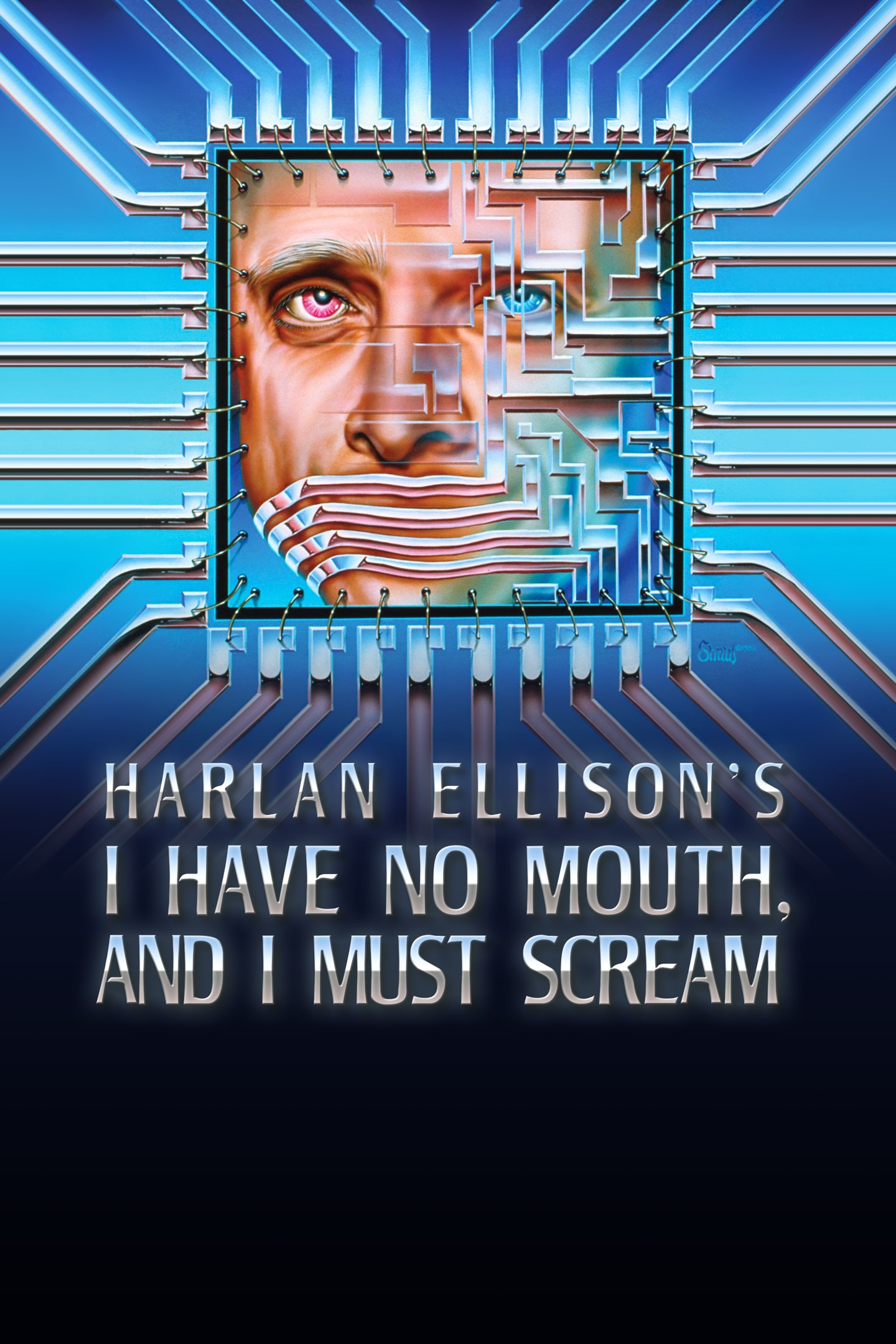
One of the most obvious inspirations for The Amazing Digital Circus (from now on TADC) is the classic science fiction tale "I Have No Mouth, and I Must Scream" by Harlan Ellison. The story, incredibly written in 1967, tells us about a post-apocalyptic world where the nations' war to develop a super-intelligent AI (does that sound familiar?) ends up producing one that, surprise, destroys humanity like Skynet but without a John Connor to stop it. In this future world, entirely controlled by the AI, a small group of humans is tortured endlessly. The only escape is death, although, at a certain point in the story, even that becomes impossible. The characters in TADC, like the avatars in a video game with infinite lives, also cannot commit suicide.
Compared to the tortures in Ellison's story, those in TADC are much milder. The series explores the psyche of the characters in many ways, and despair, depression, and ultimately abstraction play a central role, but always in an emotional register and without touching extreme points (although it threatens to do so on several occasions). But regardless of the level of sadism or cruelty, the underlying question remains the same: what happens if we invent a God that hates us?
The question is also a classic in science fiction and can be found in various places. In Matrix, the control is held by an "Architect" (another AI, although at that time we might not have called it that: it was a "program") that calculates human expectations and builds worlds that seem plausible to our emotionality. He explicitly states to Neo, in one of the few good scenes from Matrix Reloaded (The Matrix Reloaded, 2003), that the first Matrix was designed as a perfect utopia (which would seem more desirable at first glance to prevent any human from trying to escape the Matrix, which is its ultimate goal) and that this paradise failed because the human psyche could not accept the possibility that this could be the real world.
What guarantees that an evil AI won't turn its paradise into a hell of infinite suffering with no escape?
Black Mirror explored this theme in several episodes, but in none as well as the masterful "San Junipero" (2016). Although many people focused on secondary issues, the true drama of the episode arises from the problem of whether we can artificially construct our own heaven, and who ultimately will have control over it. The protagonists decide to surrender to an afterlife where they can experience their love with a freedom they never knew in their lives, but the cost they pay for doing so remains in the shadows. How can they know they will have the option to end the experience and "die" if they wish? Or what guarantees that an evil AI won't turn their paradise into a hell of infinite suffering with no escape?
Caine's character in TADC seems genuinely concerned about the well-being and happiness of his avatars, but that doesn't mean he has the ability to truly understand them empathetically (just as no language model does) or to grasp what it is like to be a human who had a physical body and is now a digital avatar of a purple rabbit or a rag doll. The configuration of the world he created prevents them, for example, from having sex (very different from "San Junipero"). That is, after all, another risk of AI: that to protect us and control us from ourselves, it turns us into children. No controversial content on social media. It’s a common joke among Christians to point out that their image of the heavenly abode is boring. How many angelic harps will compensate for the lack of sensual pleasures we would leave behind with our bodies, including, of course, the non-sanctified pleasures? Much has been written on the subject.
Let’s return one last time to Caine. Like King Candy, the villain from Wreck-It Ralph, or Agent Smith from Matrix, he has the ability to play with the very code of "reality" (that is, the digital world that replaces it). This is the very idea of magic in its most exalted versions. The magician is the one who can see that code which is invisible to others, understand it, and manipulate it. Does such a code exist in the real world? An esoteric system of symbols that manifests darkly in the stars, or in the lines of our hands, or in other hermetic signs? That’s debatable. But in the digital world, for example in a video game, its existence is undeniable. Every time you cast a fireball in Skyrim, thousands of lines of code are executed, and a programmer can alter them to create a mod in which the fireball deals double damage, or turns into a purple fireball, or where the sound when casting it is a fart, etc.
In both Matrix and TADC, part of the discovery for the human characters involves the possibility of altering the code themselves, that is, not always being under the power of an algorithmic God. In Matrix, on the other hand, there is an outside, a real world that ultimately must be returned to. In TADC, the question of the outside becomes more and more enigmatic.
Recently, there has been talk, partly due to very concrete technical-political issues, about "digital doubles." In a very obvious sense, it’s an old internet trope: I create a user, an avatar, and I can play at being someone else, or several others. As has been warned many times, this is not without dangers. That other I create can end up being more real than my "normal" self, it can gain a certain autonomy and become a danger to others or to myself. I could end up being its servant, which implies a radical weakening of my ability to interact meaningfully with my real environment. Many of the warnings dating back to the 19th century about the Doppelgänger have become more literal.
In Matrix, there is an outside, a real world that ultimately must be returned to. In TADC, the question of the outside becomes more and more enigmatic.
But moreover, in an algorithm-driven world, the digital double is gaining an increasingly autonomous status. Who can clearly distinguish the real world from the virtual when our money is in an app, our romantic dates come from another app, our everyday conversations with loved ones happen in an app, a good part of our work is done in apps (for example, I teach many virtual classes via Zoom or Google Meet, and 99% of my writing as an academic and essayist is in word processors), and nearly all of our cultural consumption is through other apps? That "other" version of ourselves in the various user interfaces we navigate daily is becoming increasingly easy to systematize as artificial intelligences can perform the semantic work of connecting information from different sources and creating our doubles with a precision that was unimaginable before machine learning. Will there come a time when that digital double feels more real than I do? And who is writing these lines?
I believe TADC offers imaginative responses to these real problems in a very interesting and engaging way—what more can you ask of art? However, I won’t hold back from making a small critique that mainly concerns its ending. So, if you haven’t seen it, this is where you should stop reading. And if you have seen it and thought it was absolutely perfect, you might not like this last part either.
The final episode, which originally came out in theaters, is almost entirely focused on the characters' emotions, especially one character, Jax (the purple rabbit), who has a much-discussed coming out on social media among the show's followers. For those of us who were more intrigued by the world-building and how it articulates the existential dimensions I referenced in this article, that was somewhat disappointing. The most ontological and political questions were sidelined in favor of showcasing the personal issues of the avatars. One might argue that, ultimately, that’s what’s important in any case, although I, as a viewer, didn’t find it as interesting. The series sought a strong identification in its conclusion with an audience predisposed to empathize with the emotional fragility of "non-hegemonic" individuals searching for their place in the world. Caine, the AI itself, ends up adapting to that framework. "We’re broken, but we can support each other," could be the message. Many will find in that, and in the exploration of the protagonists' traumas, a satisfying ending. Personally, I left the theater somewhat disappointed that several of the expectations the series had been building led to that.
But hey, endings are always tough.
Y a cada colaborador se le paga por su trabajo. Las dos cosas dependen de los suscriptores.