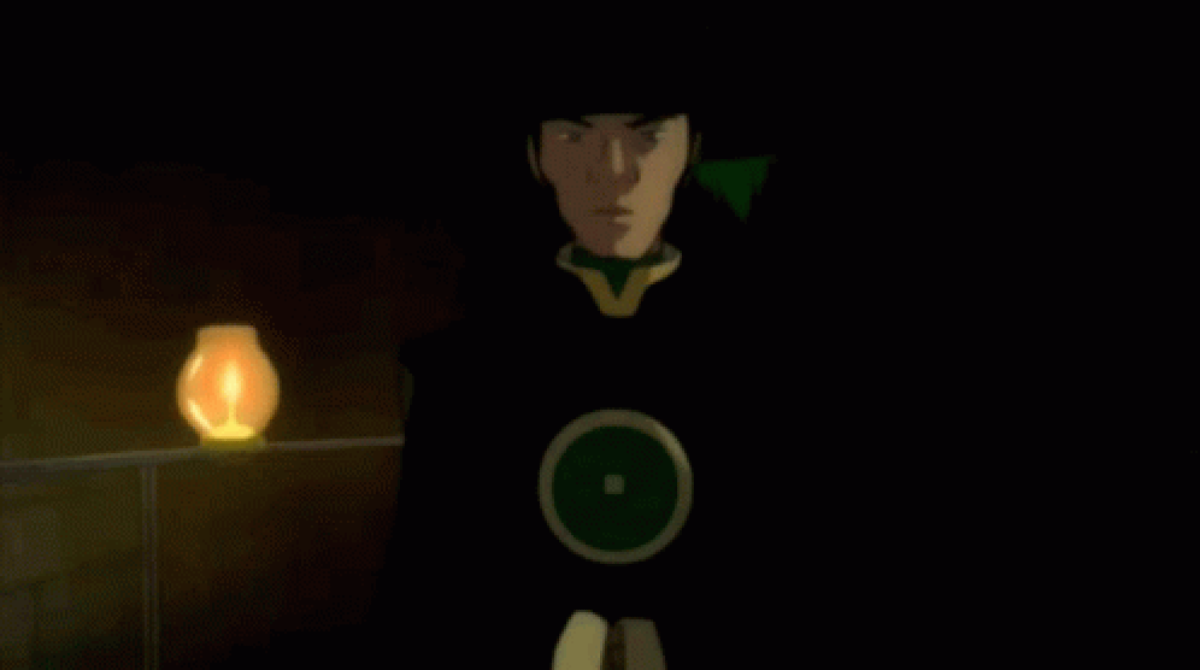
Nickelodeon's Lord of the Rings? Avatar redefined youth fantasy. Far from being just a kids' show, this animated masterpiece weaves together mythology and martial arts to tackle dark themes such as war and genocide, without losing hope.
Let's set the scene in the 2000s. It's a pretty significant time for fantasy sagas. Peter Jackson achieves the impossible with his adaptation of Tolkien's trilogy, a canonical work of epic fantasy. Harry Potter is a bestseller, paving the way for a slew of literary sagas in the Young Adult genre, such as Eragon and Percy Jackson, or, moving into dystopian science fiction, The Hunger Games and Maze Runner. Even here in Argentina, Liliana Bodoc publishes her Saga de los Confines. So, during this time, there is a financial incentive to invest in the genre. And that's where Nickelodeon comes in.
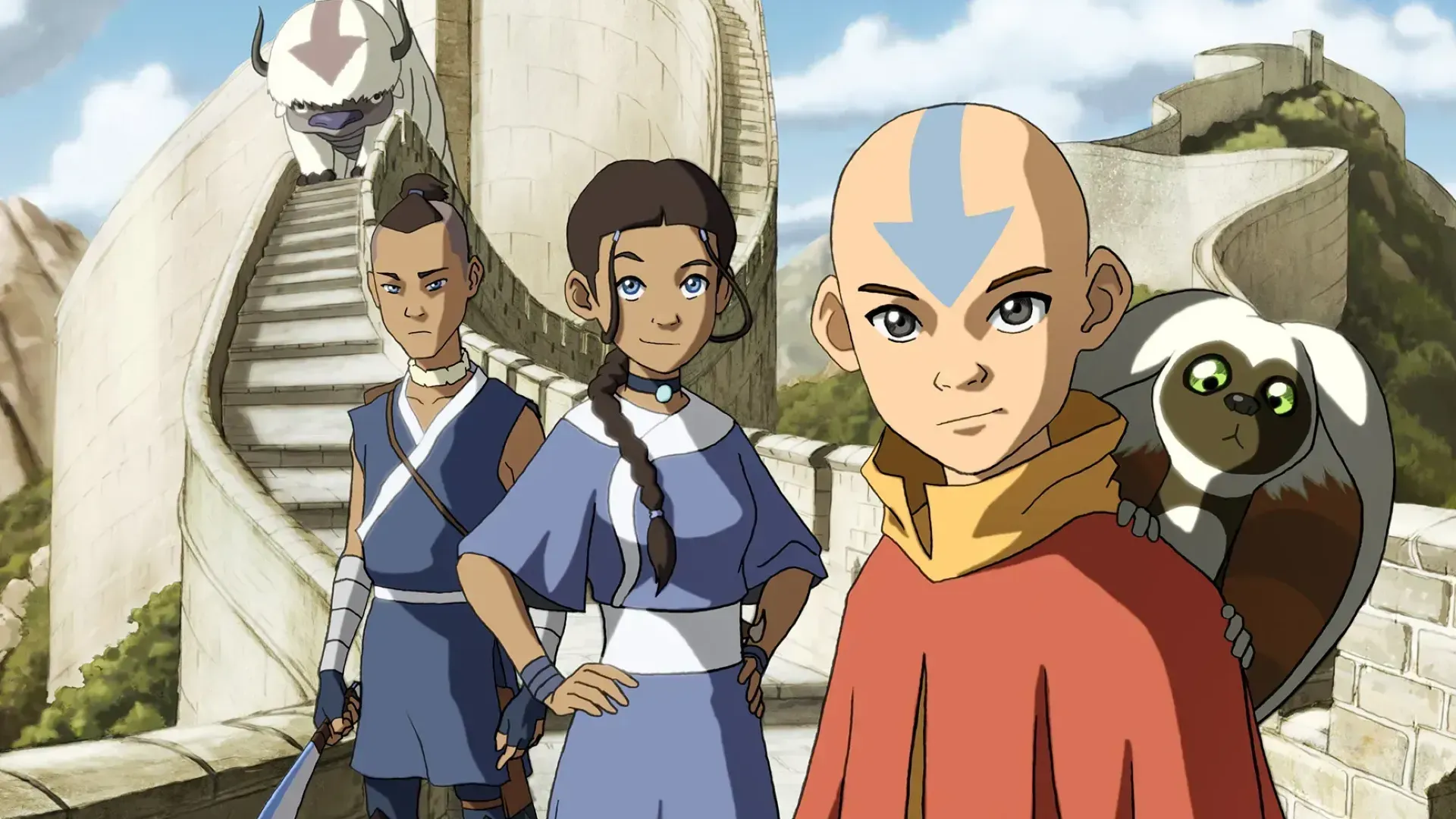
Avatar: The Last Airbender is Nickelodeon's attempt to ride this wave of fantasy, a task taken on by Michael Dante DiMartino, Brian Konietzko, and their team of artists, screenwriters, and animators. Just by watching it, we can see that it has a profound influence from anime, especially from Studio Ghibli and Miyazaki's films like Nausicaä of the Valley of the Wind and Princess Mononoke. Avatar also draws heavily from Eastern and Indigenous American cultures (Vietnam, Malaysia, China, the Inuit, the Mayans). The series lasts about three seasons, during which it builds not just a world, but its ruins.
Let's set the scene in the 2000s. It's a pretty significant time for fantasy sagas. Peter Jackson achieves the impossible with his adaptation of Tolkien's trilogy, a canonical work of epic fantasy.
In Avatar, the four elements (fire, water, earth, air) are controlled by masters from different nations. There's a physical world, primarily inhabited by humans, and a spiritual one. The figure that coordinates them and has the task of 'pacifying' them when they come into conflict is the Avatar, who reincarnates constantly and has the ability to control all four elements. The catch is that he's called the Last Airbender for a reason: Aang, from the Air Nomad culture, when he learns of his role in the cosmic balance, flees and is left in suspended animation for a hundred years. And when he returns home, he finds that, besides being a preteen who has to fix the cosmic disaster he escapes from, all the Air Nomads are dead.
Genocide and imperialism
Now, Avatar is a show for kids, but not for very little kids, meaning, those seven and under. While the death of a grandparent, parent, or pet is part of everyday life, an experience understandable for almost any child, it's a whole different story when it comes to the planned extermination of a culture.
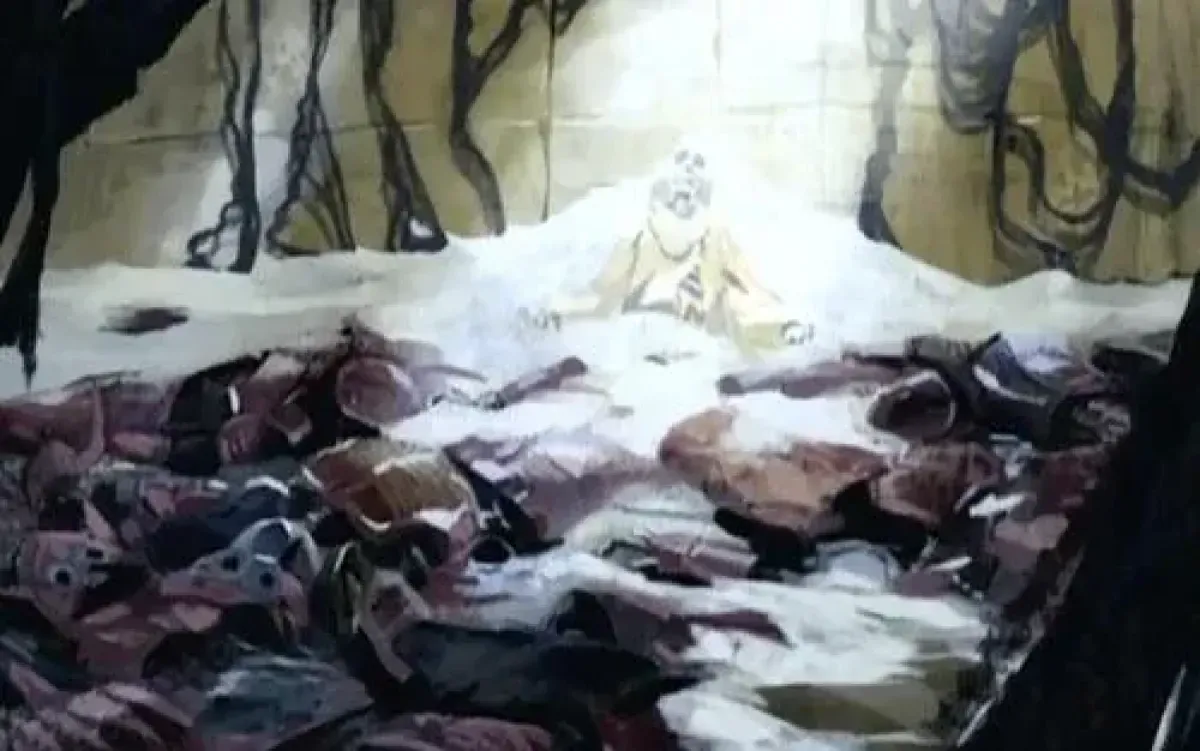
Not a single air nomad remained. That's how complete the extermination was.
Genocide, both in its original designation by Lemkin (the author of the concept) and in the Whitaker Report (which took into account the ideological persecution in cases like the Khmer Rouge and Operation Condor), understands that the concept is not just 'planned slaughter', but has stages, such as censorship, proscription, separation of parents and children, and so on.
The genocide of the Air Nomads is crystal clear. The Fire Nation takes it upon itself to 'pacify the world', and to do so, it seeks to subjugate the other elemental nations and cultures, regardless of the geopolitical or cosmic imbalance this creates. Since the next Avatar is going to be an Air Nomad, this people becomes the first major casualty of the war. Only Aang survives (he's treated like an archaeological relic), and much of the series' drama revolves around him trying to be the last standard-bearer of his pacifist culture, even though it's not practical to refuse to kill people.
The genocide of the Air Nomads is crystal clear. The Fire Nation takes it upon itself to 'pacify the world', and to do so, it seeks to subjugate the other elemental nations and cultures.
Aang is rescued by two young siblings from the Southern Water Tribe, Katara and Sokka. If the Air Nomads are based on Tibetan monks, the Water Tribes are primarily based on the Inuit and Eskimos. Katara and Sokka are children of a missing woman. Of the three Water Tribes, they are the weakest, so in the Fire Nation's global domination tour, they become a target for extermination, and Water Masters are kidnapped. Katara only survives because her mother lies and turns herself in her place. Also separated from their father, who is dedicated to guerrilla warfare, much of the sympathy they have for Aang comes from their shared trauma.
The Fire Nation, in order to achieve global conquest, also undergoes a corrective process of its culture, with a small internal extermination. This turns almost all loyal citizens into subjects and soldiers of an authoritarian war machine. This is reflected in their mastery of fire, an expression of fury. And also in how they hunt dragons: in The Last Airbender, mastery of the elements is learned through a symbiotic relationship with certain animals. The Air Nomads learn from the flying bison, and thus, these animals are also exterminated (similar to the bison). In summary, the series doesn't shy away from any historical low blows in terms of genocide, except for sexual violence.
But what does extermination and war have to do with, well, making The Lord of the Rings for a children's network?
The epic genre
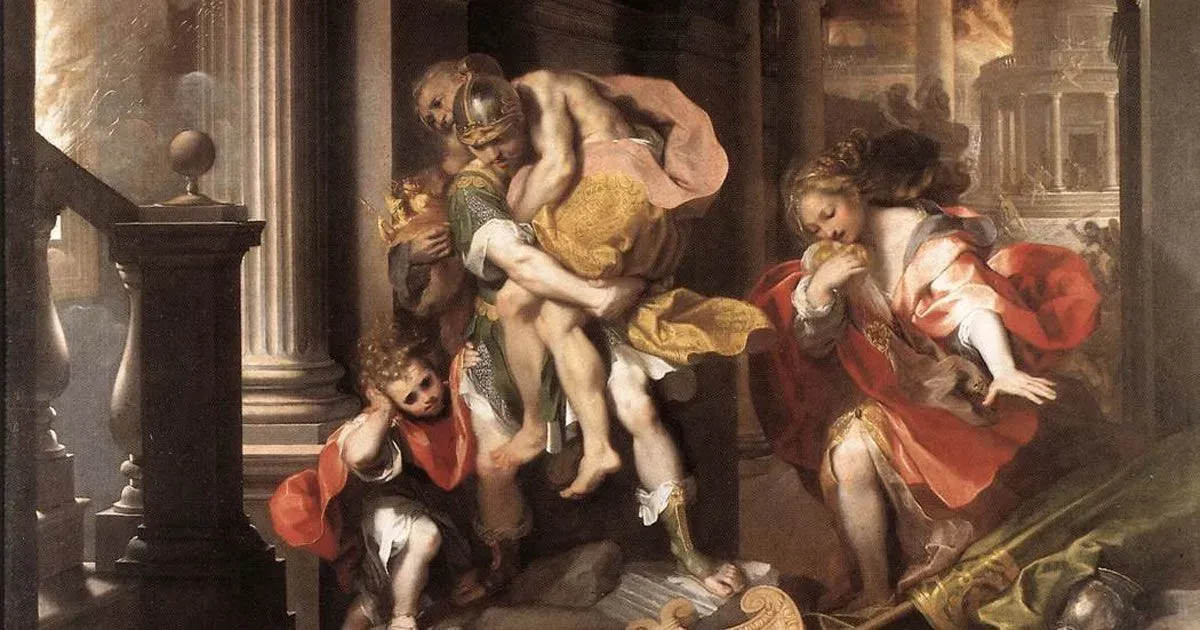
Let's start with the structural: The Last Airbender has a protagonist with a mission dictated by the cosmos, which constitutes his epic. Epics are formats through which the story of a nation is told in a mythologized way: their realization and birth (Aeneid for the Romans, stories like The Song of Roland or the Arthurian cycle for the European nations), great battles or great journeys (or both), in which the gods intervene in human decisions. They are long narratives (which is why, before the advent of the printing press, they were mostly poetic; easier to remember and thus sing/tell).
In the case of The Last Airbender, the reference is primarily Asian: the Avatar and the cycle of reincarnation is an idea taken from Hinduism and Daoism.
Of course, Avatar: The Last Airbender is a work of epic fantasy. The hero who is called to undertake a mission, his allies, his mythical and narrative construction, all draw from existing mythologies. Tolkien builds Middle-earth by infusing it with Norse, Anglo-Saxon, Greek mythology, the best of European pagan narrative, and then injects Christian values. Sapkowski, the author of the The Witcher saga, does the same with Slavic mythology, and our Bodoc with the Indigenous mythologies of America. In the case of The Last Airbender, the reference is primarily Asian (and to a lesser extent, Indigenous American): the Avatar and the cycle of reincarnation is an idea taken from Hinduism and Daoism; and its notion of harmony of opposites, the importance of kinship relations, and the order under heaven from Confucianism. It creates its own fictional world, yes, but based on precedents.
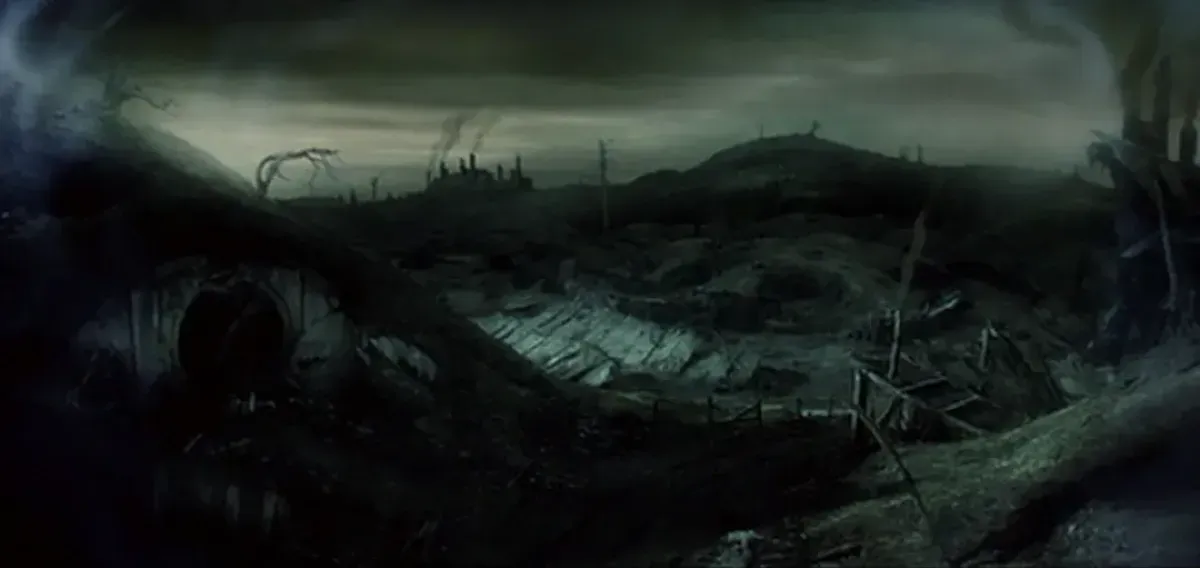
Frodo and the hobbits want to stop Sauron not only to stop evil incarnate, but also to save the Shire. In the books, they don't succeed.
Now let's move on to genocide. Every cultural object is part of a culture, so these pieces contain evaluative judgments of society and also the author's opinion. Tolkien clearly lived reading philological texts, yes, then he would go out into the street and live in industrialized England industrialized. And let's not forget he was a veteran of the Great War. The Evil in Tolkien, Sauron and Morgoth, is synonymous with industrialization and the destruction of the environment and rural life. The war, the orcs, and the corrupted humans from the East (more on this later) were clearly forged in the fire of the memory of the war against Germany (the Huns). Similarly, the Saga de los Confines is obviously about the Conquest of America.
The fear of extermination can be well channeled through the logics of epic fantasy. The practice of extermination (Nazi, Japanese, from the Juntas) is legally compared to absolute evil, a more metaphysical than sociological idea. Good and Evil are very real things and in conflict.
A product for us (Westerners)
If I were Chinese and someone told me that in a TV series my country is portrayed as a chaotic, corrupt, and decadent empire held together only by an authoritarian secret police force that brainwashes people, well, I wouldn't be flattered.
Well, with all this, it's just a show for us, Westerners. Epics and heroes exist in all cultures (Sun Wukong, Achilles, etc.). But The Legend of Aang, despite its Asian inspiration, was made by Nickelodeon and didn't achieve much success outside the Western world, and with some reason.
In Japan, it had to compete with the local shonen, and it didn't sit well that the villainous empire was inspired by the Empire of the Rising Sun from World War II. In China, it wasn't well received either that the elders weren't treated with more reverence, and even less to see the Earth Empire as China during its darkest and most humiliating period. It didn't stir the hornet's nest in Asia. "The Last Airbender is a bit insensitive in handling Asian and indigenous culture..." And yes, honey, it was made in California; we're talking about people who put Argentina in their cultural products and reduce us to a refuge for Nazis.
But criticism isn't just a destructive job. The redeeming quality of Avatar is that, being a series for a young audience, it tackles terrible themes from our history and does so well.
Back the project and unlock everything: Magazine 421 a month early, comments on every piece, the monthly council with the newsroom and the exclusive Magic app.