How to Protect Kids' Minds with a Good Cognitive Diet
The danger isn't screen time, it's the algorithm. What we do about our kids' cognitive diet.
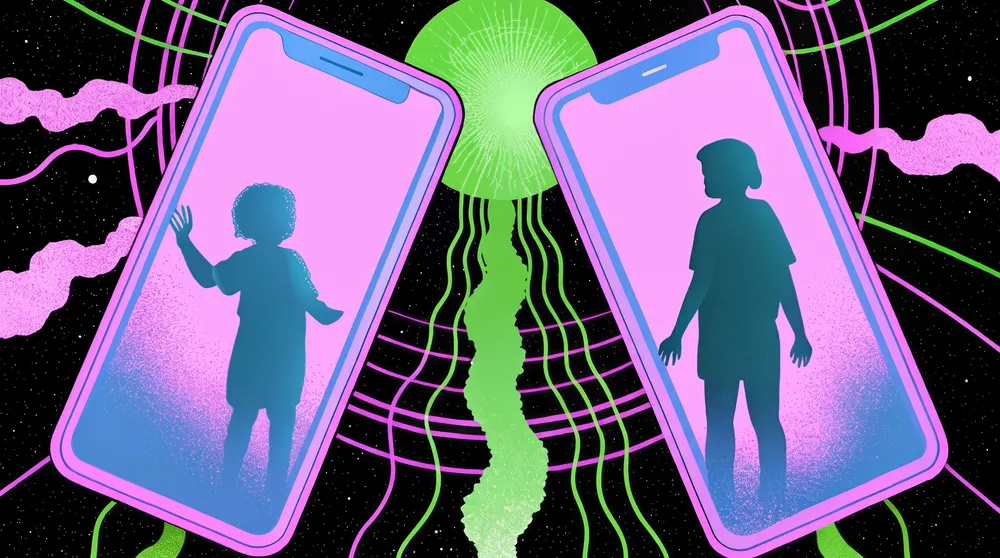
The real debate isn't how much time kids spend in front of a screen, but which experiences feed their attention, their imagination and their autonomy before the algorithms start doing it for them.
For the past few years, much of the debate about childhood and technology has been stuck on a pretty narrow question: how many hours a day can a kid spend in front of a screen? The recommendations change depending on age, new research comes out, and every so often a study gets published that reignites the whole argument.
The problem isn't just time. The problem is what that time replaces. A kid spending forty minutes watching a movie with their family is not the same as forty minutes swiping through endless videos picked by an algorithm. Both involve a screen, but the cognitive, emotional and social experience is completely different. A story has a beginning and an end; the scroll, on the other hand, is designed never to end. A movie invites conversation when it's over; a platform wants the next video to start before we've had time to think about the last one.
That's when I started looking at the problem from a different angle. I stopped asking myself only how much time I wanted my daughter to spend in front of a screen and started asking what kind of experiences I wanted to fill her first years. The difference seems small, but it changes the conversation completely. It's no longer about banning technology, but about building a good cognitive diet before the algorithms start deciding for us.
It's no longer about banning technology, but about building a good cognitive diet before the algorithms start deciding for us.
In September 2017 I found out I was going to be a father. Around that time I was already closely following the news about the impact of cell phones and social media on everyday life. The Cambridge Analytica scandal (you can watch The Great Hack on Netflix) was a turning point. The leak of personal data to build political ads during the 2016 US elections set off my obsession with understanding how mobile devices and social media can shape behavior, decisions and relationships.
It was a handful of articles in international outlets that finally set off the alarm: evidence about the effect of screens on cognitive development was piling up by the day. “Silicon Valley technologists don't want their kids using the devices they make,” “It's time to reassess how much time kids spend on screens” and “The negative effects of screens on children and teenagers” were the headlines of some of the pieces I was reading between my daughter's birth and her first steps (a little after she turned one, roughly).
Among the pieces I mention, there's one that gathers the experiences of parents who work for tech companies or tech media and explain that they'd rather their kids start using mobile devices once they're teenagers: “On the scale between candy and crack cocaine, [screens] are closer to crack,” says a father who used to be an editor at Wired. The article also cites the choices the big tech moguls have made about parenting and the use of phones or tablets: “Tim Cook, the CEO of Apple, has said he wouldn't let his nephew join social media. Bill Gates banned cellphones for his kids until they were teenagers. Steve Jobs wouldn't let his kids near iPads.”
My interest in the subject led me to the book Guía para la crianza en un mundo digital (A Guide to Parenting in a Digital World), by Sebastián Bortnik. Like the tech moguls, he recommends delaying contact between babies or young children and mobile device screens for as long as possible. In fact, he argues for banning them outright until age three or four.
Now then: life goes on, the kid turns three and... what do we do? We all know that at this point in history, a life without any screens is beyond utopian. By the same token, more often than not screens end up being the way we adults get a little free time and manage to get something done. So, once again, what do we do? Everything points to the key being not just delaying contact with screens, but deciding which ones are worth starting with and which are better left for later. There are some tools that work really well for that. But first things first: why should you take the relationship between mobile devices and your kid seriously? Here we go.
Your kid, your cognitive diet
If you're a father, a mother or about to become one, you have the chance (or the responsibility) to lay the first foundation of cognitive sovereignty for your child: this new citizen is 100% free time, which is exactly why they become a raw treasure for social media and/or content made for the sole purpose of being consumed on a loop. What we want is for the person we brought into the world to have as many thoughts of their own as possible, and for not everything to be dictated by what they see in an Instagram reel or a YouTube short. So our job is twofold: on the one hand, making sure they're not easy prey for digital platforms and, on the other, making sure our kid has their own thoughts, and that those are what make them interested in having a conversation, creating imaginary worlds or being 100% focused on a single task. Now that you're responsible for a person and you want them to enjoy a certain psychic autonomy, you're going to have to keep an eye on their cognitive diet.
As Nadia Robaldo writes, you're now going to have to “adjust the filters, direct the gaze, decide what gets in and what doesn't, which signal is useful and why” in your little one's brain. It's a big responsibility, but it's also a lot of fun. The responsibility is the same one a father or mother has when choosing what their kid eats: within your means, you give them the best you can. The fun part is that your kid doesn't know about Instagram reels, YouTube shorts or tweets on X, which means you have the power to shape the little one's first audiovisual and play choices. Bottom line: your kid's brain isn't intoxicated, and the job is to keep it as healthy as possible.
Your kid's brain isn't intoxicated, and the job is to keep it as healthy as possible.
It's worth keeping some of Robaldo's concepts in mind when thinking about our kid's brain and the context it's developing in: cognitive capitalism seeks to colonize our nervous system in order to manipulate our actions. I think that's a good argument for paying attention to what our kid watches, listens to and interacts with. That's why these first decisions you make about entertainment or audiovisual consumption will have a direct impact on your child's cognitive development: the way they talk, their ability to relate to others and even the way they move will be completely shaped by this key moment.
So what are we going to serve on that cognitive diet?
For this key moment, we're going to borrow a concept popularized in recent years by the series The Eternaut and very well developed by Juan Ruocco: for the first cognitive diet, the old stuff works too. Or rather: the old stuff is the only thing that works. As Ruocco puts it, what we're looking for in our kids' cognitive diet is anything that's far removed from hyperconnectivity, that costs our wallets less and that also builds positive skills.
Before going over which analog and digital tools can replace or delay kids' entry into mobile devices, it's worth stressing that the most important thing is talking, playing, going out for a walk, kicking a ball around or feeding the stuffed animals; in short, spending real time with your sons and daughters. And now, a list of activities with and without screens to enrich your kid's cognitive diet:
- First things first: paper, pencils, crayons and markers are a must in any house with kids. Likewise, board games are also a great way to swap screen time for 100% analog fun: cards, memory games, puzzles, etc. It's a good idea to always have these within reach.
- Going to the movies and watching movies at home. It seems obvious, but it isn't, and it often gets dismissed for being a screen. The truth is that watching audiovisual content with a beginning and an end, that is, content that tells a story from start to finish instead of being an eternal loop, lets kids have a human relationship with time: things start and things end. This kind of content also usually reinforces emotions and positive values (we can criticize Disney, but have you ever watched Peppa Pig?). Movies also strengthen single-focus attention, that is, the ability to pay attention to one thing instead of having your head split across a thousand pieces of content since you were a baby. Finally, the best part about watching movies is talking about what we just saw. A real win-win.
- Another unexpectedly effective tool is good old Tetris, like the handhelds they sold in the early nineties. A simple, repetitive game, with no garish colors or rewards designed to be addictive. Tetris works: kids are amazed by the 8 bits and spend a good number of hours trying to figure out what the game is about. It's worth noting that it's a great option for a trip or any situation that might get boring for a kid. Plus, it's cheap.
- Finally, one of our best decisions was going for devices that emulate retro video games hooked up to a TV. Consoles that let you play Family Game, Sega, PlayStation 1 or Nintendo 64 titles, but with no internet connection. Games with a beginning and an end, made for two players and for goofing around guilt-free. Try it, you won't regret it, and here too you'll find a new way to connect with your kids, a mix of excitement and nostalgia. These games, just like movies, have a beginning and an end; they're hard, and by losing, our kids build up their tolerance for frustration and also develop their reflexes. For all these reasons, I believe that playing a Super Mario, a Sonic or any of those titles will give your kid a very different gaming experience from the one offered today by platforms designed to enslave their attention.
In a few years our kids will have phones, social media profiles and probably artificial intelligence tools we can't even imagine today. None of that is up to us. What is up to us is how they get to that point.
The challenge isn't to stop our kids from using technology, but to give them enough prior experiences so that technology doesn't take them hostage.
If during childhood they learned to be bored without despairing, to pay attention to a story for two hours, to lose a round without quitting the game, to invent worlds with a couple of dolls, to talk over dinner or to walk without checking a screen every thirty seconds, then they'll arrive in the digital world with something worth its weight in gold today: that much-coveted cognitive sovereignty.
The challenge isn't to stop our kids from using technology, but to give them enough prior experiences so that technology doesn't take them hostage. Because the algorithms will keep competing for their attention every single day. Our job isn't to win that battle forever (that would be impossible), but to make sure they go into it with tools that help them decide for themselves.
Deep down, a good cognitive diet is about raising people who are capable of choosing, imagining and having fun on their own. And in an age when almost everything is designed to decide for us, that ability may well be one of the most valuable things we can leave them.
Las notas de 421 no tienen paywall
Y a cada colaborador se le paga por su trabajo. Las dos cosas dependen de los suscriptores.