Digital Junk: How Algorithmic Noise Could Collapse Public Debate
Just as junk in orbit clutters the space around Earth, digital junk could make public debate impossible.

In 1978, NASA astrophysicists Donald J. Kessler and Burton Cour-Palais published a paper with a only mildly unsettling title: “Collision Frequency of Artificial Satellites: The Creation of a Debris Belt.” The paper, no more than ten double-column pages long, wasn't meant to kick off a piece of doomsday literature or a sci-fi screenplay, but to put forward a strict physical diagnosis of the dynamics that human-made objects maintain in low Earth orbit (LEO, or Low Earth Orbit). Kessler's thesis was brutally simple: once a certain density of satellites and metal debris circling the planet was reached, collisions between them would stop being exceptional accidents and become a statistically inevitable phenomenon.
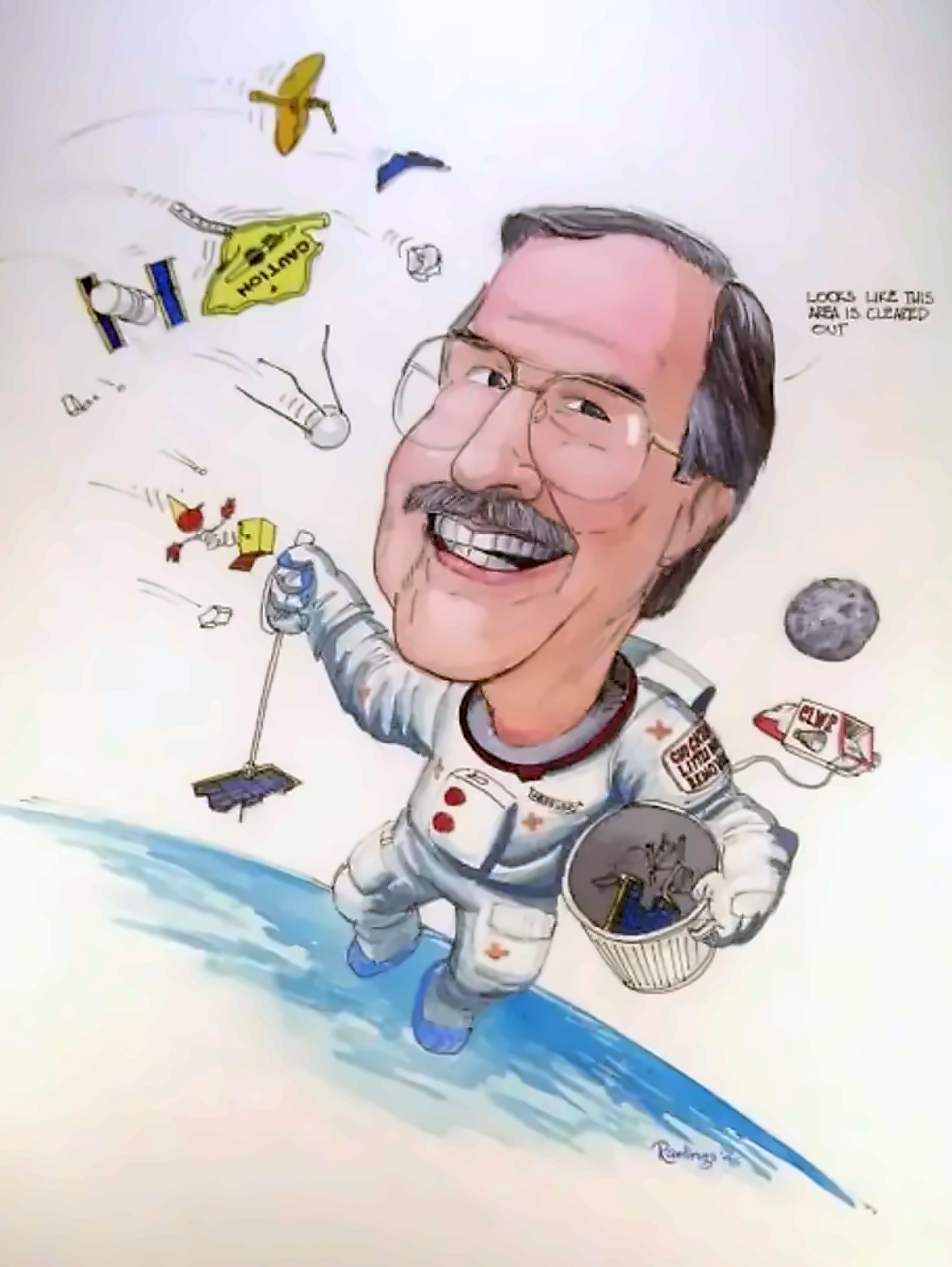
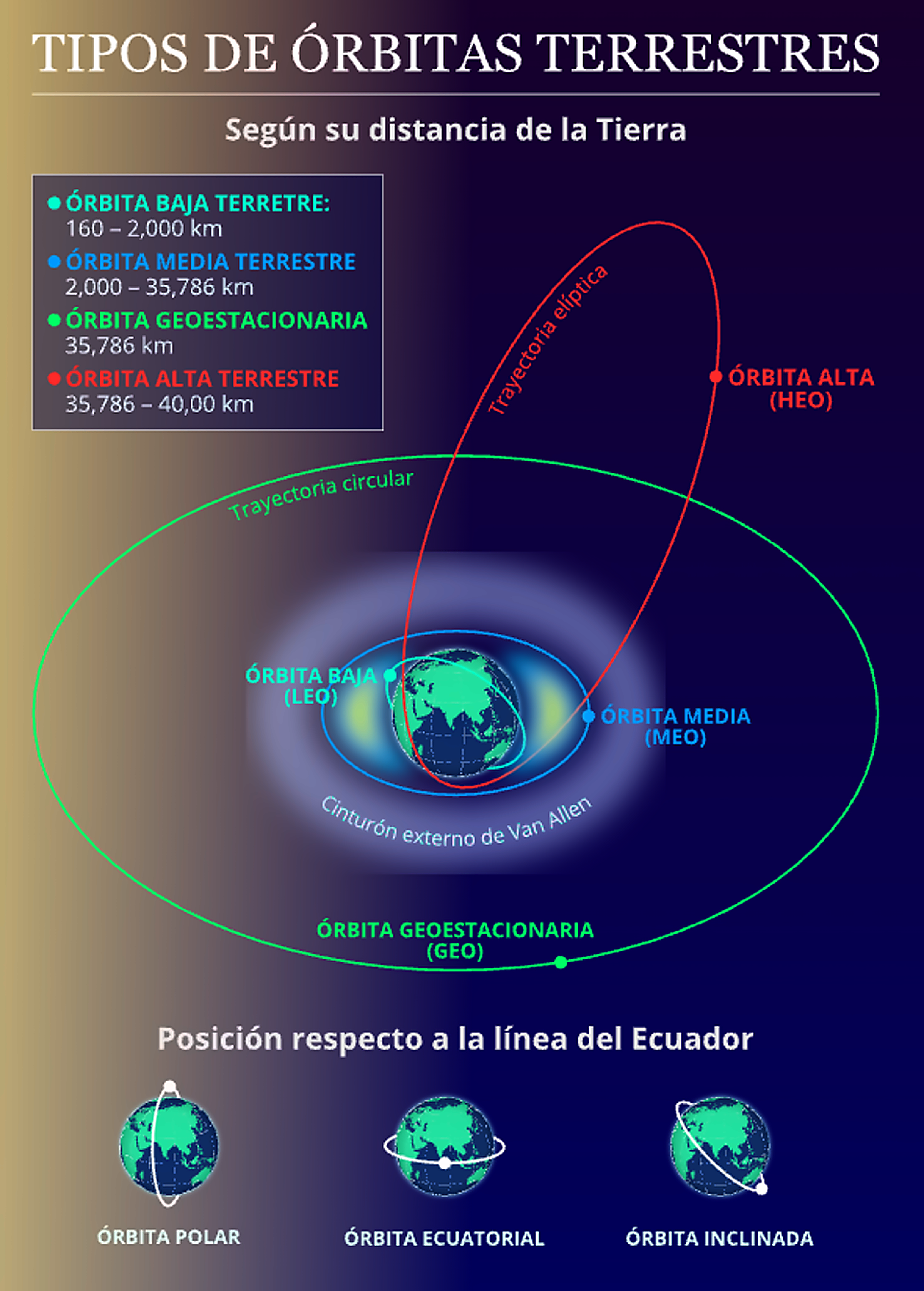
To grasp the magnitude of Kessler syndrome, you have to look at the architecture of our atmosphere. In its lower layers, that gaseous shield works as a natural cleaning mechanism. Below 500 or 600 kilometers of altitude, atmospheric friction slows down defunct objects, exerting a constant drag that forces them to lose altitude until they disintegrate in a thermal flash. The atmosphere, the human species' primary shield, burns up the trash and purges material debris from near space. However, as we climb to higher altitudes (orbits at 800, 1,000, 2,000 kilometers above the Earth's surface, where navigation and communications satellites operate), the air becomes so thin that friction disappears almost entirely. At those liminal heights, a loose bolt or an abandoned rocket stage can stay afloat for centuries or millennia.
Kessler's thesis was brutally simple: once a certain density of satellites and metal debris circling the planet was reached, collisions between them would stop being exceptional accidents and become a statistically inevitable phenomenon.
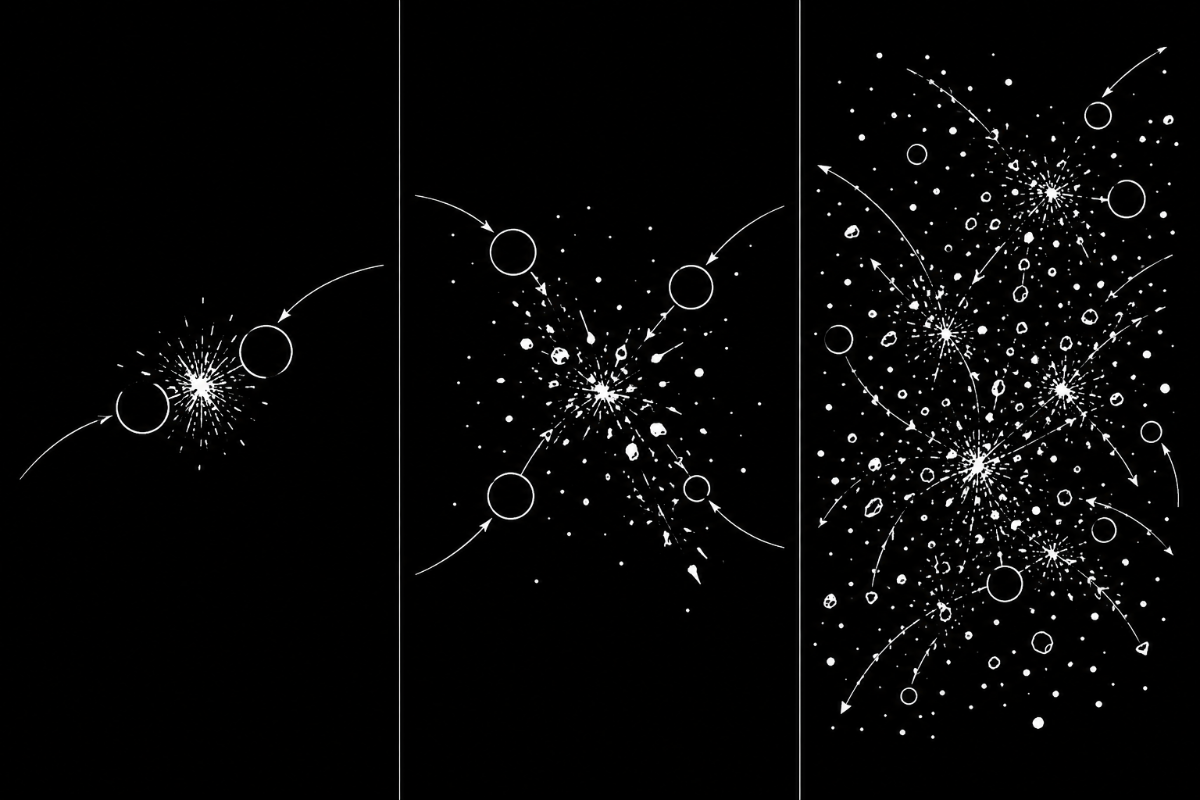
Past that atmospheric shield (that is, once you've “ascended”), orbital physics, again according to Kessler's work, imposes two decisive variables. The first is speed. Objects in low orbit don't drift in some peaceful weightlessness; rather, they travel at around 28,000 kilometers per hour. At that kinematic scale, a collision between two bodies is no humble, insignificant fender-bender. On the contrary, it's a release of energy that pulverizes matter and turns it into a cloud of shrapnel. Now, it would be a mistake to think of the resulting space debris (space junk) as a static problem of passive scraps piling up in a cosmic landfill: every fragment produced, by virtue of the hyperbolic speed it acquires (and which, of course, already “belonged” to it beforehand), becomes a tiny weapon with enormous destructive power.
The second variable is the notion of “critical mass.” Kessler syndrome doesn't describe a sudden cataclysm, but a self-sustaining, progressive chain reaction. Kessler defined a mathematical tipping point: the exact moment when the rate at which collisions generate new debris exceeds the rate of natural removal through atmospheric decay. Past that threshold, the orbital ecosystem enters a dynamic analogous to a nuclear chain reaction. Every impact generates thousands of new projectiles that raise the mathematical probability of further impacts.
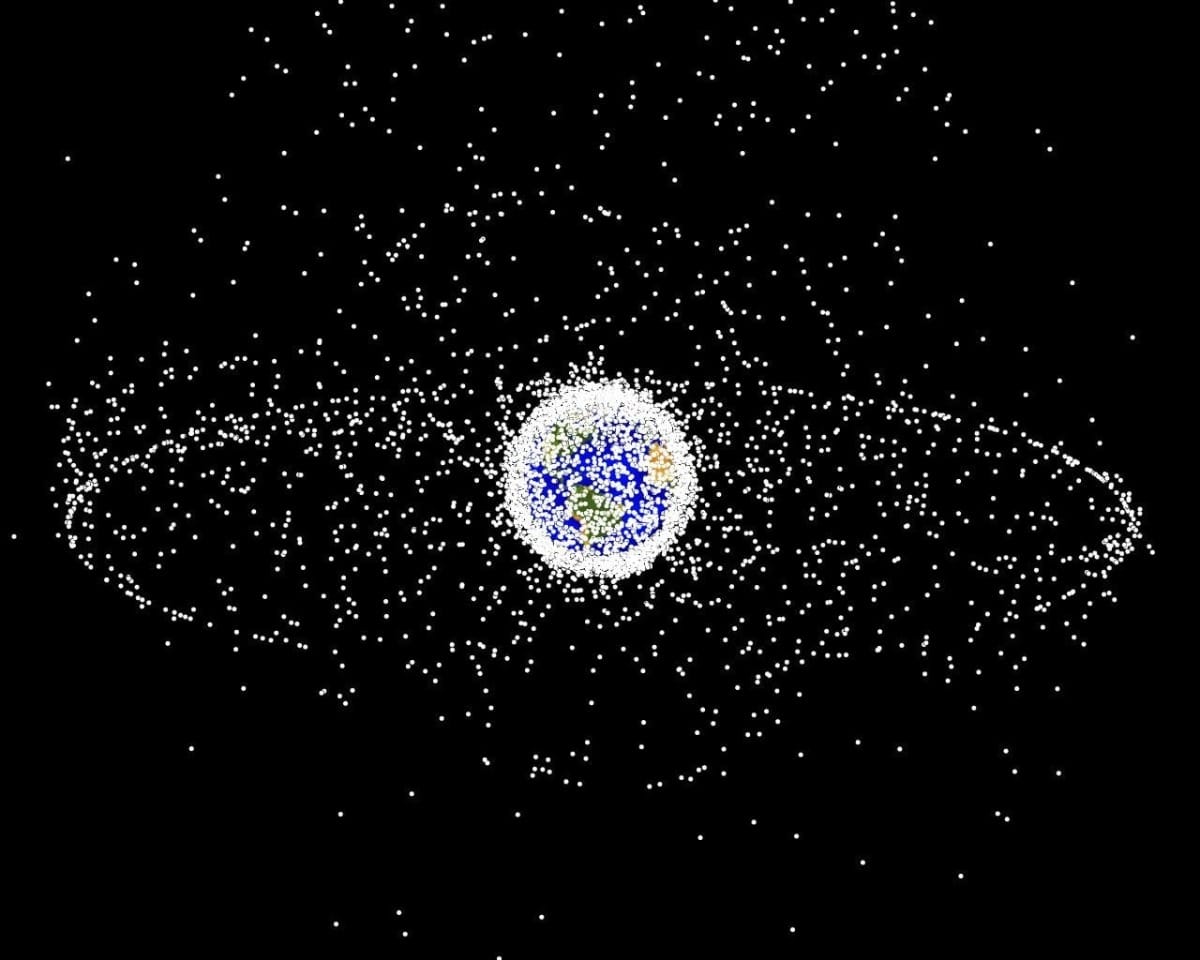
In the 21st century, Kessler syndrome stopped being a speculative mathematical exercise and became a problem to reckon with. It happened in the worst possible way. In 2007, China destroyed one of its own weather satellites (Fengyun-1C) in an anti-satellite test, creating more than 3,000 trackable fragments. Something similar happened in 2009 during the accidental collision between the American commercial satellite Iridium 33 and the defunct Russian military satellite Cosmos 2251 (which crashed into each other at more than 42,000 kilometers per hour, generating over 2,000 cataloged fragments). The volume of debris is growing exponentially.
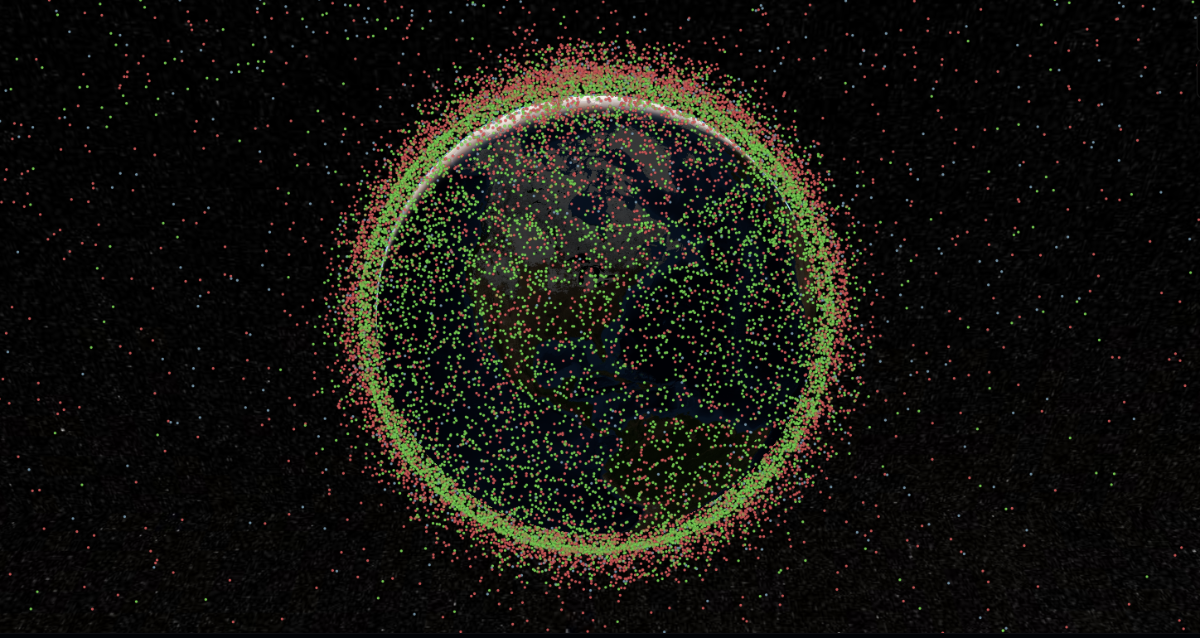
You can never have too many supporting numbers. Today, official figures from the United Nations Office for Outer Space Affairs (UNOOSA) track more than 10,000 active and inactive satellites. But that figure is only the tip of the iceberg. It's estimated that some 36,500 pieces of debris larger than 10 centimeters orbit our planet, along with nearly a million objects between 1 and 10 centimeters and more than 130 million particles smaller than a centimeter, including combustion residue and paint flakes. In 2007, China's anti-satellite test on its own Fengyun-1C weather satellite added more than 3,000 fragments in one fell swoop, dramatically increasing the density of usable space. The International Space Station (ISS) has to routinely perform emergency avoidance maneuvers to avoid being punctured by invisible debris.
What Kessler syndrome warns about isn't a meteor shower raining down on our cities, but something infinitely quieter: the total collapse of space navigability. Once an orbital layer crosses the point of no return, access to outer space could be completely shut off. Under this scenario, the busiest orbits could become impassable walls that would jeopardize new satellite launches from Earth, seriously compromising GPS navigation, weather forecasting, transoceanic telecommunications and the entire computing system (from every bank account in the world to our own Steam accounts).
Translation 1: the flattening of public discourse
So what do we do with all this? Sometimes astrophysics, beyond its mathematical and methodological rigor, offers open ground for building metaphors that help us understand human politics. If we map the structure of Kessler syndrome onto contemporary political and cultural life, the parallel stops being a mere exercise in analogy and becomes an urgent X-ray of our public discursive space.
To carry out this theoretical transposition, we need to bring back the concept of the semiosphere, developed by semiotician Yuri Lotman, a central figure of the Tartu–Moscow School. Lotman conceived of the semiosphere as the whole of a culture's semiotic space: a dynamic ecosystem outside of which the existence of signs, the translation of ideas and human communication are impossible. Just as the biosphere is the physical space that sustains organic life, the semiosphere represents the cultural atmosphere in which communities make the world intelligible.
In a “healthy” discursive ecosystem, public conversation has its own “lower atmosphere”: an institutional, editorial, legislative and civic framework that provides a certain critical friction, mediation and processing time. That friction acts as a moderating filter that burns up sterile provocations and disintegrates rhetorical debris before it contaminates the collective space. Fact-checking, argumentative rigor and accountability for what one says work as atmospheric layers that preserve the navigability of language.
However, the mutation of today's communications infrastructure (dominated by digital platforms and the engagement economy) swept away that purifying friction. Contemporary political discourse no longer moves at human speeds; it travels at hyperbolic rates where every clash of opinions turns into an uncontrolled explosion of media junk. A tweet, a decontextualized clip from a stream or a provocation deliberately engineered by trolling farms isn't trying to add conceptual depth. Its function is to atomize the scene, pulverizing language into thousands of shards of instant outrage that shoot off at runaway speeds.
This is where contemporary politics reaches its own orbital critical mass. Just as Kessler argued about space debris, when the rate at which discursive debris is produced systematically outpaces society's capacity to process or purge it, the contamination becomes self-sustaining. Controversy no longer needs a real event or a genuine ideological debate to spark it; the system generates its own nonstop background noise from the constant collision of the shards already floating in the semiosphere. The direct result of this saturation is a radical flattening of language's hierarchies. In a semiosphere crammed with trash, a scientifically verified empirical truth or a rigorous investigation ends up on the same gravitational plane as a deliberate lie, a defamatory meme or some dumb provocation posted by an anonymous account. The troll's shrapnel hits with the same force as the informed word, destroying the social body's ability to tell signal from noise, argument from junk.
In a semiosphere crammed with trash, a scientifically verified empirical truth or a rigorous investigation ends up on the same gravitational plane as a deliberate lie, a defamatory meme or some dumb provocation posted by an anonymous account.
What's new about the 21st century is the breakdown and disarray of the always tense relationship between doxa and episteme. The result has been nothing but an epistemologically unstable map of contemporary discourse.
Let's look at a few examples from the broad field of the hard sciences. The pandemic was a trial by fire for medicine. The flattening of medical discourse (that is, its delegitimization) breathed life into anti-vaccine movements like never before, delaying the much-hoped-for “herd immunity” by a long stretch; at the same time, it not only paved the way for a proliferation of new diets and eating behaviors that ended up worsening eating disorders among younger populations, but also popularized alternative therapies for COVID and other illnesses, like those pushed by Jim Humble and his MMS (Miracle Mineral Solution), made up almost entirely of chlorine dioxide. In Argentina, for instance, two cases made particular waves. In August 2020, Viviana Canosa, one of the country's most famous TV hosts, went as far as drinking chlorine dioxide from a bottle on air, claiming it “oxygenated her blood”; that same month, in the city of Plottier, Neuquén, a 5-year-old boy died of multiple organ failure after his parents gave him the “magic solution” as a “preventive method” against COVID.
The flattening of physics discourse, meanwhile, fueled the spread of conspiracy theories adjacent to flat-Earthism. From ideological headquarters like the Flat Earth Society and the Flat Earth Movement, flat-Earthers claim not only that the Earth is flat, but that the systemic lie of an oval Earth was cooked up by the world's governments to control society, hide unknown resources or territories, preserve the power of elites, or perpetuate certain religious dominions.
The soft sciences have also taken a beating.
The flattening of historical discourse, for example, has opened the door to shoddy revisionisms built on spurious sources that seek to deny the death tolls of the Holocaust, the Armenian Genocide or, closer to home, the numbers of the disappeared under the Latin American dictatorships of the seventies and eighties.
Translation 2: Dead Internet Theory and Model Collapse
This drift of semiotic pollution reaches an even more unsettling dimension when we metaphorically cross Kessler syndrome with two central phenomena of digital culture: the Dead Internet Theory and the technical phenomenon of Model Collapse (the collapse of models in artificial intelligence systems).
The Dead Internet Theory, born on the fringes of online forums, put forward a hypothesis that has proved increasingly prophetic: the idea that the network of networks is no longer a space inhabited by real human beings and has become a synthetic, simulated, automated environment. According to this diagnosis, the vast majority of the traffic, texts, images and interactions circulating on the web don't come from the agency of flesh-and-blood people, but from networks of bots and content farms designed to simulate social life. The web, once promised as the great horizontal agora of human conversation, thus ends up becoming, according to this theory, a hall of mirrors where subjective agency grows increasingly marginal and irrelevant.
When this massive automation of the web coincides with the arrival of generative AI language models, the junk problem reaches its point of ultimate saturation. In computer science, Model Collapse describes a process of degenerative decay that occurs when new AI models stop being trained on empirical data drawn from direct human experience and start being fed, recursively, the vast volumes of synthetic text and discursive garbage that other algorithms have previously dumped onto the web.
The result of this inbred loop is catastrophic for the very texture of language and its content. Feeding on their own recycled waste, stripped of any anchor in the physical world, the output of information systems undergoes progressive degradation. Language loses consistency, semantic depth, conceptual precision and, without a doubt, aesthetic nuance. The machine processes garbage to produce more sophisticated garbage, which in turn will be consumed by new algorithms in a spiral of cognitive impoverishment.
Just as an orbit saturated with metal makes the cosmos inaccessible, a semiosphere overrun by discursive debris destroys our common language, the necessary and indispensable element for naming reality, understanding it, transforming it.
When public debate feeds exclusively on its own algorithmic rubble, discourse loses all connection with people's material conditions of existence. The concrete problems of work, wages, housing, mental health and territorial sovereignty are eclipsed by a fog of fictions produced by machines to be argued over by bots. Just as an orbit saturated with metal makes the cosmos inaccessible, a semiosphere overrun by discursive debris destroys our common language, the necessary and indispensable element for naming reality, understanding it, transforming it.
Translation 3: the unnavigable sea of discourse
The real danger in these dynamics isn't an apocalyptic explosion or some spectacular physical cataclysm of the kind some of our finest science fiction writers might imagine. It's something far more sordid and grinding: the gradual shutdown of intelligibility. If the world is already a strange thing, if life already looks a lot like cosmic nonsense, well then, a system of incommunicability that feeds back on itself ad infinitum and a virtuous cycle of linguistic schizophrenia could make everything a little more painful. When public space becomes impenetrable through the uncontrolled buildup of verbal debris, society doesn't blow up overnight; it simply, if I may be allowed a somewhat exaggerated expression, switches off.
In this context, perhaps recognizing that the sea before me is unnavigable comes with the sad certainty that it might be better never to set sail at all.
“Not setting sail” is nothing other than retreating into a melancholy form of entrenchment and solitude (or, worse, into an active participation in social media that does nothing but replicate these dynamics). “Not setting sail” means getting comfortable in the archipelagic, insular structure that contemporary times demand: an eroticized, deeply desired confinement in our own echo chambers and automated confirmation biases that do nothing but hand us back the distorted resonance of our own voice.
Closing
The paralysis of intelligibility and collective disorientation aren't accidental or unwanted consequences of informational collapse; on the contrary, they are the indispensable breeding ground for the emergence of new and sophisticated forms of political control.
The contemporary political projects that seek to restructure societies through dynamics of hyperconcentrated capital and civic dispossession need to actively feed this widespread confusion. The shutdown of political imagination and the unnavigability of public debate let them implement sweeping reforms under the anesthetic sheen of permanent noise. While the population bleeds out in sterile culture wars over the rubble of the day, the structures of real power consolidate into arrangements reminiscent of cyberpunk dystopias: concentrations where 1 percent of the population hoards 99 percent of global wealth, dynamics of algorithmic hypersurveillance, absolute precarization of labor, identity theft and unprecedented forms of digital neofeudalism.
Losing our common language means losing the collective tools that allow a community to find its bearings in history, build long-term projects and tell an emancipatory horizon apart from a mere advertising mirage.
Thus, the prevailing and progressive mutilation of meaning is compounded by the loss of large-scale conceptual categories. Amid saturation by the fragment, short-cycle outrage and the fleeting lifespan of the latest news, the great unifying ideas that historically allowed peoples to organize their experience (concepts like homeland, nation, working class, the common good, community, God, and so many others) crumble. Once they're pulverized into a thousand narrative splinters, society loses the capacity to structure broad blocks of meaning, left adrift in a sea of disconnected microdiscourses that insist on their own programmatic irrelevance.
Faced with this horizon of shutdown and junk, the urgent task of our time would seem to be a cleanup operation of semiotic space.
Within this framework, the many forms of Pangaean politics, cognitive sovereignty, intellectual and political education, are always acts of intellectual and civic courage. The decision to leave our own echo chamber, cross the sea of garbage that separates us and go out to meet the other in order to rebuild a common continent means, among other things, restoring discursive standing to scientific knowledge, historical memory, disinterested artistic creation and critical theory.
Only by cleaning up our ecosystem of signs can imagination, that monumental hinge of the human species, reclaim its rightful place. Revitalizing the sobriety of language is the indispensable step toward recovering the audacity to once again name, without fear, the possibility of a collective future.
No 421 article is behind a paywall
And every contributor is paid for their work. Both things depend on our subscribers.