El Péndulo: The Magazine That Popularized Argentine Science Fiction
The story of El Péndulo, a legendary magazine which helped launch Argentine science fiction by combining New Wave literature and counterculture.

The story of El Péndulo, a legendary magazine which helped launch Argentine science fiction by combining New Wave literature and counterculture.
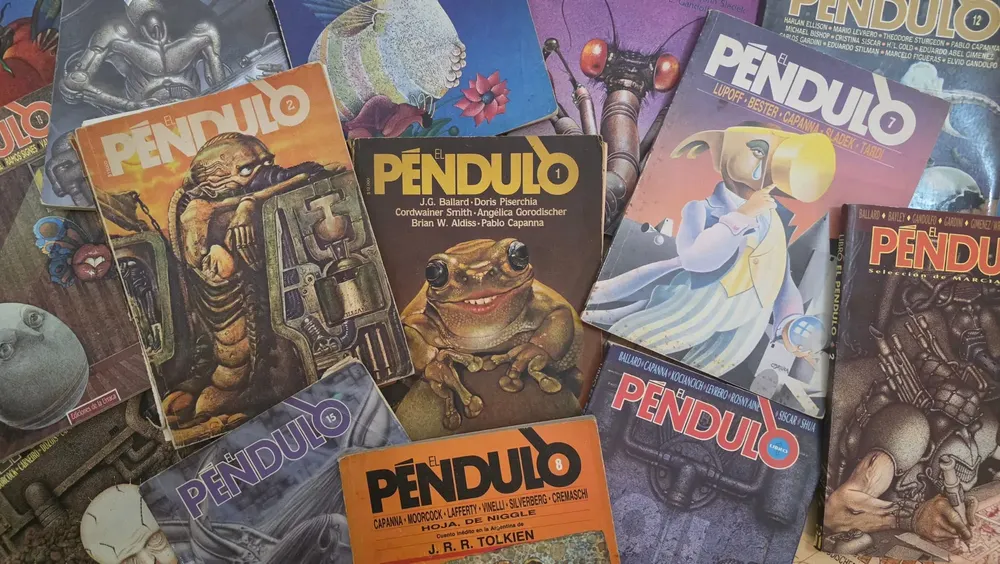
Among the worn shelves of the used bookstores on Avenida Corrientes, one could find volumes adorned with ominous illustrations, their pages filled with tales of science fiction and fantasy, interspersed with book reviews, movie critiques, occasional interviews, essays, and comics. They were from the eighties, yet they persisted through time, almost as if they were new. On their covers, a title in large, clear letters: El Péndulo.
The magazine was not just a collection of pages dedicated to genre literature; it was a cultural device that intertwined various arts and fostered the popularity of science fiction in Argentina. Writers like Cordwainer Smith, Philip K. Dick, Ursula K. Le Guin, Angélica Gorodischer, and Carlos Gardini coexisted with illustrators like Oscar Chichoni, Luis Scafati, Carlos Nine, and Raul Fortín. Essays by Pablo Capanna, critiques by Aníbal Vinelli, comics by Jacques Tati or Enki Bilal mingled with translations by Marcial Souto. This web extended beyond the 120 pages of a magazine and its usual ephemeral nature. It was made to last: it weathered the storms of Argentina's political and economic crises, dying and rising again and again. El Péndulo swung through four eras, and its impact is still felt in the air.
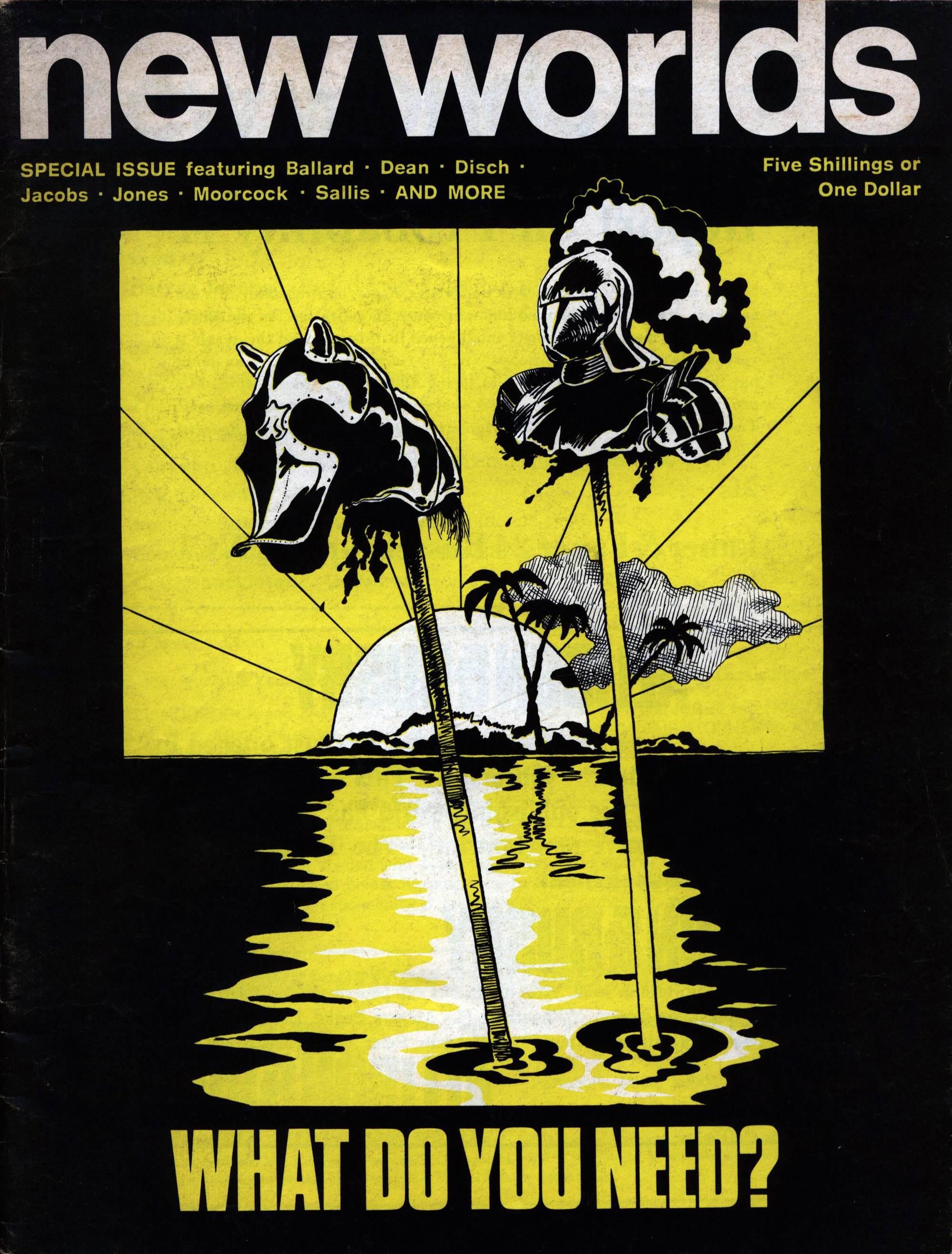
The history of science fiction is also the story of its magazines. From the pulp era, with publications made of cheap, yellowing paper, emerged editors and writers who sought not only to profit from science fiction stories but to transform them. From the first and most well-known, Amazing Stories (dedicated entirely to the genre, thanks to Hugo Gernsback, with pulp adventure tales), through the golden age propelled by John W. Campbell Jr. in Astounding Stories (with stories more aligned with hard science fiction), one can arrive at the British New Worlds by Michael Moorcock, which aimed to renew the genre. The editors, in symbiosis with the magazines, produced genuine talent factories that later, as science fiction established itself and generated a broad fandom and recognition, ended up in books.
In Argentina, as well documented and explored in Carlos Abraham's book Las revistas argentinas de ciencia ficción, there was a notable array of genre publications. Más Allá, affiliated with Editorial Abril and akin to the American magazine Galaxy Science Fiction, had among its writers Héctor Germán Oesterheld (Abraham debunked the claim that the El Eternauta screenwriter was the magazine's director, which was actually led by Giorgio de Angeli, Julio Aníbal Portas, and Alberto Löwenthal), and it was one of the most impactful. But there were others: Centuria, Urania, Pistas del Espacio, among many more. And among them, the magazine Minotauro (whose first era took place in the sixties) and its eponymous publishing house.
El Péndulo was not merely a collection of pages aimed at disseminating genre literature; it was a cultural device that intertwined various arts and fostered the popularity of science fiction in Argentina.
It was perhaps the most important science fiction publisher in the Spanish-speaking world. Its current form within Grupo Planeta is light-years away from its original independent form, boasting an immense catalog, a meticulous and inventive criterion, and above all, the creativity of its founder, Paco Porrúa, the man of a thousand translations. The excellent book Minotauro: una odisea de Paco Porrúa (2023) by Felipe Castagnet describes the adventure of translating works like The Lord of the Rings (1954-1955) by J. R. R. Tolkien, The Martian Chronicles (1950) by Ray Bradbury, or Star Maker (1937) by Olaf Stapledon under up to six different pseudonyms. “He was someone totally extraordinary. One of the most cultured and intelligent people I ever met, who knew how to work extraordinarily with words,” says Marcial Souto about his mentor.
Souto had read Honeymoon in Hell (1962) by Frederic Brown and a young adult novel by Robert A. Heinlein, after which he plunged into the waters of science fiction and read everything circulating. But it wasn't until he discovered Minotauro's books that he understood they were “the best translations he had ever known” and asserts that “many books are better than the original, like More Than Human by Theodor Sturgeon.” They met in the late sixties and immediately “synchronized” through their shared admiration for English writer J. G. Ballard. They talked about the author until night fell, and Porrúa commissioned Souto for his translation. He chose Ballard's short story anthology, The Impossible Man (1966). An admirer of Borges, a former medical student, and somewhat surrealist, the author of masterpieces like Crash (1973), The Concrete Island (1974), or The Crystal World (1966), proposed a science fiction that distanced itself from the Golden Age conception of the genre; one focused not on outer space (spaceships and technology), but on the inner self, the psychological, and the poetic. Porrúa approved the translation, thus sealing a master-disciple bond. This marked the beginning of Souto's long journey with Minotauro, starting in 1971. The Ballardian vein manifested both in his work for the publisher and in his future magazine.
Why create a science fiction magazine? Souto responds: “The genre has always grown and shrunk alongside the emergence of some magazine or collection. When that existed, there were readers and a certain enthusiasm. When they disappeared, the landscape dried up.” The strength and creativity of El Péndulo concealed its persevering gene. Because there were other magazines before, much more ephemeral, experiments that consolidated their experience and refined their criteria, until reaching a more polished stage. The first magazine created by the editor was La Revista de Ciencia Ficción y Fantasía, published by Ediciones Orión between October 1976 and February 1977, with a total of three issues. Despite being named after the well-known American publication (The Magazine of Fantasy & Science Fiction), its main source of inspiration was the first era of the magazine Minotauro. The next project, Entropía, was a single issue that came out in June 1978, and was a direct continuation of the first, made especially to publish texts whose rights had been obtained for the fourth issue of La Revista de Ciencia Ficción y Fantasía.
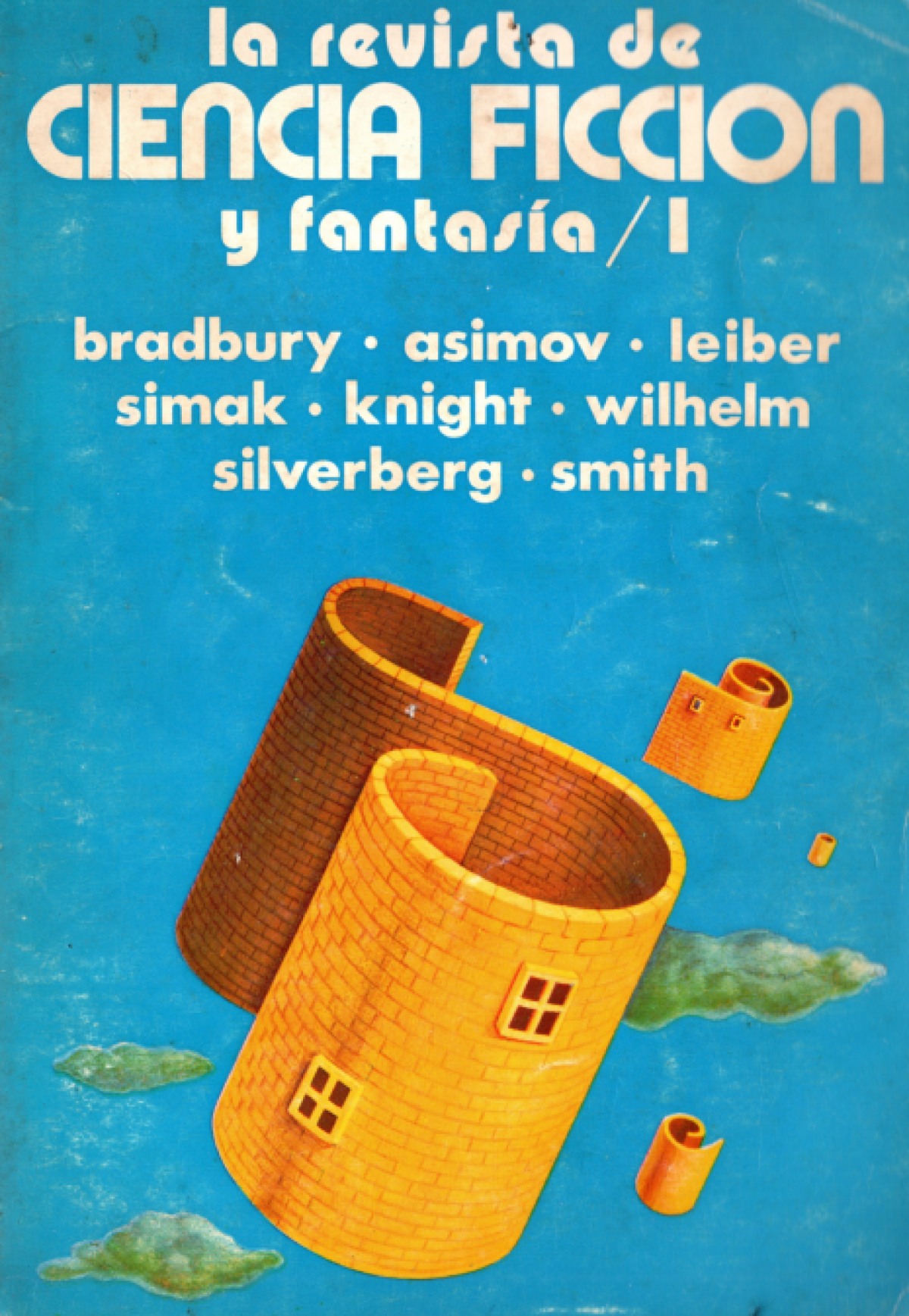
Both contained authors both national and international, who would later appear in El Péndulo: Cordwainer Smith, Pablo Capanna, Carlos Gardini, Mario Levrero, Rogelio Ramos Signes, or Robert Silverberg. But as Carlos Abraham clarifies, the first was an evident offspring of the first era of the magazine Minotauro, while the second already hinted at a more distinct identity, with the elimination of the classic scientific essay and “a more personal roster of authors and collaborators.” And, above all, with an increasingly pronounced inclination towards the New Wave of science fiction.
The strength and creativity of El Péndulo concealed its persevering gene. Because there were other magazines before, much more ephemeral, experiments that consolidated their experience and refined their criteria.
That Souto's first translation for Porrúa was a book by Ballard explains many things, as he belongs to a generation of science fiction writers who revolutionized the genre. It is said that the origin of the New Wave was the three volumes of the anthology Dangerous Visions (1967), edited by Harlan Ellison. Unlike the Golden Age, whose most visible faces were Isaac Asimov, Arthur C. Clarke, and Robert Heinlein, and whose editorial brain was John W. Campbell, the new talents were more concerned with form than content, using the tools of language and literature to innovate through metaphor, poetry, social criticism, psychology, and even surrealism. Michael Moorcock was the editorial representative of this wave, reflected in his magazine New Worlds (and in Nueva Dimensión in Spain), and authors like Samuel R. Delany, R. A. Lafferty, Ursula K. Le Guin, Thomas Disch, or Philip K. Dick were some of the greatest artisans. “During the process, they redefined the genre until it became something that, from J. G. Ballard's perspective, was the ultimate medium capable of adequately representing the reality of the time,” says writer Alan Moore in his article “Frankenstein's Cadillac.”
When Marcial Souto was generating his own identity, the New Wave was a decisive influence in his long literary project, reflecting the international scene of the sixties and seventies. The ephemeral nature of those projects, like much of the Argentine magazines, has its explanation. In Abraham's words: “The causes were generally economic: the impossibility of achieving satisfactory sales, the difficulty of promoting and distributing the publications, and the even greater difficulty of collecting the percentage of sales.” But even so, Souto's drive never stopped, and he even proposed to Porrúa to create a magazine together in the seventies, but that would only happen later.
Because, at first somewhat frail but determined, El Péndulo was born.
In 1975, Marcial Souto, along with his friend and Uruguayan mathematician Jaime Poniachik, planned a magazine of short stories. Inspired by the Mexican El Cuento, they presented the proposal to Andrés Cascioli, partner and director of Ediciones de la Urraca, which, at that time, had just been founded after Isabel Perón's closure of Satiricón, publishing the magazine Chaupinela and Libros de La Urraca. Cascioli happily accepted, and the first issue of the magazine was designed and prepared. Originally, it was going to be called Teorema, but it was already registered, so they opted for another word, in line with that abstract and sophisticated character: El Péndulo. The magazine never came out: Isabel Perón's government implemented the economic adjustment plan known as “El Rodrigazo,” which led to a severe devaluation and a price hike. “It was a brutal wind that changed everything overnight,” Souto asserts.
A few years passed (in the meantime, La revista de fantasía y ciencia ficción and Entropía), until in 1978, Cascioli, taking advantage of the World Cup fever, founded the magazine Hum® and sales exploded. “They really got rich,” Souto claims. Gaining financial backing, one of the magazine's founders, Tomás Sanz, approached Souto to try again to launch the publication. This time without Poniachik (who had his own editorial projects), he developed what was the true first stage of El Péndulo, “a zero epoch” consisting of two tabloid-format issues released in June and July 1979, which didn't even have the corresponding title due to “the company's policies that stipulated that every new launch had to be linked to the main magazine,” as Abraham clarifies. Instead, it was called Supplement of Humor and Science Fiction. It had 64 pages, listed Andrés Cascioli as director, and Marcial Souto as literary advisor.
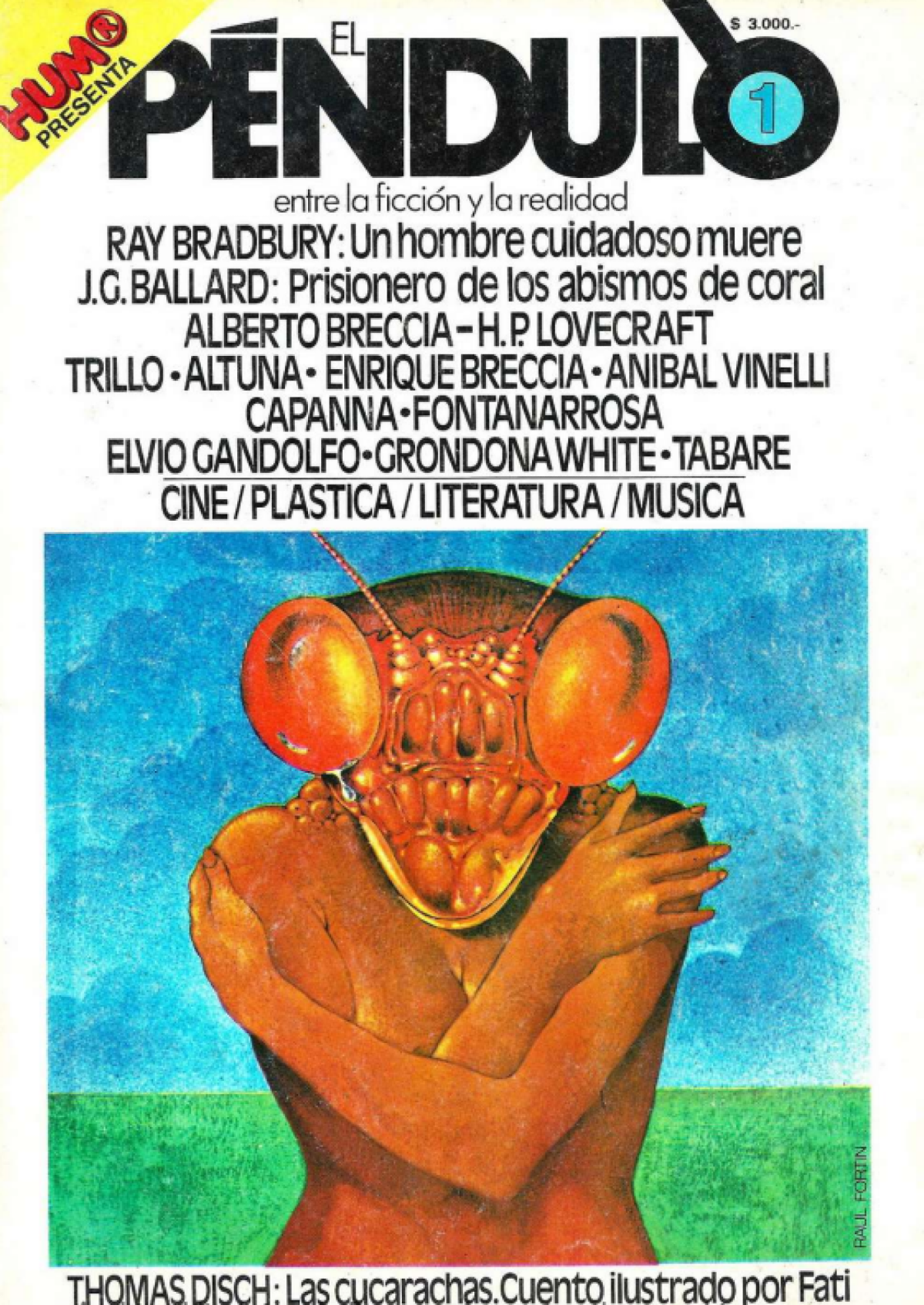
However, that didn't last long. They decided to give it a more concise and independent identity from the “mother magazine,” so the next four issues released monthly between September and December 1979 were titled El Péndulo. Between Fiction and Reality. It increased to 76 pages, combining color with black and white, and Souto rose to the position of “literary director.” But once again, the formula was not quite established. The tensions between the mother publication, primarily focused on graphic content, with multiple illustrations and comics, clashed with Souto's creative intent, dedicated to producing a magazine that was purely literary. And partly for that reason (which would be a constant throughout its history), this first era came to an end. “Each story had 20 or 30 illustrations because Cascioli believed that people had lost the reading habit and needed to be guided by images,” Souto recounts. The high costs of this type of production (which included sixteen pages in color) led them to decide to halt it after the fourth issue. In that issue, the project Ficción was announced, a literary magazine presumably closer to Souto's intentions. It was designed, but it also did not prosper.
The tensions between the mother publication, primarily focused on graphic content, with multiple illustrations and comics, clashed with Souto's creative intent, dedicated to producing a magazine that was purely literary.
However, El Péndulo continued to swing: a year and a half later, Cascioli called Souto and proposed to relaunch the magazine with a different format. By then, the magazine Hum® had already established itself with its identity of satirical graphic humor and, with censorship having eased in the last years of the dictatorship, it attracted a large opposing audience. As stated in the text "The ups and downs of El Péndulo" regarding this new edition: "In one year, sales grew from 40,000 to 140,000 copies, and La Urraca suddenly found itself in a comfortable position to support new adventures." At that time, journalist Miguel Grinberg was editing the magazine Mutantia, a countercultural, ecological, and pacifist publication made in a book format, "making use of a cut of paper." This time, Souto was given total creative control, although Cascioli still took some liberties, such as placing a joke at the end of each page or including a comic strip at the end of the magazine.
The second era of El Péndulo officially began in May 1981 and lasted for 10 issues, which were published bimonthly. In it, the oscillation of the magazine had finally stabilized: 130 pages, a predominant presence of science fiction and fantasy stories, accompanied by some illustrations at the beginning of each one, comic strips, essays, a section for reviews and critiques, and texts from the genre's world.
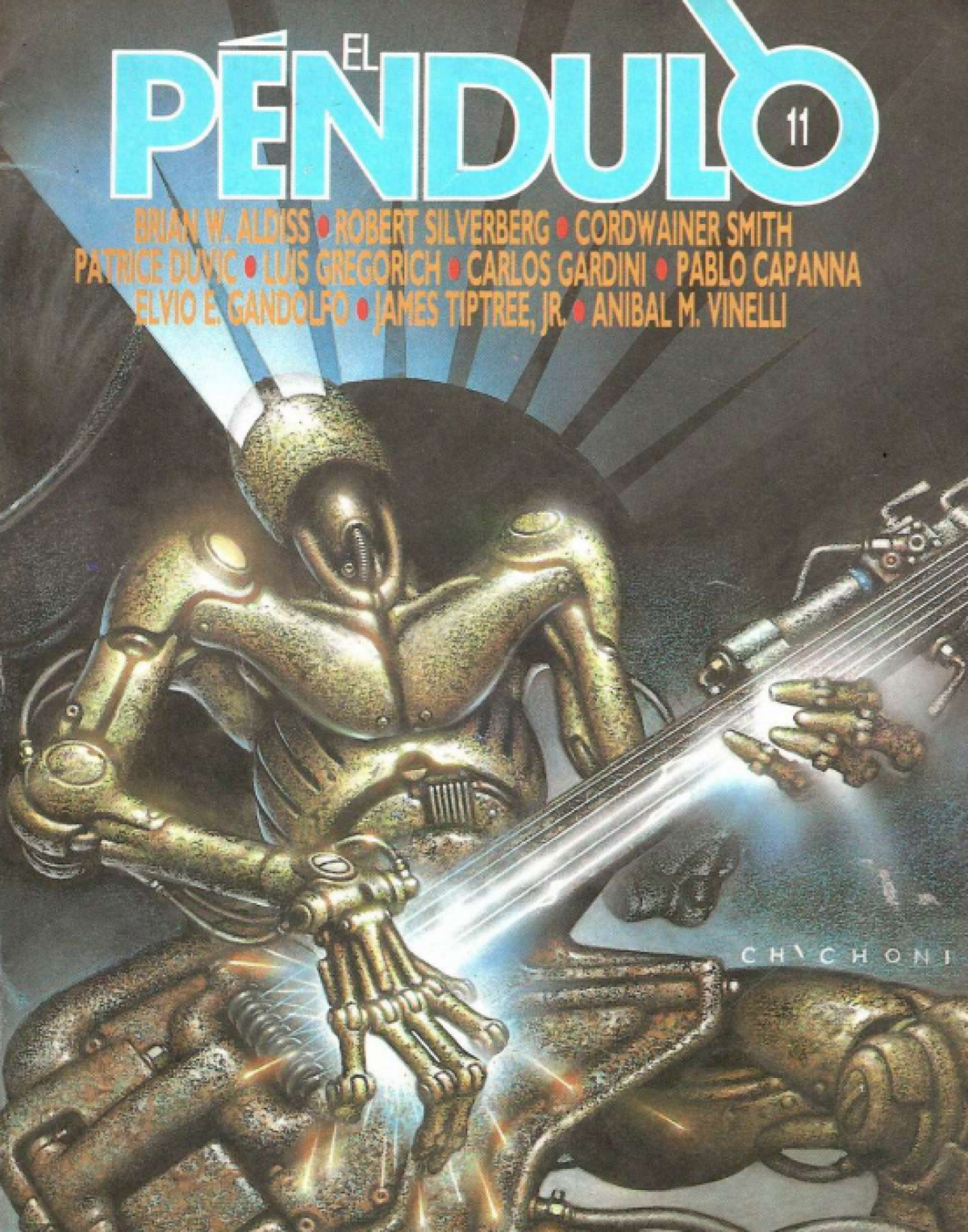
Its end occurred once again due to economic reasons and editorial decisions. "I felt that the capitalist partners of Andrés Cascioli didn’t like their employees spending so much time on this magazine that was like a whim," says Souto. The second era concluded in November 1982, and around that time, his father passed away, prompting him to return to Barcelona. In the meantime, he met with Paco Porrúa and they revisited the idea of creating a continuation of the magazine Minotauro, in the form of a second era. In a way, it followed in the footsteps of El Péndulo, with an almost identical structure and format in spirit, lasting from the first issue in April 1983 until issue 11 in March 1986.
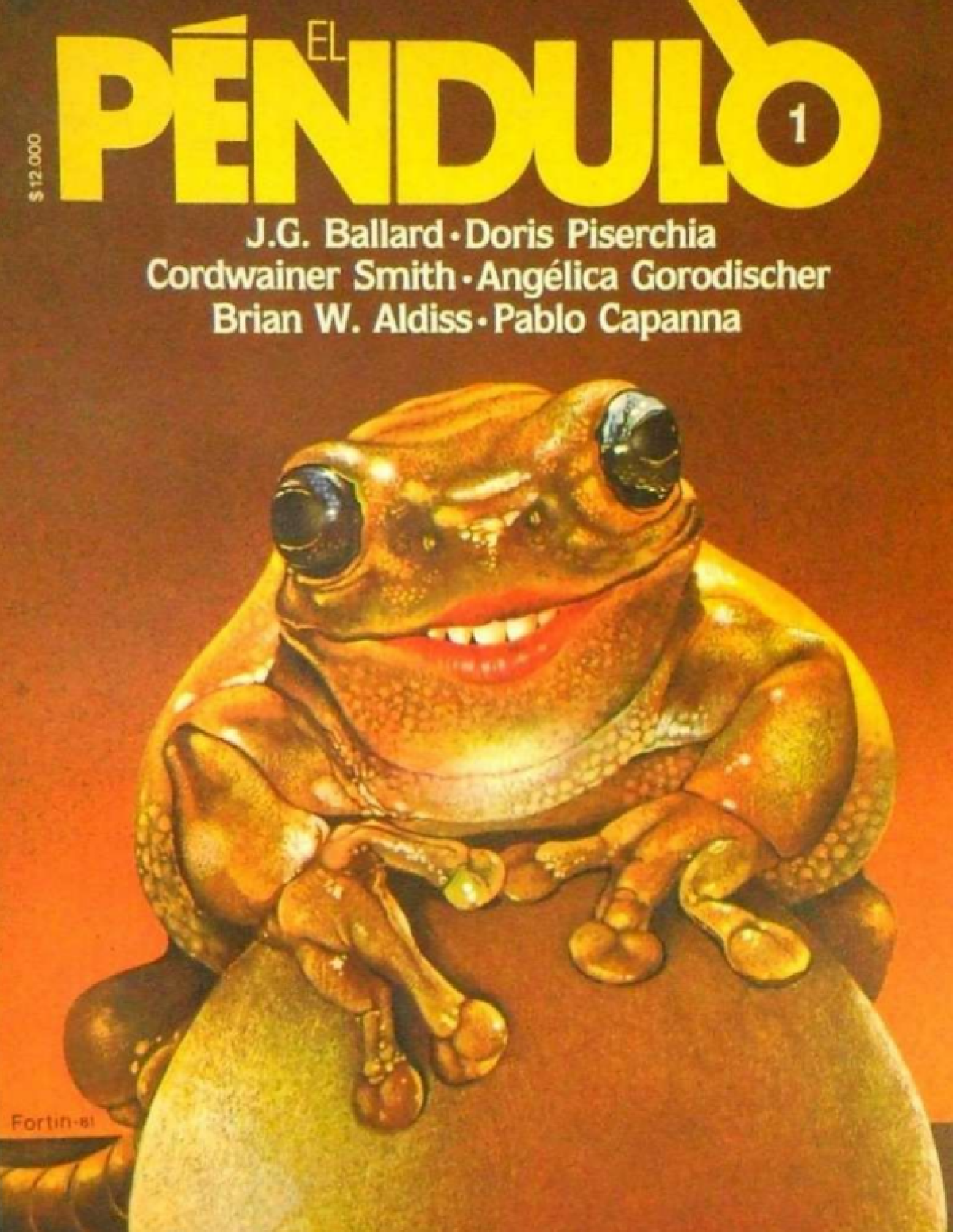
Cascioli did not give up, nor did Souto, and El Péndulo was reborn as a magazine once again. As Carlos Abraham states, two factors contributed to its return: the success of science fiction books in the eighties and a quote from Swedish writer Sam Lundwall (later published in the magazine) who stated in his historiographical article on science fiction magazines, "Adventures in the pulp jungle," that El Péndulo was "without a doubt, the best science fiction magazine in content, presentation, and design ever published." This third era lasted five issues, released between September 1986 and May 1987. Its aesthetic and format did not vary much from the previous stage, or in any case, it ended up almost completely independent from the parent company Hum®: it no longer featured comic strips, the journalistic section was reduced, and literature was given top priority. But May 1987 marked the final stamp of the third era, which, in some way, would be its last.
El Péndulo was "without a doubt, the best science fiction magazine in content, presentation, and design ever published."
The fourth could be considered a sort of epilogue, a farewell closure, no longer as a magazine, but as an anthology book, published in two volumes in November 1990 and May 1991. The first opened with an introduction by Marcial Souto and, before proceeding to provide a biographical summary of each author (the only non-fiction text in the book), reviewed the history of the publishing house, concluding: "El Péndulo established itself as a space for dialogue between the best texts of national and foreign speculative fiction and the work of the best Argentine illustrators."
In her article "The conquest of a genre: El Péndulo and science fiction in Argentina," Soledad Quereilhac uses Raymond Williams' concept known as "cultural formation" in her assessment of the magazine's work: "The realm of El Péndulo was an instance of reading, translation, reflection, and production of literature, which was not limited to the initiative of a handful of 'literati,' but was assembled with the structure of a commercial publishing company that ensured greater reach to the reading public and opportunities for interaction with that public, in addition to the crossover with illustrators and comic artists that gave the magazine an artistic blend."
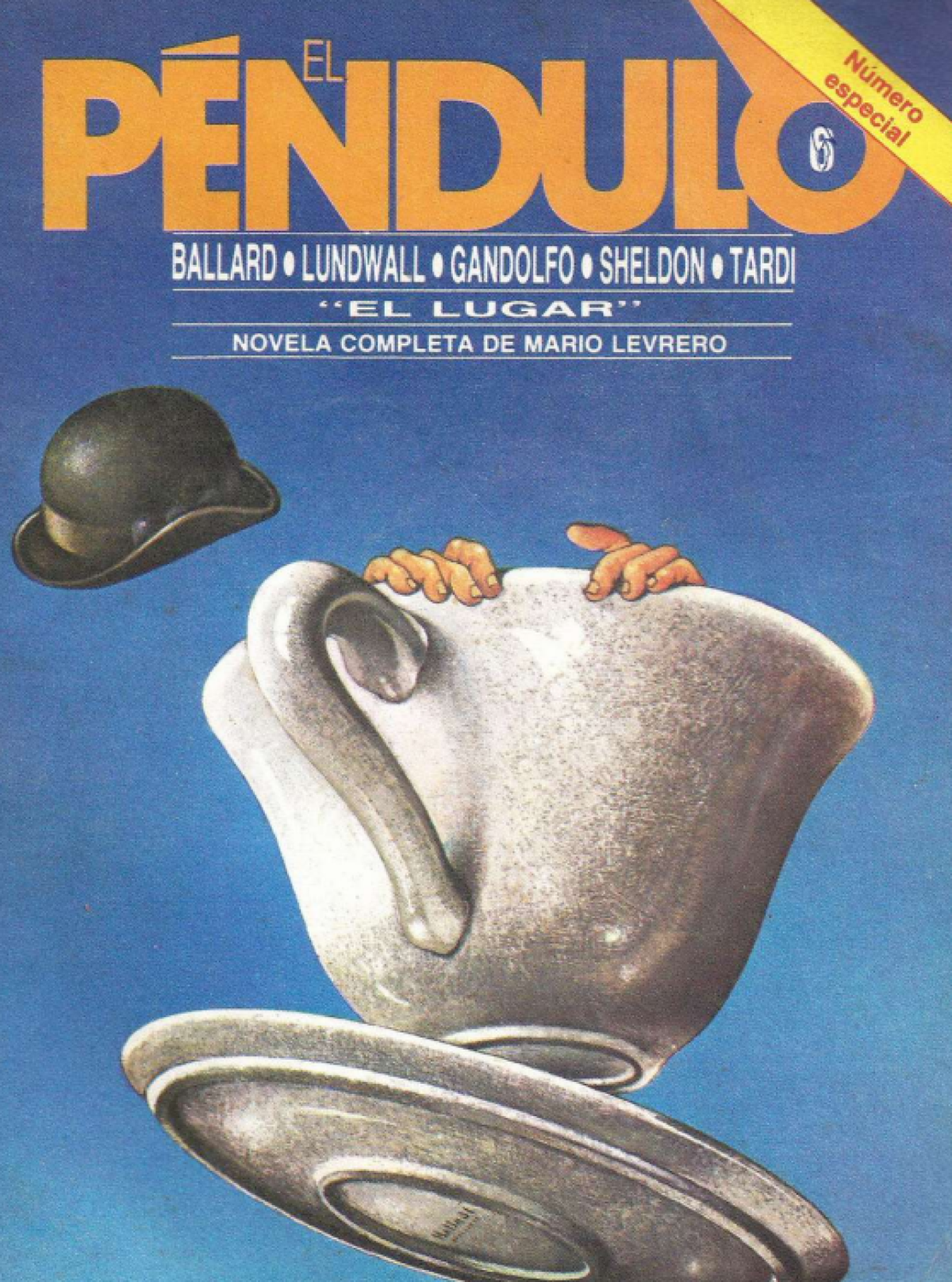
And the publication directed by Marcial Souto had a significance that transcended the limits of its pages, spilling over into the entire genre and, especially, into the national one, something that can be measured factually: as the issues progressed, the number of Río de la Plata authors grew, and by the third era, they were almost half of the contributors. Some of the names that appeared consistently included Mario Levrero (whose novel The Place was fully published in issue 6 of the second era), Angélica Gorodischer, Eduardo Abel Giménez, Cristina Siscar, Carlos Gardini, Luisa Axpe, and Sergio Gaut vel Hartman.
El Péndulo was a journalistic, artistic, and cultural powerhouse, directly connected with its readers through mail, which Souto dedicated himself to answering and whose selection he published in most issues of the second era. At the same time, seminars such as "The other worlds of science fiction," taught by Souto and Capanna, were promoted, the First International Ultramar / El Péndulo Contest was announced, the fandom of the magazine Más Allá was called upon, and the science fiction bookstore La Vía Regia and the books from Minotauro were promoted. It was a key piece in the history of the genre in the country, a production of extraordinary and influential quality.
As the issues progressed, the number of Río de la Plata authors grew, and by the third era, they were almost half of the contributors.
The magazine was an anomaly for Hum®, not only due to its genre connotation but also because of its working methodology. Because unlike what one might think, such a work was not conceived in an office, but in the quintessential porteno space: the bar. "I never had an office in the publishing house, nor a chair, nor a table," says Souto. Among coffees and medialunas, he managed with a folder and met with his collaborators on different days of the week. In that sense, in a way, his editorial process was mental: "The only one who had the magazine in mind was me. The only one who knew what would be in the next issue, how much space it would take, what stage it was in," he declares. And he adds: "I always worked on the edge of the deadline, with a lot of difficulty. I estimated that each issue cost me half a year of life."
From that mind emerged the most recognizable structure, that of the second era, under the graphic design of Sergio Pérez Fernández (succeeded in the third era by Susana Rochocz) which began with the critical and journalistic section "Earth Chronicles," directed by Elvio Gandolfo, composed of different columns: "Stardust," where he himself selected a constellation of quotes from authors and reflections on the genre; "Film," where critic Aníbal Vinelli (and later, in the third era, Marcelo Figueras) provided extensive and comprehensive reviews of genre films of the moment; "Buried Books," where Gandolfo focused on reviewing almost unknown or non-canonical books; "Books" (plainly), where contributors like Pablo Capanna, Carlos Gardini, Elvio E. Gandolfo, or Sergio Gaut vel Hartman wrote about books.
In territory outside of fiction, "Earth Chronicles" was joined by the constant essays of writer, philosopher, and Italian-Argentine teacher Pablo Capanna, who had already published books like The Meaning of Science Fiction (1966) or The Tecnarquia (1973) and who had met Souto at the Second Argentine Science Fiction Convention (also known as Mardelcon), held in July 1968 at the Club Pueyrredón in Mar del Plata. From that moment, the bond was constant, and Capanna recalls how he would meet Souto in bars, who would bring him books lent by publishers for him to research for his articles: "That allowed me to reach an audience I didn't know." In his deep and accessible popular essays, he delved into the work of authors like J.G. Ballard, Isaac Asimov, Cordwainer Smith, Olaf Stapledon, or J.R.R. Tolkien, with a marked and captivating style. "I always tried to put myself in the place of the other. Of the person who knows nothing about this and wants to learn something," he states.
The illustrations, on the other hand, were also commissioned with discernment. Souto would meet with the artists in bars and tell them about the stories they were to illustrate. The identity of El Péndulo was largely due to its extensive lineup of illustrators, most of whom were well-known in the field, such as Carlos Nine, Oscar Chichoni, Kike Sanzol, Raúl Fortin, or Luis Scafati. And while the first era of the supplement, closer to the graphic than the literary, was now behind, Cascioli's influence was still noticeable in the comic strips at the end of the magazine of the second era (Progreso by Enkil Bilal and Pierre Christin and The Ice Demon by Jacques Tardi, serialized), but especially in his character as a "maniac for occupied spaces": "If there was a little space left at the end of a story, he wanted to squeeze in a joke somehow, and sometimes it created an anticlimactic effect. But he never interfered with what I chose," clarifies Souto. By the third era, comic strips and jokes had completely disappeared, and the page breathed at the end of each story.
But the core of the magazine was literary, and the stories played a central role: translation. Fascinated by the contrast between Paco Porrúa's translations for Minotauro and other editions, Marcial Souto studied English and earned a scholarship to travel to the United States, where he coincided with the World Science Fiction Convention (Worldcon). Since then and throughout his career, he met Roger Zelazny, Philip Joseph Farmer, Robert Bloch, Richard Matheson, and even cultivated deep friendships with J.G. Ballard (with whom he had a 40-year bond), Ray Bradbury (with whom he had repeated conversations, both in Buenos Aires and Los Angeles), and Brian Aldiss, whom he calls his "best friend in the world of science fiction." Such contacts acquired at conventions, along with his translation skills learned from his mentor Porrúa and his studies, were vital for the dissemination of stories in Spanish. "Translation is something invisible and desirably invisible. If it is completely invisible, it means it is very good," reflects Souto, who was accompanied in his work by Carlos Gardini.
The oscillations of El Péndulo, which began fruitlessly in 1975 and extended intermittently but persistently for over 15 years, continue to resonate even today. The position that science fiction occupied in Argentina before and after the magazine was notably different. "For all of us who read science fiction, it was a discovery. We were huge fans of Minotauro because it always had excellent material and very good translations. Having El Péndulo, and being able to participate in Hum®, felt like: 'Finally, I'm recognized in this little world that matters so much to me.' That, subjectively. Objectively: science fiction became mainstream," says Eduardo Abel Giménez, editor and writer, whose first story, "Quiramir," was published in issue 10 of the magazine.
The oscillations of El Péndulo, which began fruitlessly in 1975 and extended intermittently but persistently for over 15 years, continue to resonate even today.
The entire project of the magazine El Péndulo can be interpreted as a Borgesian operation, in the words of Luciana Martínez in her essay "Translation policies and publication of Argentine science fiction magazines (1979-1987)": "The Borgesian irreverence is another great tradition to which these publications cling, as they recover texts from the genre that are even outside the global canons, a gesture accompanied by an effort to create critical works that could place these poetics on the map." As Borges postulates in "The Argentine writer and tradition," national literary history can be constructed by integrating international influences that each author makes their own. What Souto accomplished, selecting and translating a group of authors, mostly Anglo-Saxon and from the New Wave, generated the conditions for writing and reading by national authors.
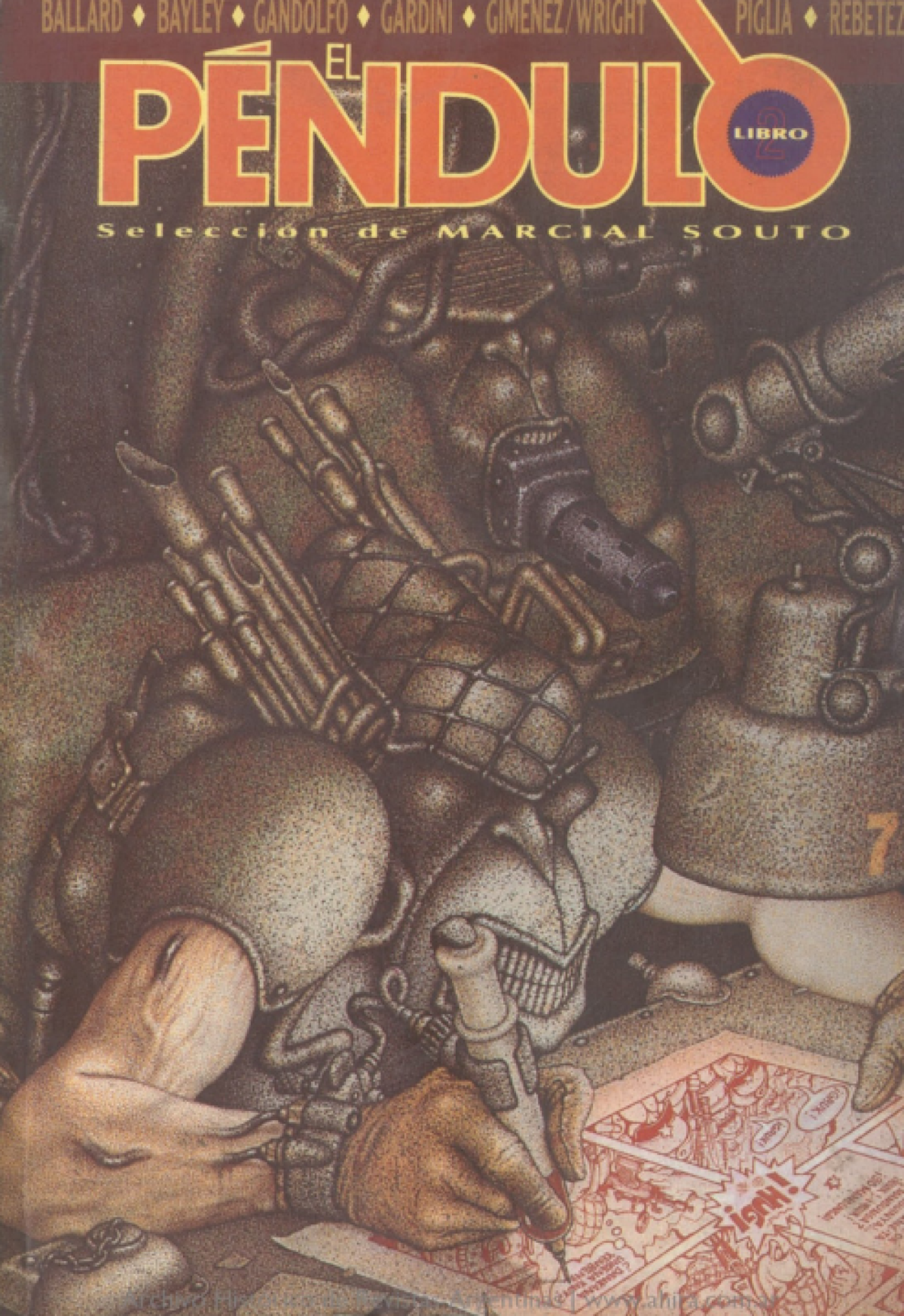
In this regard, Marcial Souto had a direct impact on the promotion of Argentine authors of science fiction and fantasy, not only in El Péndulo but also in Minotauro. Before him, Porrúa's publishing house had only published three authors in the genre: Alberto Vanasco, Eduardo Goligorsky, and Angélica Gorodischer. After nearly 15 years, at Souto's insistence and under his own direction, the collection Autores Rioplatenses was created, featuring ten titles from authors who, not coincidentally, also appeared and would appear in El Péndulo: the same Gorodischer (Kalpa imperial I and II), Rogelio Ramos Signes (Las escamas del señor Crisolaras), Ana María Shua (La sueñera), Sergio Gaut vel Hartman (Cuerpos descartables), Mario Levrero (Aguas salobres), Carlos Gardini (Mi cerebro animal and Juegos malabares), Luisa Axpe (Retoños), and Eduardo Abel Giménez himself (El fondo del pozo). “That didn’t exist; no one was doing that. It was the first time within the world of science fiction that authors from here managed to publish books, and not just anywhere, but in Minotauro,” he recounts. He himself won the Gilgamesh award in Spain in 1986 for “Quiramir,” an honor he shared with none other than Ursula K. Le Guin. “It was the climax of my life,” says the author, who has already published ten books, including El fondo del pozo (1985) and Juicio a las diez (2019).
The magazine Minotauro, in its second era directed by Gardini, published in its issue 10, especially dedicated to national science fiction literature, a self-aware introduction reflecting the same impact as it and El Péndulo had on the national genre: "Two or three years ago, perhaps there weren’t enough authors or stories to attempt this adventure. El Péndulo, some not strictly professional publications like Sinergia, Cuásar, and Nuevomundo, this very magazine, and the collection of speculative fiction books written in Spanish that Minotauro has been publishing since May 1983, have encouraged a whole new generation of writers."
What Souto accomplished by selecting and translating a group of authors, mostly Anglo-Saxon and from the New Wave, created the conditions for writing and reading among national authors.
Today, science fiction occupies an unquestionable place. Recognized authors use tools from the genre without being labeled as such, and publishers like Anagrama have multiple science fiction authors in their catalog, which “has expanded in the sociocultural imagination to become an indispensable part of it,” explains Abraham. However, certain specializations still exist. Caja Negra has the Efectos Colaterales collection, featuring several of the best authors in the genre at the moment (Juan Mattio or Michel Nieva), while Indómita Luz boasts the Arqueologías del futuro collection (including Flor Canosa or Alejandra Bruno), and the already classic Línea C from Interzona features authors like Stanislaw Lem, M. John Harrison, or Rafael Pinedo. Magazines like the digital Axxon, active since 1989, and Próxima, the first publication from Ediciones Ayarmanot by Laura Ponce, which lasted from March 2009 to December 2019, owe a lot to the existence of El Péndulo. The genre has blended with others, taking on the form of a certain New Weird, which would not have been possible without the innovation and narrative tools of the New Wave so widely disseminated by El Péndulo.
The Historical Archive of Argentine Magazines (AHIRA) houses all the eras of the magazine El Péndulo. And its timelessness remains intact: “It still seems very readable to me. You can read it with great pleasure. The content holds up well,” states Eduardo Abel Giménez. Both Capanna and Souto recall a failed attempt a few years ago to revive El Péndulo alongside editor and writer Hernán Casciari: "That worked in its time. It’s a different world now. We need to do something different, and it has to be done by another generation," Capanna asserts. Meanwhile, Marcial Souto has been living mainly in Barcelona for years, where he continues to do translations and, above all, read a lot. "Our world is built on fictions. Someone is writing these things," he concludes.
Y a cada colaborador se le paga por su trabajo. Las dos cosas dependen de los suscriptores.