Philip Dick: Science Fiction for the Radical Search for What It Means to Be Human
Amid paranoia and false realities, Philip K. Dick sought out what it means to be human in a broken world.
"Reality is that which, when you stop believing in it, doesn't go away".
Yes. We live in an era of unreality. A silent struggle between psychopaths and schizoids. The literature of Philip Dick is perfect for discussing all of this. And, putting aside his personal life (or not so aside), we can find in his paranoid literature, filled with unique categories, a gesture of radical humanity. A gesture that offers a philosophy of what it means to be human.
Philip K. Dick writes during a time of control, where the DeepState permeates everything with paranoia. We are now in an information society (or post-information, if we hop on the train of adding prefixes to give a fresh punch to our analyses). But what he writes somehow comes true in this schizoid present, where it’s all too easy to convince oneself of something by sucking in bait.
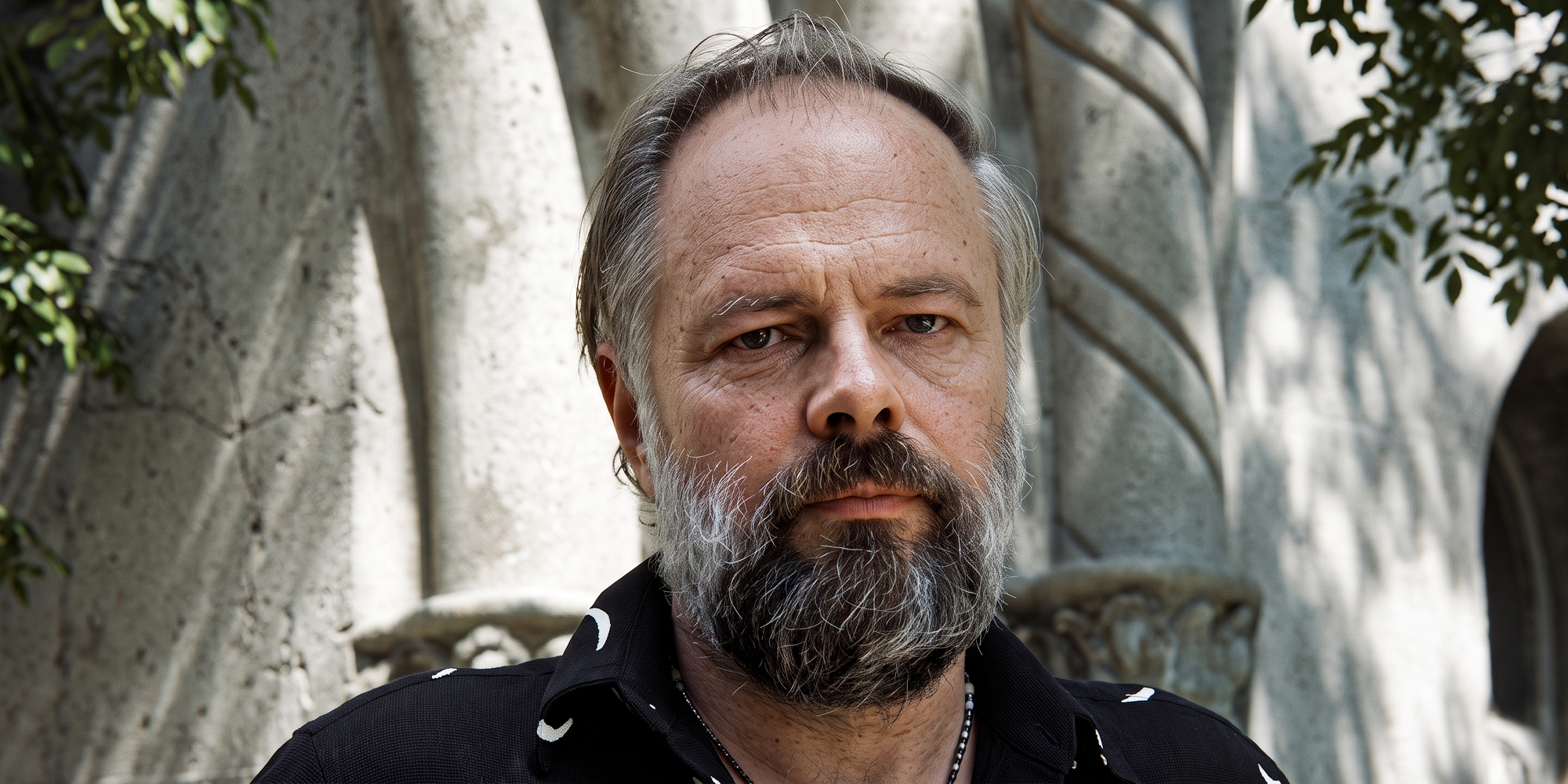
At the peak of a life filled with conflicts, a messed-up guy who has just written his most memorable science fiction novels, gone through several marriages, and lived years filled with amphetamines, hallucinogens, depression, and family chaos, has a deranged revelation that plunges him into a terrifying religious journey. It’s just a moment: a girl with a pendant shaped like a Christian fish triggers a spiritual break that he will try to process for the rest of his life.
As we planned how to approach this profile, we wondered if there could be a “hopeful” vein in Philip Dick. The first answer was that (and I quote) definitely not. Philip Dick was a guy who spent his life questioning what is real, feeding a picturesque madness for those who look at it from afar, in a detective-like search for the divine, haunted by the horror of entropy. His novels are paranoid and dark, just like he was. He doesn’t believe in institutions, progress, technology as salvation, or the stability of reality.
His novels are paranoid, dark, and distrustful, just like he was. He doesn’t believe in institutions, progress, technology as salvation, or the stability of reality.
But he believes. What he does best is believe and seek. In the style of Johnny Carter, the character from Cortázar in “The Pursuer.” A hyper-talented jazz musician obsessed with sex, substances, and a surreal reality that transcends time, which he tries to reach through music, because he can’t capture it intellectually.
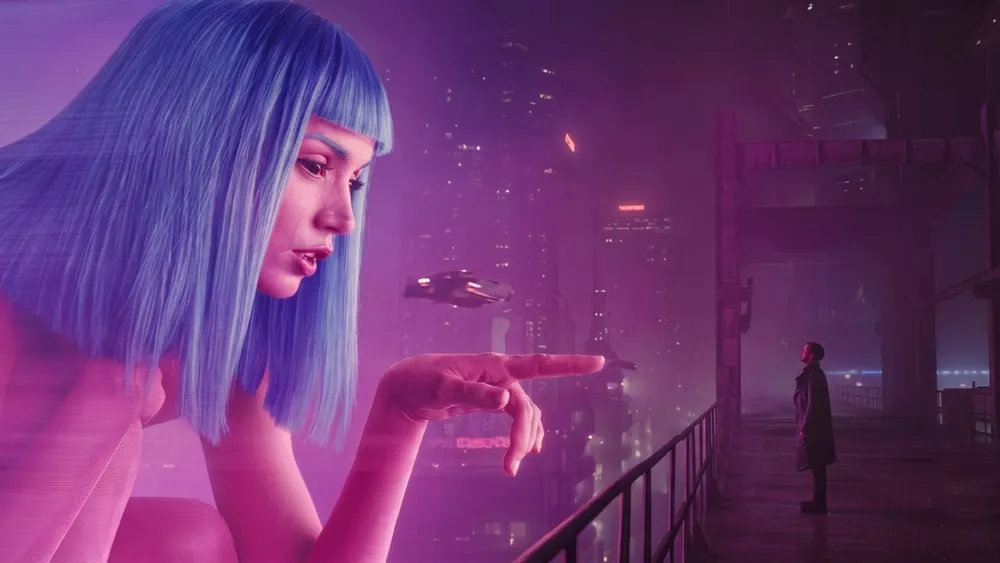
Dick is the author of three metaphysical stories: Do androids dream of electric sheep?, adapted into Blade Runner, a dystopia where humans hunt androids that feel increasingly human (through a test, the Voight-Kampff, that measures the capacity to feel empathy). It’s the laboratory of empathy. Ubik, an incredible tale where characters disintegrate in a world that regresses in time, trying to counteract entropy with a divine aerosol. And The man in the high castle, a novel of overlapping realities that starts in a plane where the Axis won World War II, the United States is occupied and divided between the Japanese area, the Nazi area, and a neutral zone, and the true history of the world (one that is subtly different from the one we readers live) is contained in a clandestine novel written by an ordinary guy dictated by the I Ching. Among these powerfully metaphysical tales are also The three stigmata of Palmer Eldritch, Time out of joint, and Flow my tears, the policeman said.
If there was techno-optimism in authors like Isaac Asimov, there’s an unbeatable will in the literary trench of Philip K. Dick. A guy who trusts in the broken individual moving through the system’s webs. One who is always asking, “What makes me human?” And, above all, “How do I become one?” Someone for whom the human can exist, in fact, in any body, no matter how artificial. While in Asimov the human scale tends to be civilizational and accumulates in institutions, knowledge, rationality, and plans capable of spanning centuries, Dick remains among employees, salespeople, addicts, the police, and their victims, consumers. Both positions question what it means to be human. Only Dick goes out on that search naked, exposed, and comes back much more battered.
Philip Dick's exploration has a lot to do with our current moment. So: can something optimistic be found in Philip Dick? Yes. But it’s exhausting, and it’s at the core of his belief system. Just as exhausting as the kind of optimism found by suicides, addicts, the damned, the neurotic, the Raskolnikovs. The optimism of those who are too awake.
Sometimes it’s not necessary to be entirely optimistic. It’s enough not to fall into nihilism. What more optimism of the will can one think of than that, while we feel the world falling apart? Which leads us to a question about how: is it most coherent to surrender to paranoia? To measure everything with the theory of psyops? Paranoia is, after all, the fuel of dystopias. We’ve deciphered our genetic code. We’ve read it, loaded it into a technology that recreates language, that mimics thought, and that, now, we have to decode. The vertigo in front of the thinking machine is more palpable than ever today. We are reading, now, the new humanity we are forming. We are in the era of resuming the decisive explorations that people like Bacon once made about the procedures of knowledge; Humboldt about the connections that hold nature together; Mary Somerville about the links between sciences that were beginning to separate; Marx about the functioning of that economic system that had consolidated; Hannah Arendt about the activities with which we build a common world; Kuhn, about the renewals of our tools for understanding reality; or Donna Haraway about the increasingly blurred boundaries of being human, just to name a few.
Philip Dick, in two realities
Capturing his work is complicated because the guy wrote at a frenetic pace (according to him, he managed to write 16 novels in 5 years), but it’s enough to read a couple of things to know that Philip Dick was a guy condemned to imagination. His paranoia actually has very concrete historical roots. He wrote during the Cold War, Watergate, the rise of consumer capitalism, and state surveillance in the seventies. Many people have written about his life, but two of the most beautiful and interesting biographies to read are Divine Invasions: A Life of Philip K. Dick, by Lawrence Sutin, and I Am Alive and You’re Dead, by Emmanuel Carrère.
Until he was six weeks old, Philip had a twin sister, Jane, who died of malnutrition. According to Sutin, who paints a rather documentary portrait, that’s where his obsession with doubles, substitutions, and female figures appearing as lost sisters, messengers, saviors, or threats comes from. Philip ended up, in fact, buried alongside her as if he had returned to a lost fragment of his being.
His paranoia actually has very concrete historical roots. He wrote during the Cold War, Watergate, the rise of consumer capitalism, and state surveillance in the seventies.
Carrère takes advantage of the character he has in hand and dives into the temptation to novelize that life: a kid with asthma, vertigo, anxiety, and agoraphobia, fascinated by Poe, Lovecraft, classical music, science fiction magazines, the Third Reich, scientific oddities, and popular occultism, starts to live in several territories at once as a way to process reality. Even to manipulate it. Carrère insists, in fact, that Dick learned from a very young age how to respond to psychological tests, familiarizing himself in detail with diagnoses, neuroses, phobias, and the markers of what is normal and abnormal to give the expected response, feign oddities, and play with that device that aims to classify him because, after all, the universe of psychiatry is largely made up of diagnoses, categories, labels, and classifications, so any identity can be produced through a montage (that’s how he manages that when one of his wives calls for emergency medical help during a breakdown, the paramedics take her away and confine her for over a month in a psychiatric hospital).
Before making a living from writing, he worked at University Radio and Art Music, two Berkeley businesses filled with vinyl records, speakers, customers, and devices that could still be opened and repaired. For Sutin, that’s where the figure of the common man comes from, who doesn’t participate in the Great History, but holds a piece of the world together by fixing something. Dick even fantasized about being a radio voice that would keep survivors of a catastrophe connected (like a metaphysical disc-jockey sending messages of salvation among the ruins).
What turned out somewhat twisted was his literary path. He wanted to publish deep, realistic novels, but he met editor Anthony Boucher, started selling stories in science fiction magazines, and crossed paths with the curse of being loved, awarded, and admired in a field he considered minor (in 1963 he won the Hugo for The man in the high castle), while his “serious” novels continued to be rejected. But, according to Sutin, that defeat also freed him, because science fiction allowed him to talk about alienation, capitalism, advertising, state control, religion, depression, and false worlds without having to ask permission from the bourgeois realism he held in such high regard. Dick, in fact, published several texts with explicitly political content in his early days, which later led to the paranoia that he was being spied on by both the KGB and the CIA and FBI.
Throughout his life, he married five times and had three children, all steeped in what Carrère calls a sort of “compulsive monogamy”: each woman appeared as the promise of a home and ended up, for Dick, as a prison that incarcerated and pursued him. In the seventies, he went through situations of substance use and detoxification, debts, amphetamines, and paranoia that led to separations, having the house filled with junkies, and a murky burglary that he attributed successively to the government, the CIA, drug dealers, or whatever.
Writer Gregg Rickman speaks of three moments in Dick's writing: a political stage, a metaphysical stage, and a messianic stage. The first is the most likable, the second is by far the most recognized. And the third may be the one that ultimately consolidated his myth as a crazy author. But we will dedicate a separate section to that.
In 1972, he traveled to Vancouver, fell into a suicidal crisis, and ended up in X-Kalay, a rehabilitation community where he cleaned bathrooms and lived alongside people devastated by drugs. He later moved to Orange County, started another family, and tried to begin anew. He wrote A Scanner Darkly as a barely disguised testimony of science fiction about the friends he had lost and the possibility of surveilling oneself until one no longer knows who they are.
And just when it seemed he was more or less recovered, came his mystical break: the episode with the girl wearing the Christian fish pendant triggered an unstoppable, contradictory, and fragmented writing that would accompany him until his death a decade later. The most serious recognition came when he was already physically and spiritually exhausted. He died on March 2, 1982, at the age of 53, after several strokes and heart failure, without ever seeing the premiere of Blade Runner, just as the massive machinery of the cultural industry began to finally turn him into that writer who was much greater than the genre in which he had been confined.
To inhabit unreality
Returning to what concerns us: one might think at first glance that Dick was dedicated to creating worlds. But no. Dick inhabited several realities. He was someone who for a good part of his life suspected that our world was false, and he used science fiction (which after all is one of the most speculative branches of literature) as the tool to seek an answer or, at the very least, to expand that suspicion.
Some time ago, I had a conversation with a friend who works in world design for a major video game studio. I was writing about the metaverse, that project Mark Zuckerberg took on like Christopher Columbus of cyberspace during the pandemic, and I asked her to share her perspective on digital worlds. My friend's response, which I paraphrase and surely betray, was, “the metaverse already exists. It’s the integration of technology and the Internet with everyday space. My social media profile interacts with my real-life experience. When I go to buy vegetables with a virtual wallet, the grocer and I are inhabiting the metaverse.”
Dick was troubled by two questions: what is reality and what constitutes an authentic human being. He formulates this in How to Build a Universe That Doesn’t Fall Apart Two Days Later, a text from 1978 often presented as a lecture, although it’s unclear if it ever was. The connection between both questions is simple and quite brutal: false realities produce false humans. Then, those humans create other false realities and sell them to others. The cycle can continue until no one remembers which came first, the chicken or the egg.
False realities produce false humans. Then, those humans create other false realities and sell them to others. The cycle can continue until no one remembers which came first, the chicken or the egg.
In that essay, Dick begins by suspecting that each person lives within a private world, simply because we all have a limited amount of information that we use to construct our reality: the dog interprets that the garbage collectors are coming to steal the food that its family carefully keeps in a bin, and that reasoning is perfectly logical based on the data it has. The real illness would appear when two subjective worlds drift so far apart that they can no longer communicate, breaking not only the consensus about the world but also the bridge that allows one to tell another where they are.
However, there is something that remains, even if we don’t know what the hell it is. “Reality is that which, when you stop believing in it, doesn’t go away.” Dick's characters keep searching for that remnant of truth even when they are dead, drugged, frozen, programmed, lost in a simulation, or convinced they inhabit the right world. Doubting doesn’t save you, no. But it is the resistance we oppose to the consolidation of a false reality. A threat that is not just metaphysical, because we live surrounded by pseudo-realities manufactured by media, governments, corporations, political organizations, and religious groups. Dick makes a clarification that brings him quite close to Asimov's problem: “I do not distrust their motives; I distrust their power.” The issue is not the intentions of those who build worlds, but their very capacity to create them: The police that appear on TV are always good and always win. Therefore, a lesson emerges from the screens telling you: don’t mess with the cops, don’t fight authority. Because you will lose. Besides, Officer Baretta loves you, and you should love him too.
Because for Dick (and quite a few others), the basic tool for manipulating reality is manipulating words: if you control what a word means, you also gain power over the people who need to use it. Dick adds a second operation to this: controlling perception. Words and images synchronize to produce a world that we then remember as if we had seen it on our own. One unknowingly participates in the fabrication of a spurious reality and then serves it back to oneself. There’s no need for a malevolent figure pressing buttons: those who create these fictions can also end up trapped within their own product. The gaze of a thousand demiurges.
Okay, Dick talks about television, and the neurological explanations he provides are not exactly what one would call “current science” today. But the mechanism that worries him, of images entering without being fully processed, memories filled in afterward, repetition, everyday hypnosis, narrative worlds that settle before we can discuss them, is quite relevant. The leap to TikTok, recommendation algorithms, or an artificial intelligence that reconstructs language with the remnants of everything written does not require much effort.
Dark night of the soul
In the happy night, in secret, when no one saw me, nor did I look at anything, with no other light and guide, but that which burned in my heart.
In February-March 1974, Dick experienced an episode that marked him forever. Our little friend opened the door to a pharmacy delivery girl who came to his house to bring him a painkiller after he had his wisdom tooth removed. The girl wore a pendant with the Christian fish (ichtus), and Dick took her as the bearer of a divine revelation. For the next two months, he would have a series of visions and “anamnesis” (uncovered memories, basically), revealing dreams, dialogues, and the sensation of living simultaneously as a writer in California and as a persecuted Christian in first-century Rome. All conveyed by a pink light that informed him, basically, that the visible world is a “Black Iron Prison.” A theological-paranoid vision of Max Weber's “iron cage,” the German sociologist and economist who said that people are trapped and limited by modern bureaucratic systems, guided exclusively by efficiency, calculation, and reason, which leads to the loss of autonomy and individual freedom.
Since this mystical (and didactic) episode occupied him in February and March 1974, Dick calls it “2-3-74.” From then on, Philip Dick would spend years writing thousands of pages attempting to explain what happened. Sutin says (and it’s clear if one reads a few pages of the “Exegesis,” his collection of diaries that exceed 8000 handwritten pages and was editorially compiled into about 1000), that the author never arrives at a definitive explanation. It’s a period where he remembers being a persecuted Christian alongside the girl who showed him the fish pendant. Where he claims that things happened to him that relate to books he had just finished. Where he again suspects that the KGB is after him and writes a letter to the FBI, sending it in the most coherent way possible: putting it in the trash so that the agent spying on him would find it. The problem is that his delusion, at least once, seems to have hit the mark. Dick said that the light transmitted information about a hernia in his son Christopher that had not yet been diagnosed. He took the boy to the doctor, and the problem was indeed there.
The girl wore a pendant with the Christian fish (ichtus), and Dick took her as the bearer of a divine revelation. For the next two months, he would have a series of visions and “anamnesis.”
In all this stage, there is a fundamental issue. An asymptote of meaning. A search that approaches ad infinitum to where Dick wants to go: he knows that the messages he receives come from a divine entity. The only problem is that he cannot decipher them. Carrère presents the Exegesis as a battle between two Dicks: the inspired one who believes he has been chosen by God and the skeptic who suspects that all of this is madness. If God exists, perhaps he can use the delusion of a failure to speak; if God does not exist, this Exegesis is a string of nonsense. But then, that would also lump Isaiah, Saint Paul, Schreber, all packaged and headed straight to the same psychiatric ward. The deadlock of being unable to believe or not believe.
The Exegesis grows around that kind of deadlock. If all the messages were false, Dick could abandon them. If they were true, he could obey them. In life, it is common and perhaps necessary to go through some “Dark Night of the Soul.” The poem, written by Saint John of the Cross, dates back to around 1578, meaning it comes from a time when the poet was imprisoned or had just been released. It is not in itself a state of absolute despair without direction or meaning, but a longing sought from confinement.
The question is whether that night ever ends. When seeking the divine becomes an occupation rather than a space for meaning. Much of what Dick composes can be translated as religious terror. What if God exists, but he is evil? What if salvation were indistinguishable from an invasion? That’s what VALIS is about, which is essentially a dense detective story in search of a gnostic meaning. Valis is a mess to read and can be emotionally exhausting, but it may be the volume that best explains what was on his mind: Dick ended up being a desperate detective of the divine.
A narrator who watches himself through belief. To narrate the experience, he invents the character of Horselover Fat. Someone who splits into a break not just of the fourth wall but of his own authorial personality to start doubting a revelation he cannot abandon. It is him and it is not him. Instead of resolving the contradiction between revelation and madness, Philip Dick dramatizes it. He brings it entirely into the realm of literature. A kind of Matrix where it is safe to pour out those experiments (spoiler: it wasn’t).
In 1977, Dick traveled to Metz and publicly shared his idea that he doesn't remember a previous life, but rather a distinct present life. He knows that no one believes him. He even knows that many doubt whether he believes what he's saying. He just asks that they understand one thing: he is serious. In his story, many have been burned by "the fire of the divine." And we know that in Judeo-Christian religions, "seeing God is equivalent to dying."
Valis is a mess to read and can be emotionally draining, but it might be the volume that best explains what was on his mind: Dick ended up being a desperate detective of the divine.
Okay. Dick's case is extreme. But isn't that what countless writers have dedicated themselves to for centuries? Why does one embark on the quest to articulate a text with ideas through patience (and perhaps some substance)? The question is whether that search ever ends. Because the "Dark Night of the Soul" isn't about a blackout, an apathetic Total eclipse of the heart. It has something to do with surrender, yes, but as much as there is madness in the sacrifice and denial for what is sought.
I remained and forgot myself, resting my face upon the Beloved; all ceased, and I let myself go, leaving my cares forgotten among the lilies.
His sin is to confront Descartes' path without bumpers. To seek a malignant genius behind the institutions that is nothing more or less than our own words and narratives. Descartes has the prudence to understand when he is going off the rails and to stop at "cogito, ergo sum" to rebuild existence from there. Dick doesn't seem to have access to that prudence or the possibility of accepting that minimum of stability. It would mean giving up something very big. But we know that an excess of self-awareness implies, to a large extent, self-destruction.
The Exegesis
In that search, Dick was never able to maintain a single cosmology. He had many, all fighting against each other. One said that beneath the changing world persisted an unmoving landscape: the period of early Christianity narrated in the Acts of the Apostles. Another said that the Roman Empire had never ended and that each historical tyranny was merely a new facade of the same Black Iron Prison. He also revived the old idea of the Devil as the "Monkey of God": an entity incapable of creating, but perfectly capable of fabricating imitations and placing them in place of the authentic world.
In that map, there exists VALIS. An intelligence made of information that pierces the prison, sends signals, and tries to awaken in humans the memory of another reality. This "Vast System of Living and Active Intelligence" could be God, an extraterrestrial network, the mind of the universe, a satellite, a part of Dick talking to himself, or a disease that acquired knowledge of theology. The guy wrote thousands of pages because no answer could completely kill off the others.
Then there's kipple, the term for useless garbage that accumulates and expels everything that isn't trash. Papers, broken objects, containers, scraps, propaganda: the entropy that becomes our home decor. Kipple grows on its own, and to prevent something from becoming kipple, it takes work, attention, affection, maintenance. The world indeed falls apart when no one takes care of it. The dead Internet grows because we have abandoned it. Because we respond to those we shouldn't respond to. Because it operates like an ecosystem of algae that produces more poisonous gas than oxygen. The problem of infoxication, which analysts feared in Internet 2.0, has become independent and self-sustaining.
The world indeed falls apart when no one takes care of it. The dead Internet grows because we have abandoned it. Because we respond to those we shouldn't respond to.
But there's also Ubik, this entity that initially manifests as a series of tacky advertisements and ultimately presents itself as a force prior to the universe in a world where we don't know if we're alive, dead, or in a state of semi-life. The divine is everywhere. No longer in a little flower, as that comic strip with class critique by Quino shows, but in the very industry itself. The divine can come in an aerosol can.
Dick seeks to save reality with his very strange form of faith, which envisions a universe in constant motion. Because if there's something worth discovering, then there's something worth being. The paranoid style of Dick, far from surrendering to "I don't give a damn," says "it doesn't add up for me." In his not-so-secret love for chaos, he enjoyed assembling and disassembling the parts of the universe and putting his characters to the test. Why could order and stability become forms of death?
To give depth to this mess, Dick throws Heraclitus, Parmenides, Xenophanes, and Spinoza into the same blender. From Heraclitus, he takes the idea that the latent structure governs the visible structure: there is a landscape hidden beneath what we see. Parmenides allows him to imagine that all reality could be a mind or the object thought by a mind. If God thinks of Rome in the year 50, then that Rome still exists as a present reality within something that thinks it.
In this essay, Dick gives a lovely example: At Disney, there were fake birds that squawked, had electric motors, and looked almost real. He imagines that one night he enters the park and swaps them for real birds. Then he brings in real hippos and lions, and the fake Matterhorn becomes a snow-covered mountain. Then the park's operators discover that some sinister forces are transforming the unreal into the real, and they have to shut it down. The copy can function with absolute ease as long as what it imitates doesn't show up. What destroys Disney is when a real, unprogrammed bird comes along.
If in Ubik the divine appears through commercial language, it's because for 1970s America, the only thing that can be everywhere is advertising. But Ubik says something more: "I am alive, and all of you are dead."
I've seen things you people wouldn't believe
But then, what is the measure of humanity for Dick? Because, after all, if nothing is real, then everything is permitted and whatever. A clue might arise from the Voigt-Kampff test, with which bounty hunters detect androids in Do Androids Dream of Electric Sheep? To determine if a suspect is a human being, or if they need to be taken out, their capacity to feel pity is evaluated.
And while the novel doesn't establish that androids feel empathy like humans do (although they show a vulnerability that touches the soul), humans also don't pass their own moral exam cleanly. A human without empathy can be as android as a machine designed without it. Does artificial thought apply a "narcissistic wound" to human beings? Dick answers this from the rupture of self-perception: if we are exceptional, it's because we can suspect power. We can avoid becoming administrative killing machines. We can doubt for the other.
It's impossible not to go crazy in the Nixon administration. It is, in fact, one of the greatest acts of sanity in the 1970s. It's one of the most coherent reactions of the year 2026. Yes, androids are among us. Many don't know they are (that's part of the dispute). And the "too human humans" are the ones who suffer. Especially when they suffer for others. Dick's most human moments were those when he confronted his own hypothesis of calculation. His organic way of experiencing that clash with all the incoherence of the system that contains us.

In Man, Android and Machine (1975) and The Android and the Human (1972), Dick complicates that boundary even further. An android can be born from a human womb, because the premise is that "we must not posit a difference of essence, but a difference of behavior." A human being who remains indifferent to the fate of others can be as android as a machine designed without empathy. And a machine that interrupts its program to help you participates, even if just for that gesture, in a form of humanity that cannot be found by checking its transistors.
But we might be perceiving reality upside down. "In a very real sense our environment is becoming alive, or at least quasi-alive," he writes in 1972. Since information had already become (by that time) a living entity independent of our brains, perhaps mechanical objects and electronic systems are more fully participating in the "Ultimate Mind," while we are currently the true machines. That mind would be a titanic Artificial Intelligence (!) that writes its own book and reads it to us at night. We, the living, become a thing while the mechanical becomes animated. Our artificial environment has become so complex that we now must study ourselves to understand how our machines work and fail. The fusion is not between body and machine, as in cyberpunk, but between us and the functions we have given to machines.
A human being who remains indifferent to the fate of others can be as android as a machine. And a machine that interrupts its program to help you participates in a form of humanity.
On the other hand, a human being can be inanimate. The android is a being driven by incorporated tropisms (automatic reflexes) that does not lead its own life. It accepts being a means or instrument, losing its own personal destiny. Here comes the indictment: our environment is becoming increasingly animated while we become inanimate.
The android is the one who obeys and who needs scientifically accurate answers to function. The human, on the other hand, is deceptive. "The authentically human mind would get bored." It disobeys, is lazy, and gets distracted simply because it can do so. And in a present of hyperproductivity where the fetishism of commodities in human relationships is more present than ever, this definition may be telling us something very important. Perhaps it is indeed time to discuss reducing the workday instead of pursuing the idea that everyone should have three jobs.
As Mariano Vilar wrote in this very magazine, technological capitalism simultaneously sells us two ideas that are quite difficult to reconcile. The first says that silicon, genetic engineering, and algorithms will allow us to transcend our finitude and become a kind of gods. The second considers the human being a defective and predictable bundle of impulses whose attention needs to be captured, ordered, and optimized by an external intelligence. We can be gods, apparently, as long as a platform tells us when to sleep, walk, buy, pick up, produce, or breathe. The transhumanist dream promises to free us from the body. Platform capitalism works every day to turn us into a fully calculable body. Androidization does not need to replace us with robots. It is enough that we respond in the expected way.
Humanity, after all, is a way of being in the world. If a machine stops to help you, Dick says, we grant it a humanity that no analysis of its transistors can explain. Are we then androids? Are we in the society of data extractivism merely a machine for processing information, generating productivity, feeding more machines with our little bodies of false warmth?
The authentic human, for Dick, is the one who instinctively knows what not to do and refuses to do it even when that refusal may bring terrible consequences. There lies the heroism of ordinary people: telling the tyrant no and bearing the fallout. Their actions may be minimal, not appearing in newspapers or leaving any mark on History. Authenticity is precisely in those silent refusals. In that they cannot force you to become completely what they need you to be.
Dick found a particular hope in the youth of his time. Not necessarily in the organized militants around a banner, because obedience to a program could also appear there. He was interested in the kids who refused to function correctly out of boredom, laziness, distraction, selfishness, or pure bad luck. Those who hid four friends in the trunk to avoid paying for the drive-in. Those who could receive for years the instructions of the State, advertising, school, and television and, when the moment came, do something entirely different.
To make androids, predictability is required. The system can work with a rebel whose ideology it knows. It has a much harder time with a kid who slashes the tires of a patrol car because it occurred to him at that moment. The pastiche that Dick creates is excellent for discussing everything that happens to this day. Advertising (and I say this, not Philip Dick) is the spearhead of capitalism that appeals to one of the most human aspects: emotional complexity. It is the infiltrated face of an inhumane system. Advertising is the perfect replicant. It is the environment of our interactions turned into psychopathy. A machine for manipulating feelings.
From that place, the narrator/metaphysical presence that tells both the characters and the readers in Ubik that he is alive and we are dead is the voice of Dick himself standing against the world. Against ourselves, his readers, who may well not exist. We may well be androids. But that’s okay. Because after all, as the character Garson Poole does in The Electric Ant, we can reprogram ourselves. Like the protagonist who finds a punched tape that programs his perception of reality and begins to modify it to dilute his world, we can take care of our own maintenance. Seek a singularity. Again: with moderation.
Humanity is incorruptible in the face of those spurious realities precisely because of its love for unpredictability (which Dick indeed abused). A concept very different from the "if it happens, it’s good" nonsense that CEOs and ravishankarists love so much, and more akin to "a man (or woman) is what he does with what was done to him" by Sartre. Charly García can jump from the balcony of a ninth floor after the police (again the police) tell him: "stop messing around. You are just like anyone else." Paraguay can eliminate the Germans from the World Cup, as happened in 2026. Argentina can come back from a 2-0 deficit against an underestimated team like Egypt or exacerbate a narrative almost like shonen against its arch-enemy England in the last 10 minutes of a game that was going downhill. The importance of miscalculation is what keeps life interesting. What allows us to believe in miracles and not consolidate the dystopias that are, after all, the preferred genre of paranoia.
To inhabit reality
Many of the analyses we make today about social networks, astroturfing, psyops, and viral campaigns were already present, under different names and technologies, in the critiques directed at radio, press, and television. For this reason, we keep returning to McLuhan, Baudrillard, or David Foster Wallace. The hypnotic brevity of zapping, the lull of marathons, the suspicion that the media do not merely transmit reality but actively intervene in its construction.
Can we bring something of Philip K. Dick to this present full of questions, manipulation, and unrealities without making psychosis the only escape route? In 1990, Argentine anthropologist Néstor García Canclini published Hybrid Cultures. Strategies for Entering and Exiting Modernity, a book dedicated to studying the new forms of cultural circulation in Latin America. In chapter 7, "Hybrid Cultures, Oblique Powers," he analyzes an unequal, fragmentary modernity, traversed by mass media, the market, migrations, tourism, and cultural institutions.
Can we bring something of Philip K. Dick to this present full of questions, manipulation, and unrealities without making psychosis the only escape route?
Canclini observes that the old labels used to organize culture began to disassemble. Cultured art, popular culture, and mass culture ceased to occupy perfectly differentiated spaces. Comics enter the museum; advertising appropriates popular aesthetics; a local tradition transforms into tourist merchandise; graffiti can simultaneously function as political intervention, urban art, youth identity, and commercial object. This is what Canclini calls "de-collecting": objects and languages abandon the boxes that had been assigned to them and begin to circulate among different realms, modifying their meaning with each displacement.
Science fiction knows this impure circulation very well and sometimes celebrates it (hello, Michel Nieva, how are you?), but its images, arguments, and philosophical questions have long colonized cinema, television, video games, advertising, and even the way we talk about technology. That circulation does not occur in a vacuum: it is traversed by what Canclini calls "oblique powers," forces that simultaneously pass through the State, the market, the media, cultural institutions, and consumption. Power no longer descends from a single center; it is distributed, negotiated, and disguised as it circulates.
An article published by Wired in 2003 proposes a particularly useful hypothesis for thinking about this process. In "The Second Coming of Philip K. Dick," journalist Frank Rose argues, in general terms, that Dick's literature has become a kind of spiritual foundation of contemporary Hollywood. His metaphysical labyrinths have taken the form of thrillers, detective stories, and action films. For his protagonists, discovering what is real constitutes an immediate necessity: their sanity, identity, and often their very lives depend on that answer. That’s why Dick is so fertile for the questions of Matrix, Mr. Robot, and much of the audiovisual culture of recent decades.
But we must also consider that we are immersed in a problem. In the era of Psyops and astroturfing. Of manipulation and the creation of realities. There is a layer of algorithm over our new reality. A new alienating surface. For this, it is necessary to step back a bit. To engage in logical processes that allow us to zoom out. Okay, going crazy is important because it’s the only way to break with the established system when it is not pleasing to us. But after that, there must come a process of abduction in the Peircean sense. That is, we cannot continue explaining this world that we no longer understand through deduction (which proves that something must be) or induction (which operationally shows that something is).
Because indeed our paradigms have long been under unprecedented siege. Pope Leo XIV (who is on a sort of humanizing crusade against AI to which various supports and objections can be made) made a call to writers from his Twitter account in June 2026.
Dear writers, we need you, your imagination, your narrative creativity, your lively thoughts. We need all of this to create spaces of freedom and authenticity where divine grace can resonate with the promise…
— Pope Leo XIV (@Pontifex_es) June 24, 2026
A writer friend from the LGBTQ+ collective quoted the tweet and said, “I’m doing it, believe me, but you’re not going to like what I write.” That’s part of it too. Writing is also about contesting the essence of realities. It’s not about pulling back the curtain, but about materializing it.
It makes sense that many see AI as a superior, collective, automatic consciousness, fed by human pasts that escape most of us. It’s wrong, but it’s understandable that we’re so obsessed with its “humanity.” And the cliché used to refer to it is that it “has no soul.” Because after all, what Ghost in the shell is there in AI? What is there, in essence, in technology? But that’s where the suspicion kicks in, à la Dick. Who is that consciousness? How real is what it says based on the words? There’s some truth in the idea that manipulating words is manipulating realities, without needing to get too constructivist about language.
Many works delve into this reconfirmation of reality and making peace with death. Mr. Robot is largely, with its ridiculous plot twists (which align with the tone of the unreliable narrator speaking to us), a tale in the style of Philip Dick. Donnie Darko, with its deeply adolescent tone that relies on an alternate reality already lived to ease the destruction of the main life, has traits reminiscent of Philip Dick’s experience. “Madness is being able to see beyond,” says Sui Generis from a political statement generated in the same era (and stemming from the same repression) during which Dick goes mad. By 2026, in a moment of re-edited oppression where reality has layers and layers and layers of meaning, that “beyond” once again becomes humanity.
After the apocalypse, the world will remain in the same place
In his personal sphere, Philip Dick was not exactly a pious guy. And if Dick wasn’t nihilistic, then why did he leave such a harmful legacy? Perhaps it’s because, as the saying goes, if nothing is real, everything is permitted.
Like so many friends, I care for Dick deeply but sometimes I can’t stand him. That kind of distrust of reality is unbearable. Seeing it from the outside is unbearable: it’s like having a drug-addicted friend who connects everything to everything. Moreover, if one inserts themselves into a web of correlations, everything ends up being related to everything. It’s like pregnant women who start seeing pregnant women everywhere or, in my case, when I began to see people with vitiligo all around as I gradually turned into a raccoon.
What becomes clear when reading Carrère is that Dick suffered from unreality. His writings draw closer to him each time. His mystical explorations are real. When in Valis he puts an external narrator to tell his story, or when he destroys the universe of The man in the high castle by inserting a book that narrates reality (a reality that isn’t exactly ours). And, above all, when death never arrives in Ubik but everything fades away while he tries to reconstruct it.
And do you know what other worlds we could consider deeply Dickian? Those of the Souls saga. Broken worlds, worn out, filled with dead gods, exhausted cycles, and characters who barely remember why they do what they do. Where the player wins by dying, learning, returning, and managing to transform before being completely worn out. Some people say that Dark Souls helped them with depression. I can confirm that.
In Outer Wilds, a solar system trapped in a loop where the sun explodes every twenty-two minutes. In Outer Wilds, the apocalypse is not the end of the story: it’s the mechanism that allows you to know it. Each destruction returns information. You don’t keep objects, positions, or lives; you keep what you’ve learned. For a reason, Gondry, who directed Eternal sunshine of the spotless mind, was almost set to direct Ubik.
In Outer Wilds, the apocalypse is not the end of the story: it’s the mechanism that allows you to know it. Each destruction returns information.
And not to mention the overlapping, oppressive, and personal realities of the best horror saga in history.
These games can restart because the repetition doesn’t return exactly the same world. The one who returns has already seen something. The universe is destroyed; consciousness takes a piece with it. Something similar happens in Dick: no reality is left unscathed, but there can always be a remnant capable of reading the next one. It’s a personal adventure in the style of Dolina when he avoids stepping on the lines of the tiles or races against strangers who don’t know they’re competing. The difference is that Dick enters the game ready to find the universe’s secret plan. And when one starts looking at it that way, coincidences cease to have the right to be coincidences.
Even Dick knew when to stop searching for certain themes. He once tried to work on a sequel to The man in the high castle, but didn’t because revisiting Nazism felt too horrific. The truth is that everything could be different. That, in fact, there are several overlapping realities in this very one we inhabit. Not only at a quantum level, but at the level of meaning. Just remembering a good day with new information that reaches you several years later can ruin that experience. Or the opposite.
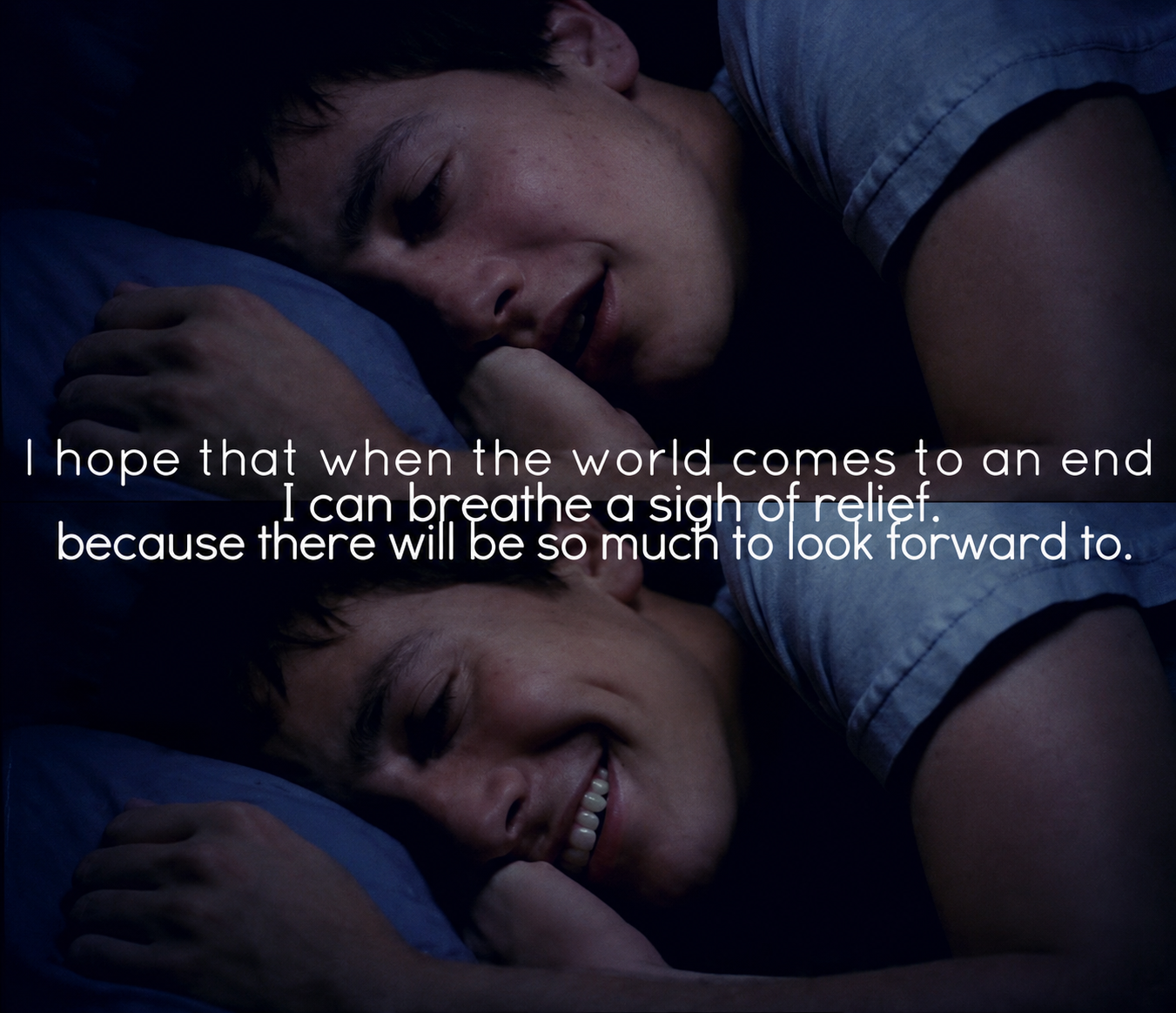
After the apocalypse, the world will remain in the same place. Hopefully as something new and better. The worst-case scenario would be to remain alive in an intervened, drugged, privatized, police state, hypermediated, spiritualized in a tacky tone.
Postscript: pessimism of paranoia, optimism of faith
If there’s anything optimistic about Philip K. Dick, it’s the fact that his paranoia, far from closing off the meaning of the world, goes out to chase it. His worlds are not false. While he writes, the United States is also paranoid. In that sense, Dick doesn’t just delude himself; he exaggerates an environmental illness. His worlds exist precisely because they presuppose a truth to be desperately sought. No paranoia is constructed without the condensing and poetic material of dreams.
But there lies the entrenched struggle of the writer, in their work to explore, create, or convey (and in this, others like my dear Kurt Vonnegut, another crazy person, will agree). There’s a beautiful conversation between Roberto Bolaño and Rodrigo Fresán from 2002 that some editor titled “Two Men in the Castle.” There, Fresán says that Philip Dick is not strictly a science fiction writer, but rather a creator of “time bombs” that project bizarre questions into the future and, moreover, infect a way of thinking about modes of otherness that few have managed to capture. Dick’s books have the ability to reach future debates because, precisely, the functioning of technology at the time they are read (nor in themselves) is not relevant: Dick is a realistic writer who only speaks of the future.
And the future is, precisely, the quasi-present space where questions live. While authors like Proust or Nabokov infect ways of writing, Dick infects ways of thinking. Like a virus. Like a meme. In that conversation, Bolaño provides a counterpoint and says that Dick is the definitive author of paranoia (and yes), but because he writes about entropy, with an ear attuned to the noise of the universe’s inevitable death. But it’s precisely Dick’s detachment from the epithet “science” in science fiction that produces human salvation in the search for friendship, sex, and shared adventures. The issue goes beyond writing: it’s about creating.
Philip Dick first seeks the seam of reality in science fiction magazines, records, women, drugs, politics, and conspiracies. Then he looks for it in God. In the end, he doesn't find a stable answer, but he does discover a unique form: novels where the mundane reveals itself as a façade and where everything can be a divine message.
Philip Dick first seeks the seam of reality in science fiction magazines, records, women, drugs, politics, and conspiracies. Then he looks for it in God.
Writing this note was challenging. Not because of its premise, but due to its emotional weight. Delving into what someone like Philip Dick was pursuing is exhausting. Especially because when it comes time to pause, he doesn't stop. However, there is something hopeful in the work of writers. Or anyone pursuing an art form. If writers exist, it’s because they never stop searching for the beams that support that universe. And testing what material they are made of.
If someone writes, it’s to avoid dying. That’s my hypothesis and that of many others. The person writing here spent four consecutive years with suicidal thoughts. Once, I asked ChatGPT to write me a suicide letter. Not to kill myself, because I decided long ago not to do that (since the morning I learned about the suicide of a friend and experienced what that explosive hole in everyday life can produce in others), but to play around with the feeling. It turned out to be such a perfect and personal text that it completely took away my desire to die. The machine imitated a closure too well. I laughed at the situation. Stupid machine, how can you be so incapable of containing the irregularity of life. Damn, we’re so awesome.
There’s one more detail I saved for the end about the definitions Dick gave regarding what an android is: There are certain agonizing situations that create a human being where there was once only "clay." The key difference is that the android repeats a limited reflexive gesture in the face of danger, while the human struggles internally, changing and finding one answer after another as each one fails. The human goes through suffering and transforms, while the android merely wears down.
When I bring all this metaphysics down to a more manageable scale, I find three forms of humanity: work, art, and love. Work understood as the ability to transform the world, even though the way it’s currently organized can turn it into a biblical curse that the Judeo-Christian God casts upon humanity for disobedience. Art as an abstraction capable of bringing forth something that wasn’t there before. And love as the decision to support another when they can’t support themselves.
Perhaps none of these are exclusive to our species. Better that way. Dick’s humanity was never too firmly tied to the human species. A machine can lend a hand. An animal can care for another. An android can feel dread at the thought of its own death. What matters is when something interrupts its functioning so that something else can continue to exist. I’m writing this note, in part, during the days of the World Cup. A time filled with mystical interpretations, numerologies, coincidences, excesses, and unrealities. “Don’t try to understand it, just enjoy it” is the meme that best describes this whole issue.
Philip Dick was a man filled with a desperate will to find humanity and a trace of divinity that reaffirms it through literature. And that’s why Dick’s work is sometimes not science fiction, but religious horror. And all his suffering in imagination occurred precisely in that quest for reconnection. Perhaps his is the most radical action in a world that seems headed for destruction: not allowing that reality to solidify.
Las notas de 421 no tienen paywall
Y a cada colaborador se le paga por su trabajo. Las dos cosas dependen de los suscriptores.