Tainted Grail: The Apocalypse of King Arthur
Tainted Grail reimagines the Arthurian legend in a dark, decadent tone. A must-play RPG.

My favorite childhood movie has always been The Sword in the Stone, Disney's animated adaptation of the King Arthur story, which tells how a little boy, in a classic Cinderella-style situation, is educated by the legendary (and funny) wizard Merlin and his (even funnier) owl, Archimedes, until he becomes the chivalric legend that ruled all of Britain.
A highly played album during my teenage years, inherited from my dad, is the conceptual work by former Yes keyboardist Rick Wakeman, called "The Myths and Legends of King Arthur and His Knights of the Round Table," a rock progressive album revisiting the key points of the foundational British myth with a tense and dramatic leitmotif, where each track corresponds to a character from the story and their downfall (except for the last one, titled "The Last Battle"). I got to see it live at the Gran Rex Theatre in 2014.
Last in this reminiscence is the classic English comedy from the humor group Monty Python, "Monty Python and the Holy Grail," a satire of the Arthurian myth with a level of absurdity characteristic of the troupe, depicting King Arthur gathering his Knights to search for the Holy Grail in a decaying Britain.
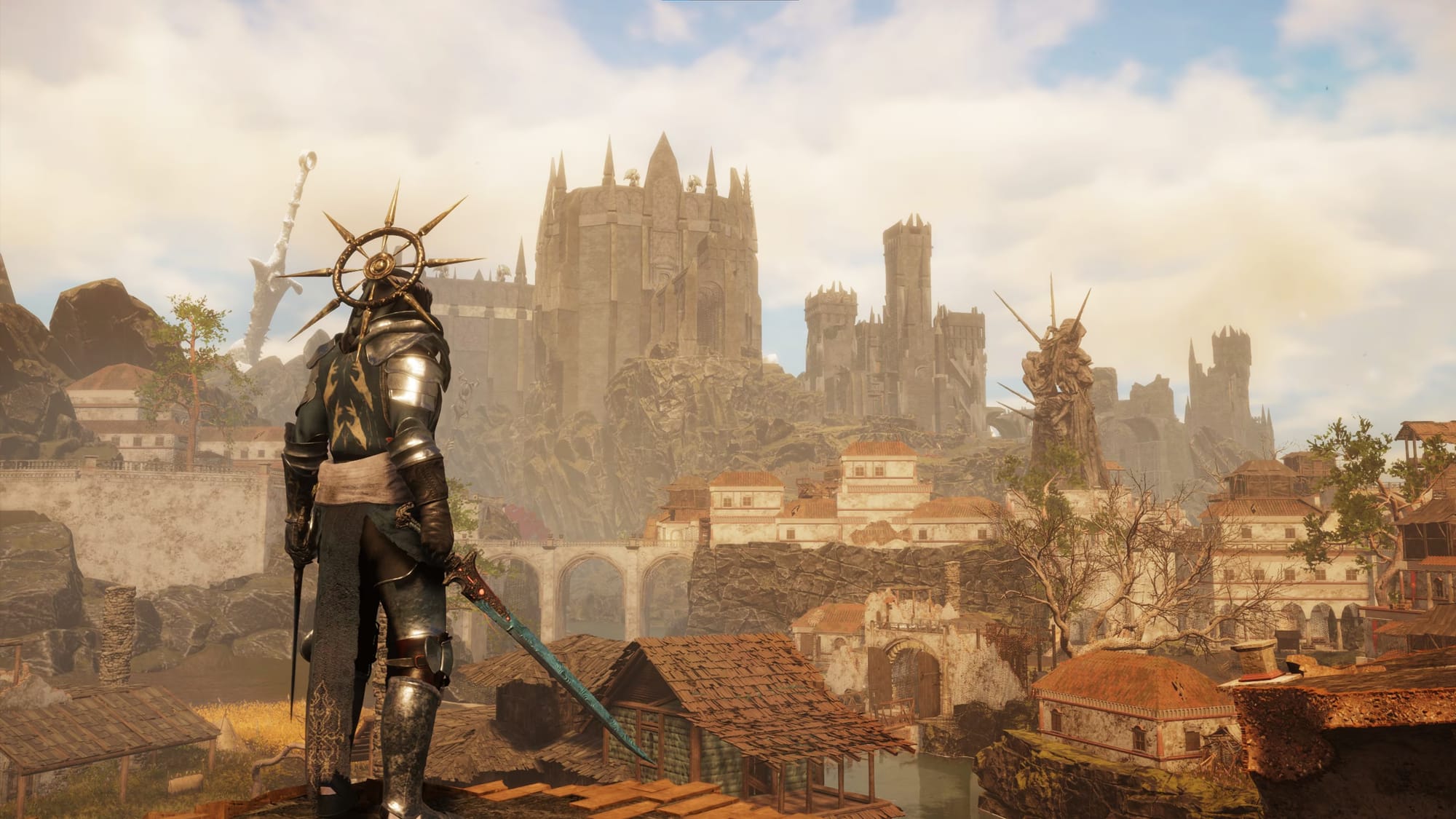
And it's in the idea of mythological decay that, upon double-clicking, Tainted Grail: The Fall of Avalon appears; a role-playing video game set in a post-apocalyptic Isle of Avalon where apathy and dependence on the figure of King Arthur sealed the fate of an entire world. In terms of big games, it's a world of the "dark fantasy post-apoc Scrolls-like RPG" style.
Developed by Questline, an indie studio from Poland, Tainted Grail: The Fall of Avalon is the second in the line of video games (preceded by Tainted Grail: Conquest, a deck-building rogue-like) set in the world created by Krzysztof Piskorski, who originally conceived it for a tabletop game of the same name published in 2019 by Awaken Realms.
In terms of big games, it's a world of the "dark fantasy post-apoc Scrolls-like RPG" style.
I'm lucky to have been a tester since the alpha stage and continue to test every patch and expansion regularly in beta since its full release last year, an experience that helped me see the entirety of the game on a technical level, as well as the number of decisions and integrations made entirely with narrative and worldbuilding as the focus. A reality less common than imagined in the RPGs environment.
What's it about
We start in a prison (at this point, a classic). There's a guard who bullies us. Bam, an arrow to the head out of nowhere. Our savior appears, currently anonymous. "Let's see if you can get out on your own." On the way out, we touch a statue, which transports us to a kind of vision of a world in suspension, as if in slumber. An incorporeal being, a sort of soul, speaks to us: it needs us to escape, it feels a calling. Little by little, it remembers: it is what remains of the soul of Arthur Pendragon, king and hero of all Avalon. It's kind, it wants to see what’s happening in its kingdom. It enters our body, and we escape. Surprise! Our rescuer is none other than a Knight of the Round Table, whose goal is to kill, once and for all, King Arthur and everything that remains of him. Holy crap. Here we go.
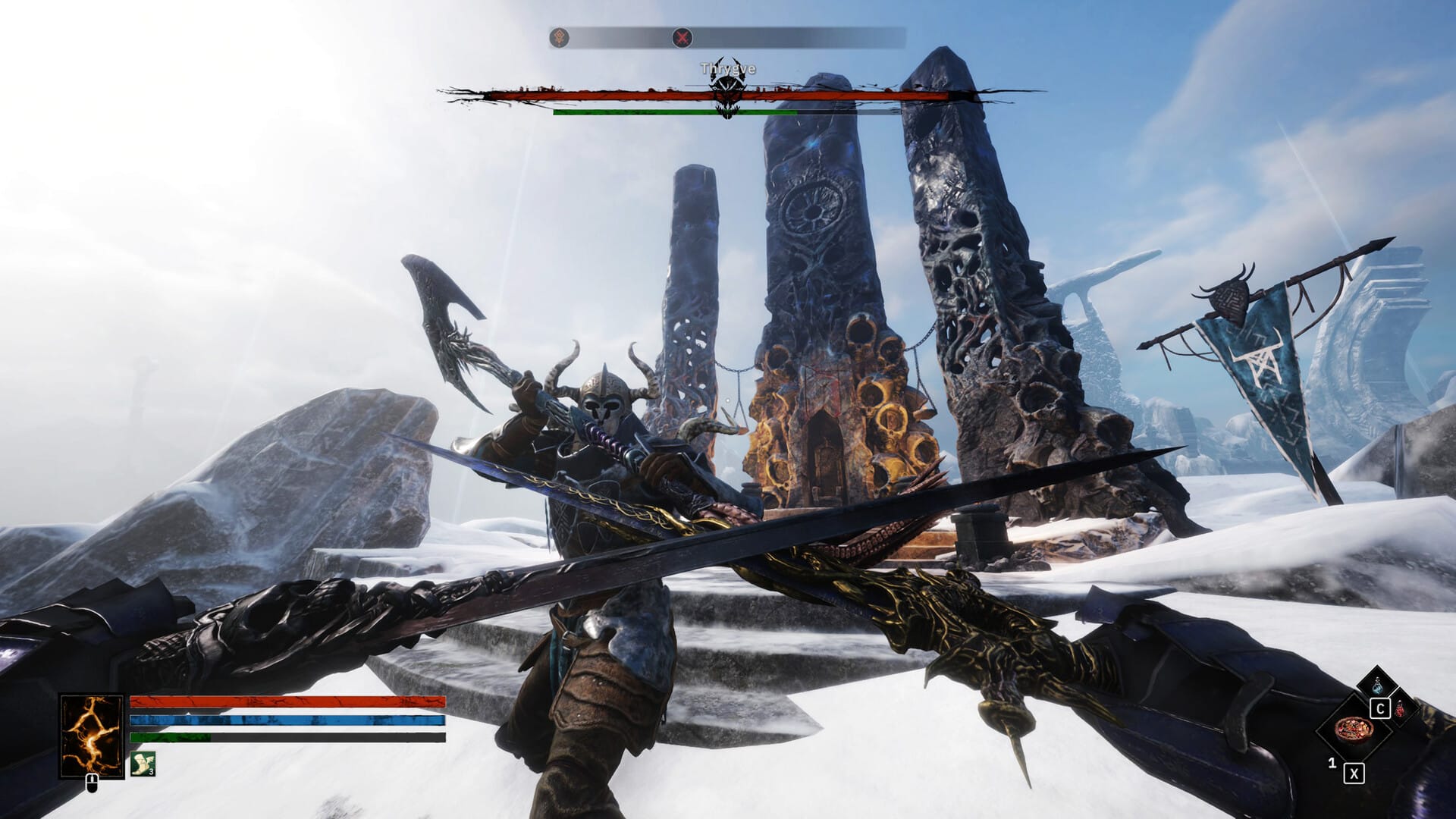
Mechanically, it's a very traditional first-person RPG: it has no classes, but rather each person levels up the attributes and skills they want, creating their own character using whatever weapons and spells they choose. It features crafting, stealth, alchemy, dual-wielding weapons, all kinds of magic, and even mounts. The world is huge. And when I say huge, I mean huge: I've never felt so small in a game. Comparable only to Shadow of the Colossus and some parts of Zelda: Breath of the Wild. A clear main quest (to obtain the legendary artifacts of Arthur, which hold a piece of his soul) and a good volume of side quests that spice up the land and its characters.
All fantasy is post-apocalyptic
The premise and core of the narrative world of Tainted Grail is a concrete idea: what would the world of Avalon look like if the inevitable fall of King Arthur had been the last possible historical event? What would happen in a world where one figure's milestones and achievements cannot be escaped? A world in which every decision and action of this figure had impact and metaphysical consequence. A world in an eternal autumn, mourning its hero who is no longer there, but whose people cannot let go.
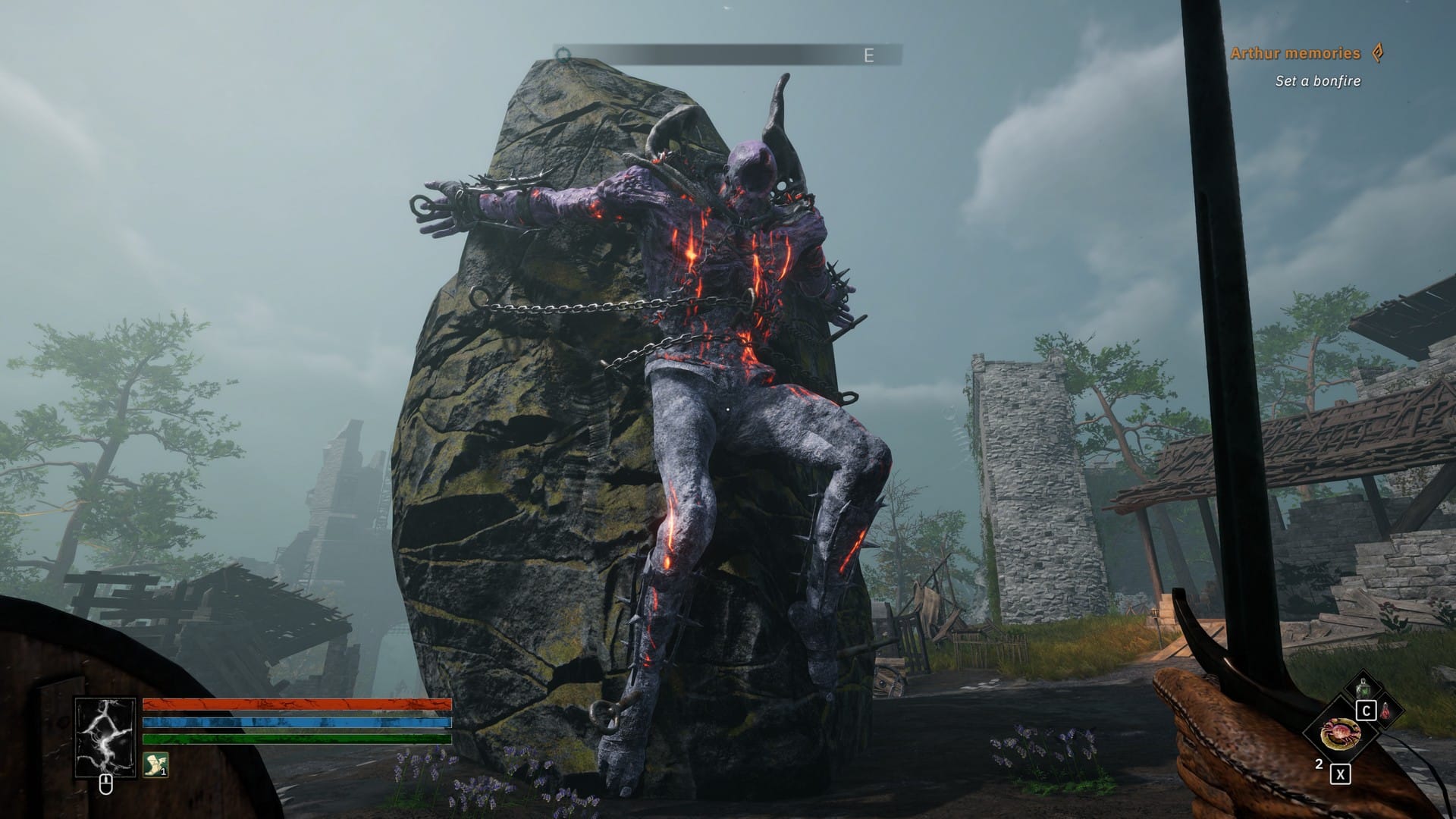
And here comes the darker fantasy. Centuries after Arthur's death, Avalon is ravaged by a tremendous plague, a fog that creates horrendous creatures and a whole series of internal conflicts between Camelot, the Knights of the Round Table, and the surrounding peoples. To top it off, a systematic plan of necromancy in constant operation based on reviving King Arthur every X number of years to restore order only serves to accelerate the metaphysical chaos.
We reach the end
Tainted Grail emphasizes that always-present but often forgotten part of the Arthurian myth: the party is over. Eventually, Guinevere and Lancelot betray Arthur, Gawain succumbs to vengeance, Morgan Le Fay rots it away, and Mordred, his son, kills him. Avalon falls, becoming a utopia, a forgotten kingdom of yore that inadvertently symbolizes the tradition and essence of fantasy ("All fantasy is post-apocalyptic").
Tainted Grail emphasizes that always-present but often forgotten part of the Arthurian myth: the party is over. Eventually, Guinevere and Lancelot betray Arthur.
We are used to RPGs placing us in the role of the hero/character who must stop the impending apocalypse: we are the Dragonborn, the Nerevar, or the Hero of Kvatch in the Elder Scrolls saga, we are Cloud and AVALANCHE against Shinra and Associates® in Final Fantasy VII, etc. Other games, the fewer, show us the transition, like Final Fantasy VI. Tainted Grail not only tells us, "The moment has passed, it was 500 years ago," but also makes it clear that humanity did not rebuild, did not overcome, did not advance. It merely endured. And we get to see the broken pieces. Tainted Grail has a bitter taste, a constant heavy sorrow, contrasted by some strangely colorful landscapes, like a world still trying to offer a glimmer of hope.
Can anyone rule forever?
One of the central axes of the narrative of Tainted Grail is that eternal question of politics and power: can someone govern ad eternum? Even if it's not exactly the same person: in the Avalon of Tainted Grail, the current Knights of the Round Table are not the same as 500 years ago, but their names have become roles, cloaks of authority with which to evoke power just by mentioning them. There have been many Galahads, many Percivals, many Lancelots. Not so with Arthur or Merlin.
Is there a possibility of using that story, that mythology as an inexhaustible source of authority and governability? What conflicts does this have with the inevitable mortality of man? Piskorski goes a bit further and hides his own answer in the story itself: those who truly held power, who possessed the highest legendary status, chose mortality. Arthur, Merlin, Cai.
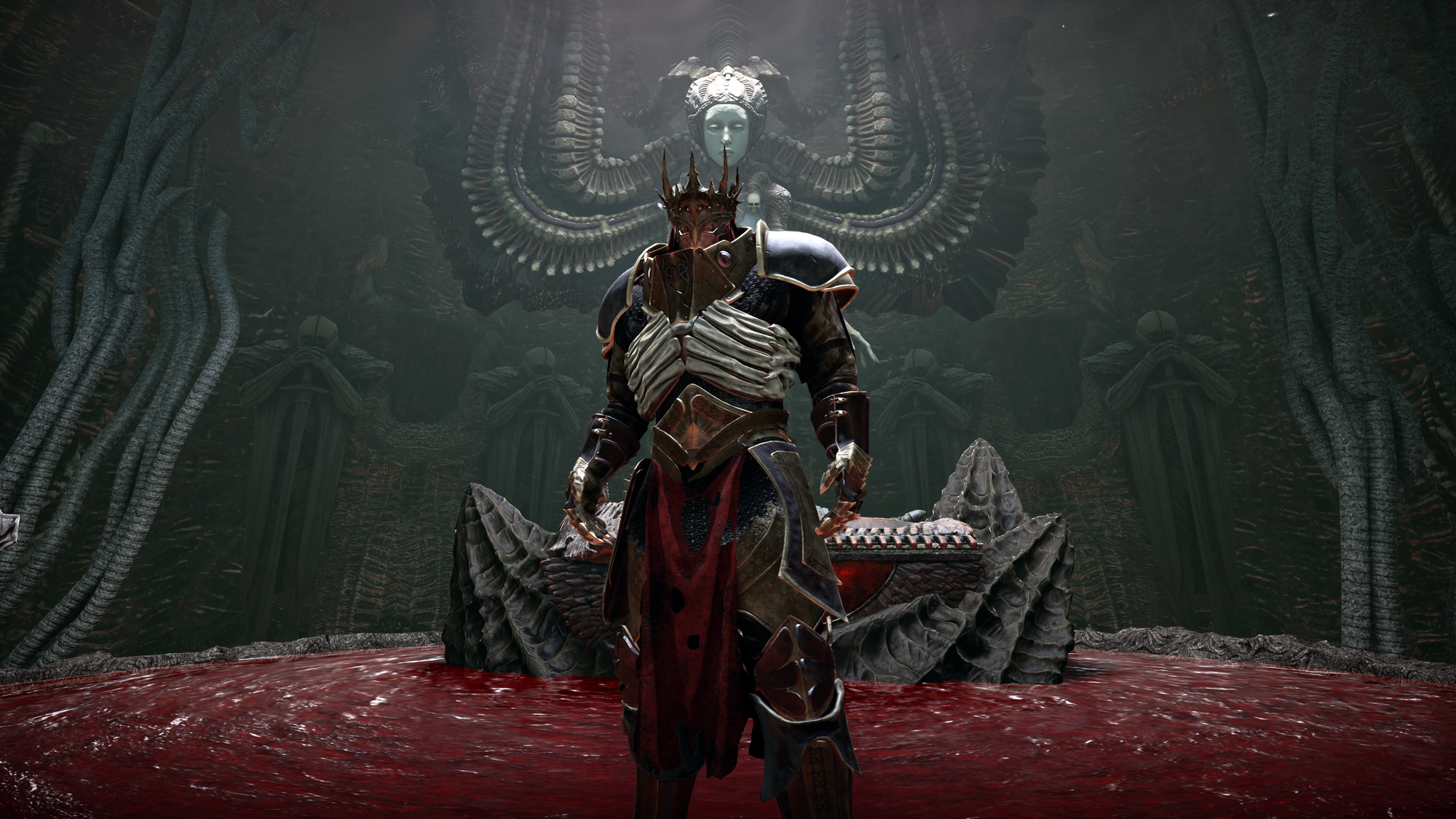
Tainted Grail: The Fall of Avalon gives players the chance to experience more than just a fantastic adventure in a medieval role. It makes them both a spectator and a participant in an event 600 years in the making; a political, spiritual, and mythological dispute over the remnants of a shattered world, an abandoned people, and a legacy overshadowed by blood and plague. Tainted Grail asks us: Is Arthur the eternal king that Avalon needs? Is he just another person who did what he could? Or was he, in his selfishness, the greatest tyrant of his land?
Perhaps, Piskorski suggests, almost inspired by our own Jorge “Turco” Asís, the only mistake King Arthur made was dying.
If you enjoy RPGs, this is an experience I wholeheartedly recommend. And even if it’s not your favorite genre but you’re interested in Arthurian myth (there you already share something with Tolkien), it’s definitely worth a try. Tainted Grail: The Fall of Avalon is available for PC, PlayStation 5, and Xbox X|S, and if you prefer buying games over pirating, fortunately, it’s priced much more accessibly than any AAA game.
Las notas de 421 no tienen paywall
Y a cada colaborador se le paga por su trabajo. Las dos cosas dependen de los suscriptores.