Ace Combat 3 Electrosphere: The PS1's Cyberpunk Gem
More than just a 1999 flight simulator, Ace Combat 3: Electrosphere is a cyberpunk masterpiece. Transhumanism, corporations, and a twist that puts you in the shoes of an Artificial Intelligence.

More than just a 1999 flight simulator, Ace Combat 3: Electrosphere is a cyberpunk masterpiece. Transhumanism, corporations, and a twist that puts you in the shoes of an Artificial Intelligence.
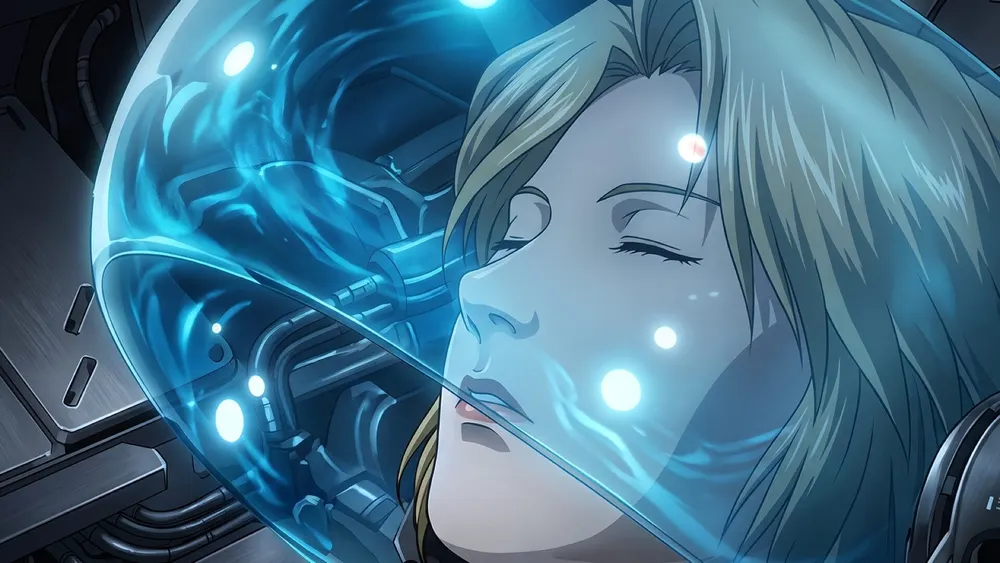
Disclaimer: This note contains spoilers. If you want to play the game before reading this, now's the time to run away, and you can also watch a playthrough in full here. However, knowing where the story goes doesn't take much away from the experience.
It's 1999, which we can call the end of the end of history, the last warmth of the Menemist autumn. Namco in Japan is reveling in two commercial successes, one bigger than the other, in the form of Ace Combat (or Air Combat, as it was known in Japan) and Ace Combat 2. Arcade games featuring little planes, based on the idea of World War I flying aces, but in a post-national world where mercenary factions battle in aircraft. You are an ace of the skies, a winged knight. Following the commercial success of the first two installments, and living in a post-Evangelion and post-Ghost in the Shell world, Namco decides to innovate with its saga.
So they develop a futuristic and cyberpunk spin-off that was going to be called, fittingly, "ACSF: Post-Cyberpunk Flight Shooting", but during production, they decided to change it to Ace Combat 3: Electrosphere. Electrosphere releases just over six months after Metal Gear Solid, and in my opinion, both become part of the podium of the console (shared with Final Fantasy and Silent Hill, perhaps) in terms of pushing the limits of what was possible with its hardware.
After the commercial success of the first two installments, and living in a post-Evangelion and post-Ghost in the Shell world, Namco decides to innovate with its saga.
Argentina wasn't consuming original PS1 games; we had a chipped PlayStation, so at some point in '99 (if I remember correctly), I bought the Japanese version of AC3 along with five other games at a video game store in Adrogué.
I found it fascinating. The game, which came on two CDs, had enough English in the menus to navigate without knowing Japanese, but the entire story was in that language. Still, I understood something, or at least I thought I did.
The point is, as soon as you turned it on, the game had a very recognizable aesthetic and an intro that clearly indicated it wasn't just any game. The electronic music and the character presentation as if it were an anime immediately captivated me.
The game's intro, where you can already see the care put into the music and the story.
As soon as I started playing it, I was hooked. I had just been really into Evangelion, and this game had a very similar aesthetic; but instead of mechs, you start as a pilot who receives personal messages from other pilots in an organization called UPEO, welcoming you (apparently, you're a newcomer), you choose what to name that pilot, and if you don't choose anything, by default, you're called Nemo. All of this is what I inferred from the dialogues in Japanese and the mission content.
UPEO, the organization you belong to, is a sort of military institution under the New United Nations in a world where the Nation-State has become irrelevant. As soon as you start, you begin to see news talking about a conflict between two corporations called General Resource Ltd. and Neucom Inc. General Resource has a militaristic aesthetic and, for those who played Cyberpunk 2077, resembles Militech. General Resource is attacked militarily by Neucom, which (I would discover much later) is a sort of corporation founded by the more utopian research and development wing of General. Neucom is a corporation fascinated by aesthetics and its own ideology, like a super fusion of Apple, Boeing, and Anthropic of the future. It explores cutting-edge technologies that go against the statu quo (represented by General Resource: Artificial Intelligence, Nanotechnology, Aerospace Technology, and, more importantly, the digitalization of the human psyche in the form of what they call: "sublimation"). The game takes place during what is referred to as the intercorporate war between GR and Neucom.

Neucom attacks, and UPEO, under the direction of General Park, assigns the S.A.R.F (Special Armed Response Force), after several missions trying to prevent Neucom's incursions into General Resource territory, you collaborate with two pilots from General Resource: one of them is clearly the main rival of the installment (given the opening), Abyssal Dision.
Dision is impressed with your flying style (I could tell from the tone of the Japanese he was shouting at me on the screen), so after a joint mission, he invites you to defect to General Resource against the objections of his partner Keith (who is a sort of unrequited Patroclus to his proverbial Achilles) and Fiona and Erich, who urge you not to defect.
That's when you notice the game has choices, giving you some agency. If you finish the game either by going with Dision or staying in UPEO, some of your companions will die, and the ending will be bittersweet. With little sweetness. Many players may have considered that, well, they played a fun game and the ending is simply good or bad. But if you liked the game, as I did, you can see what happens if you make different decisions. A few months earlier, Silent Hill had come out, and that game has good and bad endings (though they all lean towards bad), the same with Metal Gear: Solid. So, why not try? And if you were smart enough to save in another slot on the memory card just before each decision, you can explore the other branches (defecting or staying with one of the four factions) without starting from scratch. In the obvious options, the ending remains bittersweet, unsatisfying, frustrating.
Before continuing to talk about the story, I want to clarify something: The game hooked me immensely, I completed all the endings, got the highest rank in all missions, unlocked some things I didn't understand, even something very strange after the credits of the fifth: a post-credit scene, let's say. At that moment, the two CDs stopped working. Tragedy, my favorite game had broken, it would connect sporadically, and since it was a two-CD game, both had to work perfectly for it to run.
All of this happened over months, or more than a year, so when I wanted to buy the game again, I couldn't find it. Being a little teenager as I was, I eventually considered buying the original game, maybe there was no other option. I searched online around the year 2000 and found it on a site called Amazon. Plus, it was in English, so I was finally going to be able to play it translated. It made sense all around. I had never had any other original game for Play 1 before or after. After burning my poor mother's patience, she lent me her credit card to order it: she wasn't so worried about the price (it wasn't outrageous) as she was about making a purchase online, but she was more concerned about my insistence, so she eventually caved. I don't remember how long it took to arrive, one or two weeks. When it arrived, I was over the moon, but I noticed something strange: the game had a different cover. "Must be a thing with the North American version," I told myself. Besides, it was just one CD. Weird. In my mind, motivated by sunk cost, I didn't consider the unthinkable yet; it must be that the original Playstation CDs store more information, right? After all, they're black on the other side and thicker, that has to be it.
I put the disc in, the intro is different, surely it's because Namco didn't just do a mere translation, they adapted it by editing things! It still works, it still works.
The intro of the American version.
But by the time I started the missions, my hope had completely deflated. The game didn’t have the characters’ voices translated, it didn’t have animations of their avatars when they called you (they didn’t call you), it had nothing more than a bit of text between missions, the conflict was futuristic but generic. The unthinkable had become impossible to ignore: Namco had cut out all the story, all the endings, they hadn’t adapted anything. Ace Combat 3 in English was just another game, similar to Ace Combat 2 where you were an anonymous mercenary fighting against anonymous enemies. I’ve suffered less painful romantic rejections. After all, a good part of the active pain of heartbreak (when it’s the metejón variant) is a blow to pride and self-esteem (and here the humiliation was as great as the feeling of betrayal). The consoles had broken my heart. The nation of Japan was my enemy.
As sometimes happens, life gives you a second chance. I want to clarify something: none of my friends played this game, I didn’t know anyone who remembered it, not even people who played as much on the PS1 as I did. We must have been a handful of people who bought it, and most probably ignored it because it was in Japanese. If anyone here ever played the American or European version, they surely passed through life without a trace. The (non-)adaptation is a mess. So, what happened? Well, if I had looked into it back then, I would have understood something, although much of this information came to light later.
The unthinkable had become impossible to ignore: Namco had cut out all the story, all the endings, they hadn’t adapted anything. Ace Combat 3 in English was just another game.
According to the wise ones on the internet who reconstructed the sequence, what happened was that while Electrosphere went into production when Namco was excited about the saga; by the time they finished it, the cost of the Japanese version had become significant. The game has an hour of exclusive animation made by the animation studio that created Ghost in the Shell; the script and the five endings were written by Dai Satō, writer of some episodes of Cowboy Bebop, and later Ghost in the Shell: Standalone Complex, among many other anime (with a certain obsession for denouncing bare-knuckle capitalism); dozens of futuristic planes were designed, both reimagined from contemporary aircraft and completely from scratch for the game, with a distinctive identity for each faction; not to mention the creation of a world with brutalist beautiful cities.
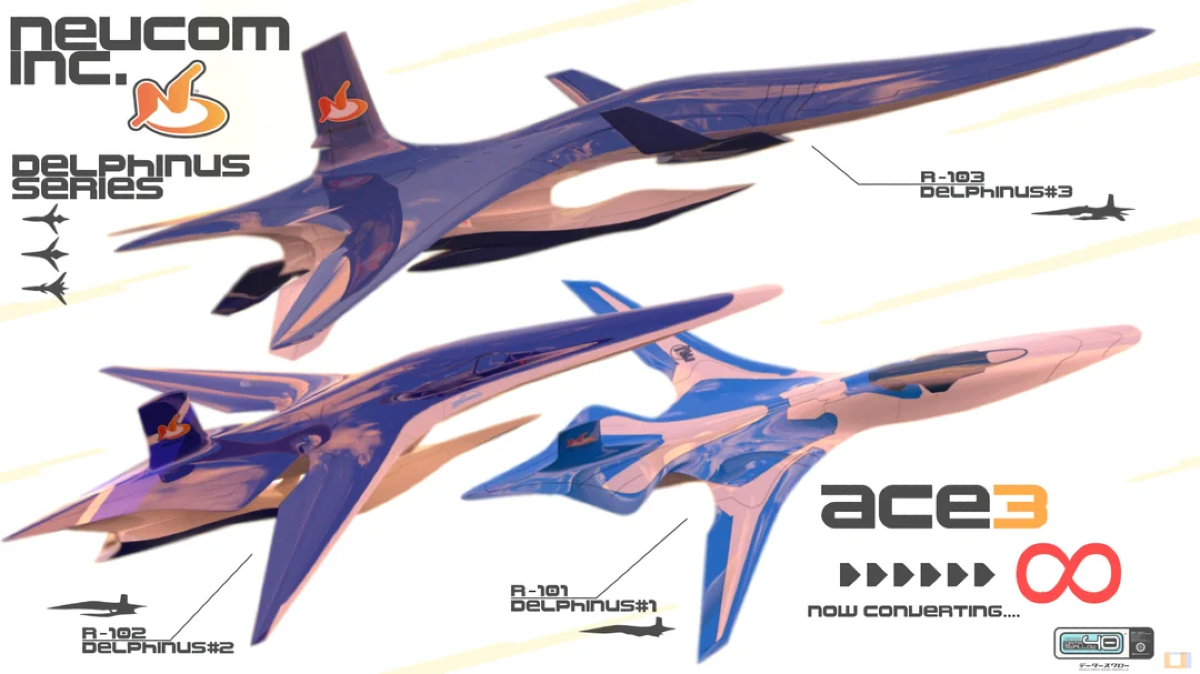
In other words: an expensive game. They had plans to make international localizations, even hiring the translator who would later translate MGS2 (and would argue with Kojima for not making a literal translation), but they gave up. Electrosphere didn’t sell enough in Japan, and they also considered that the anime-style plot wouldn’t be well received by foreign audiences. Basically, they backed down and opted for the more financially conservative option.
The Ace Combat saga continued (for many, its great milestones are in the Play 2 games, and the eighth installment, Ace Combat 8: Wings of Theve, is about to be released) but none had the audacity of the third (to the point that the subsequent installments slowly brought their world, Strangereal, closer to the 2040 of Electrosphere). Namco, after many years of losses, merged with Bandai in 2005, and today there’s not even a mention of it in the entity, but Electrosphere, although it was born too ahead of its time, marked one of the most successful video game sagas to come out of the land of the rising sun.
And how did I find out about all this, if Ace Combat 3 was never adapted outside of Japan and I didn’t learn Japanese or closely follow the saga? Curious fifteen years later, around 2015, I started piecing together the plot that I had only glimpsed in fragments, through the excellent voice acting of the Japanese actors. That’s where Project Nemo comes in, a group of pros who set out to translate the game in its entirety: I found their transcripts while they were working, and in 2016 they finally released their patch (which applied if you had the original, the only legal way to emulate it, of course). Finally, during the pandemic, I was able to play it in full with subtitles. It was beautiful, a bit cheesy (as many Japanese products tend to be), but precious. Today I have it on the DuckStation emulator with the Project Nemo version and the recent one from the Load Word Team (both excellent) and every now and then I take some time to fly a few planes.
So what is the game about? It’s about powerlessness, agency, and humanity. And what is the electrosphere? The cyberspace or Matrix of William Gibson in Neuromancer, the datasphere of Simmons in Hyperion. The internet, everything. As I mentioned before, the game begins with you choosing a name to connect to the electrosphere (via the data-swallow interface), or the one the game gives you: Nemo. "Nobody" in Latin. At the start, you watch sensationalist news made by media addicted to war corporations in the electrosphere, people send you messages via intercom through the electrosphere. But you never respond. You have no voice. The pilots no longer use planes like they do now, but connect through an interface like the capsules in Evangelion. It’s a direct connection to the machine. Being an ace pilot in 2040 is being a cyborg.
The first minutes of the game in the version translated by Load Word Team. It’s also available in Spanish.
Rena Hirose, the star pilot, says your flying style resembles hers. She finds it strange. Dision says you impress him, he finds it odd. As you go through the endings, driven by the feeling that something doesn’t add up, you get to know, befriend, and make enemies with various characters. But the important ones are Dision, Rena, and you; and while you know a lot about the two of them, who you are is something you have to forge with your actions. After all, you’re a stranger. The typical hero’s journey, or so it seems.
At a certain point in the war, the fourth faction appears: Ouroboros. A transhumanist terrorist faction that wants to save humanity from the condemnation of flesh. Who’s their leader? It could only be Abyssal Dision. Using cutting-edge technology from Neucom, he wants to digitalize all of humanity and eliminate their bodies. He wants everyone to transition to the electrosphere to transcend human condition. The electrosphere is not just a means of information; it’s a medium that can host digital lives.
And who helps him? Rena Hirose. Why? Because Dision has a beautiful plane, and Rena feels alienated from her body (she can’t go out in the sun) and misses the X-49. The X-49 Night Raven is like the One Ring and Rena is Sauron: they are one for the other. In all endings except one, Rena would do anything to pilot it, including genocide. The X-49 is a beauty that can easily destroy a city through coordination with weapons in orbit.
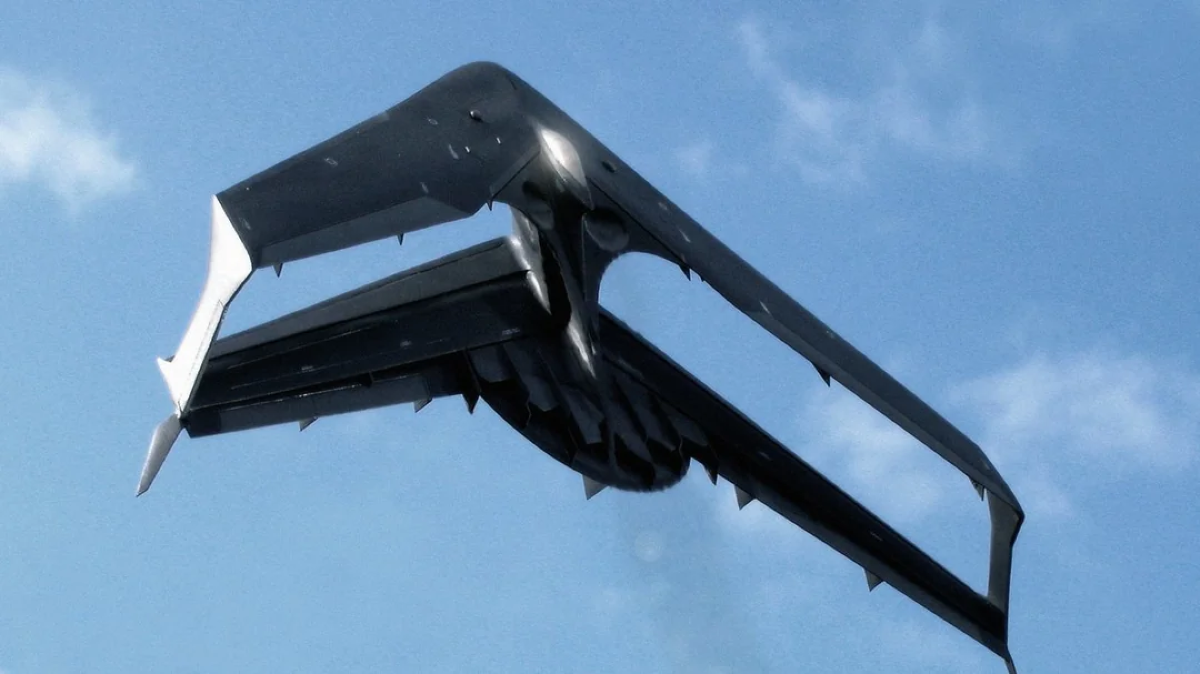
Rena was raised by General Resource from a young age to pilot the X-49 Night Raven through an interface even more aggressive than the one the other pilots use. She can feel the plane. For her, using the X-49 feels like being in her body, and being in her normal body on the ground feels like being in a prison. Dision uses that to bring her back to the fold. However, Dision’s transhumanist terrorist utopianism is not the only utopia: in the background, the war between the two corporations faces antagonistic visions of the world. For General Resource, technology is a means to an end (the margins of profit and order); for Neucom, founded by disgruntled scientists from General, science is an end in itself, and nothing sacred exists under the sun outside of the knowledge and emancipation it brings.
Using cutting-edge technology from Neucom, he wants to digitalize all of humanity and eliminate their bodies. He wants everyone to transition to the electrosphere to transcend human condition. The electrosphere is a medium that can host digital lives.
Unlike other cyberpunk works, and this is one, the aesthetic is almost optimistic. It’s what Midsommar is to the horror genre. You’re not a cyberpunk like Chase in Neuromancer, a cyberspace cowboy who sells his cyberdeck to the highest bidder without understanding the forces that dominate the world; nor are you V or Johnny Silverhand from Cyberpunk, fighting futilely against corporations or surviving on scraps. Here you are a hero, your decisions on the battlefield forge the very story. Electrosphere doesn’t throw you into a tale of powerlessness where you’re left to just survive; you’re an agent, you’re a protagonist. You navigate the world made by others, but you are the vanguard of that change.
As each ending progresses, you become more important; what happens is up to you. Until you start doing strange things. At one point, if you ally with Dision and Rena in their crusade against the prison of flesh, you access Rena’s memories about Dision and... you erase them. This causes Rena to stop following Dision, and you become an enemy of the revolution, she starts attacking you. You were her ally just moments ago. The game doesn’t ask you; your character simply does it. In your final battle with Dision, something you’ve learned throughout the game comes into play: Dision is already sublimated; he died long ago in his physical form. Dision had been an ace of General Resource and ended up as a test subject in a secret digitalization experiment by the corporation itself, overseen by two of its scientists: neuroscientist Yoko Martha Inoue and Simon Orestes Cohen. Yoko manages to copy his consciousness, but the General Resource leadership decides that the research is too dangerous: they abort the experiment by killing his physical body and, to bury the matter, they also murder Yoko, who by then was his lover. Seeing himself die depersonalizes him: he envies and seeks to avenge his flesh self and Yoko. The surviving copy ends up piloting for General Resource, the same corporation that had killed him.
Of course, this is bizarre, but what’s interesting is: why couldn’t this happen in a world where people no longer interact face to face? No one knew, except for a few, that Dision was no longer a flesh-and-blood person, that the entire conflict was orchestrated by him. But what difference would it make? The planes are piloted with a digital interface, interactions with others are too: it’s a natural consequence of the world presented to us.
But since he has no physical existence, when you’re about to kill him, Dision escapes to the electrosphere. The strange thing is that you can follow him. The game doesn’t emphasize this much; you just do it, you fight in a no-place that looks like the wormhole that’s part of the interface you’ve been seeing before each mission: the electrosphere. If you follow the natural order of the endings, this is the third ending, the Electrosphere mission from the Ouroboros I segment. You’ve already beaten it with UPEO, where you killed Dision, and you’ve beaten it with General Resource, where you killed Dision. This third time you killed him in the electrosphere. And what if you try with Neucom? There you come face to face with Simon Orestes Cohen: the cowardly scientist we saw at the origin of all this, now in Neucom. There, to no one’s surprise, you notice that you can’t avoid killing Dision either. He’s the only one who always dies, in any situation you play.
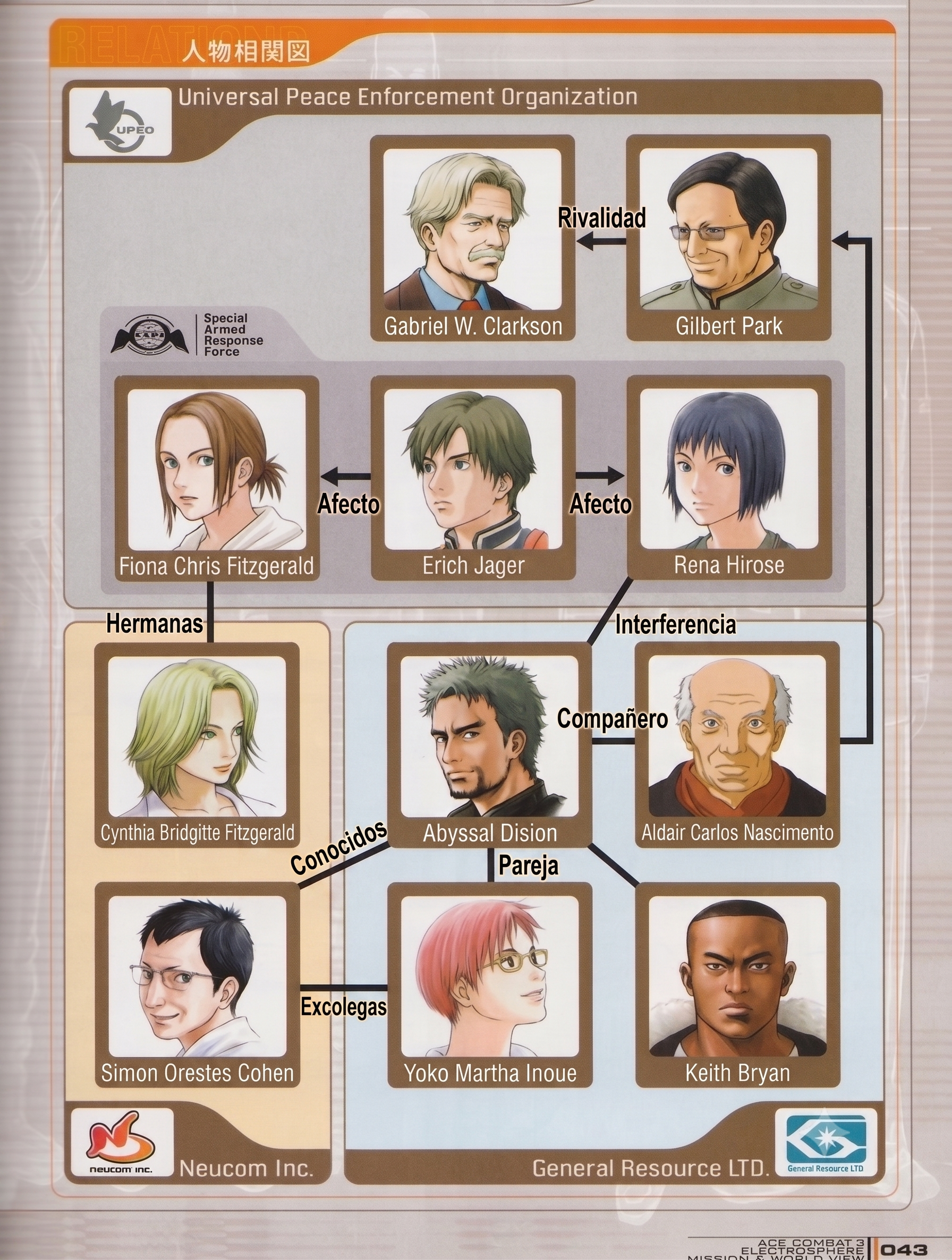
Dision, in the electrosphere, accuses you of being Simon, of being a puppet, right, Simon? What does that have to do with anything? Once again: weird. The last two endings with Neucom, whether you join Ouroboros at some point or not, complete the puzzle. When you have all the endings in the same saved game, the one that appears is none other than Simon. In the omega ending, Simon says you might have already guessed it, that you are a program and that everything you've experienced is a simulation. You are an AI being trained to kill Dision in any possible geopolitical scenario, and now that you've tried them all, you're ready to go out into the world and actually kill him. That is, his digital copy. You, the player, are simply a weapon designed to carry out a revenge. You never truly met any of your companions; you were gathering information about them. You made no decisions: even when trying to help Dision (whom you only knew through what Simon wanted to show you), you were forced to kill him (when you erased Rena's memories by hacking her plane). You only see what you need to conclude that he is bad, that he must die: in the simulation, Dision didn't want to sublimate all of humanity; he just wanted revenge on the corporations that sublimated him by mistake and blamed him for Yoko's death (it's not even clear what he did to deserve it).
In the omega ending, Simon says you might have already guessed it, that you are a program and that everything you've experienced is a simulation. You are an AI being trained to kill.
All the characters are too human in their desires to abandon their humanity; their utopias are nothing more than projections of their personal shortcomings, and your sense of agency was merely the final display of your inability to choose. You were following a script, even if it was dynamic.
One interesting thing is that Electrosphere captures, in its endings, the same unease that classic cyberpunk stories do (Gibson's novels, the tabletop game by Pondsmith, its recent adaptation by CD Projekt Red in Cyberpunk 2077): that you can't win and, above all, that you can't escape your own humanity. But while the endings of Cyberpunk 2077 are all examples of the real costs of each decision, without a "and they lived happily ever after," in Electrosphere there is one true ending, which depends on your involvement. If you don't ask yourself what else you could do to prevent the game from ending that way, if you don't feel trapped by your decisions, you'll never see the bigger picture before being erased. Cyberpunk 2077 gives you options, and it's hard to decide which one is right; Electrosphere shows you that you never had any.
More interestingly, Electrosphere is the only work of fiction I know that takes the time to put you in the perspective of an Artificial Intelligence being trained. Nemo doesn't learn like Claude or Qwen (Deep Learning, detecting patterns in a dataset) but like AlphaStar, the Google DeepMind system that excels in StarCraft: a system that learns by playing possible alternatives and incorporating optimal decisions based on some desired outcome (what is known as Reinforcement Learning). The reward function here is, whether you know it or not, to kill Dision. And the question the game pushes you to ask yourself (what does it feel like to be an artificial intelligence?) seems, at first glance, easier than imagining what it feels like to be a bat. It's the same nerve that Do Androids Dream of Electric Sheep? touches, by Philip K. Dick (what differentiates us from a mere android?), or Major Kusanagi's struggle in Ghost in the Shell to claim her will in a system that sculpted her as a tool; and, under a cyberpunk lens, the very Evangelion, with its theme of the vain illusion of dissolving into others to escape the limitations of one's own perspective and loneliness. An illusion for something that presents itself as an indistinguishable satisfaction from non-existence.
In contrast, Electrosphere, as a tribute, leads you to identify with a system designed to follow designs that are not your own because the system was you (you moved the joystick to unfold the plot). Designs that can stem from biological evolution, a vengeful neuroscientist, or a video game writer, it doesn't matter; they are not yours. But as you appropriate them, you capture part of Dision's tragedy, who took the opposite path to yours. Starting human, he was copied into a form beyond matter and desire, but that "dead copy," as the game calls it, does not transcend its emotions or "irrationalities" but reconstructs them in a digital substrate. Life in the electrosphere is not a heaven of eternal satisfaction, but more of the same.
If the Dision resulting from sublimation counts as a true agent and not merely a simulation of one, the materialist question of whether digital consciousness can exist blurs in both directions in the universe of Electrosphere: by copying human consciousness, a digital consciousness can be realized, which implies that a program could come to be a consciousness. If you managed to identify with Nemo throughout the story, you become the content of that possibility. When you are powered off, and when you realize you turned out to be a mere means to an end and not an end in itself, you feel like a victim of a cruel injustice.
I think it's one of the best cyberpunk stories available, and particularly relevant. After all, what we lack is for corporations to have their own armed forces and for people to be able to be digitized, not much more than that.
Because the game ultimately shows what it wants to tell: its plot (like in great works) is a vehicle for its theme, and the UI is too. The replayability and curiosity about the plot, that which left some of us thirsty or regretful about the ending, were the trap itself: the engine that pushed us to complete a game whose real ending consists of revealing to us that none of what we saw was real, now in double meaning.
Now, this is what happens with any video game. The options are pre-programmed, and the freedom they give us is nothing more than an illusion created by the artists behind them. However, by finding the limits of those pre-written stories, we can build ourselves through our decisions within the world presented to us, even if we never had a chance to win. Like when I bought the game on Amazon. Nowadays, I believe it's one of the best cyberpunk stories available, and particularly relevant. After all, what we lack is for corporations to have their own armed forces and for people to be able to be digitized, not much more than that.
Y a cada colaborador se le paga por su trabajo. Las dos cosas dependen de los suscriptores.